


Cost of providing emergency obstetric care in Tanzania’s Kigoma region
Supporting Files

-
July 03 2019
-
File Language:
English
Details
-
Alternative Title:Int J Health Plann Manage
-
Personal Author:
-
Description:Background:
The provision of Emergency Obstetric and Neonatal Care (EmONC) is critical for reducing maternal mortality, yet little is known about the costs of EmONC services in developing countries. This study estimates these costs at six health facilities in Tanzania’s Kigoma region.
Methods:
The study took a comprehensive programmatic approach considering all sources of financial and in-kind support over a 1-year period (1 July 2012 to 30 June 2013). Data were collected retrospectively and costs disaggregated by input, sources of support, programmatic activity, and patient type (nonsurgical, surgical patients, and among the latter patients undergoing caesarean sections).
Results:
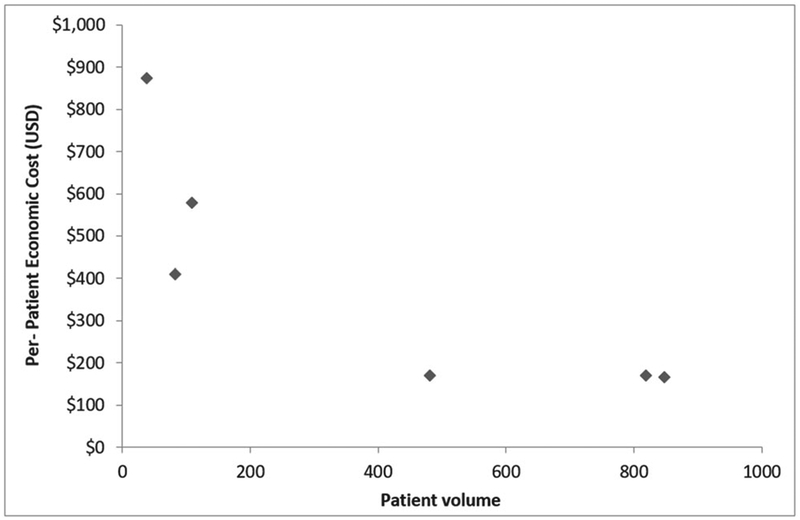
The median per-patient cost across the six facilities was $290. Personnel and equipment purchases accounted for the largest proportions of the total costs, representing 32% and 28%, respectively. Average per-patient costs varied by patient type; cost per nonsurgical patient was $80, $258 for surgical patients and $426 for patients undergoing caesarean sections. Per-patient costs also varied substantially by facility type: mean per-patient cost at health centres was $620 compared with $169 at hospitals.
Conclusions:
This study provides the first cost estimates of EmONC provision in Kigoma. These estimates could inform programme planning and highlight areas with potential scope for cost reductions.
-
Subjects:
-
Source:Int J Health Plann Manage. 34(4):e1510-e1519
-
Pubmed ID:31270861
-
Pubmed Central ID:PMC6904496
-
Document Type:
-
Funding:
-
Volume:34
-
Issue:4
-
Collection(s):
-
Main Document Checksum:urn:sha256:3a3523d8699860db91e642d158a149539ab67f3aa25cbcf992fa2e405d3d27c3
-
Download URL:
-
File Type:
 [PDF
- 146.83 KB
]
[PDF
- 146.83 KB
]
Supporting Files


File Language:
English
ON THIS PAGE


CDC STACKS serves as an archival repository of CDC-published products including
scientific findings,
journal articles, guidelines, recommendations, or other public health information authored or
co-authored by CDC or funded partners.
As a repository, CDC STACKS retains documents in their original published format to ensure public access to scientific information.
As a repository, CDC STACKS retains documents in their original published format to ensure public access to scientific information.
You May Also Like
COLLECTION
CDC Public Access