



Marijuana and alcohol use among injured drivers evaluated at level I trauma centers in Arizona, 2008–2014
Supporting Files

-
11 01 2019 ; 11-01-
-
Available in CDC Stacks on 2020-11-01T00:00:00Z
File Language:
English
Details
-
Alternative Title:Drug Alcohol Depend
-
Personal Author:
-
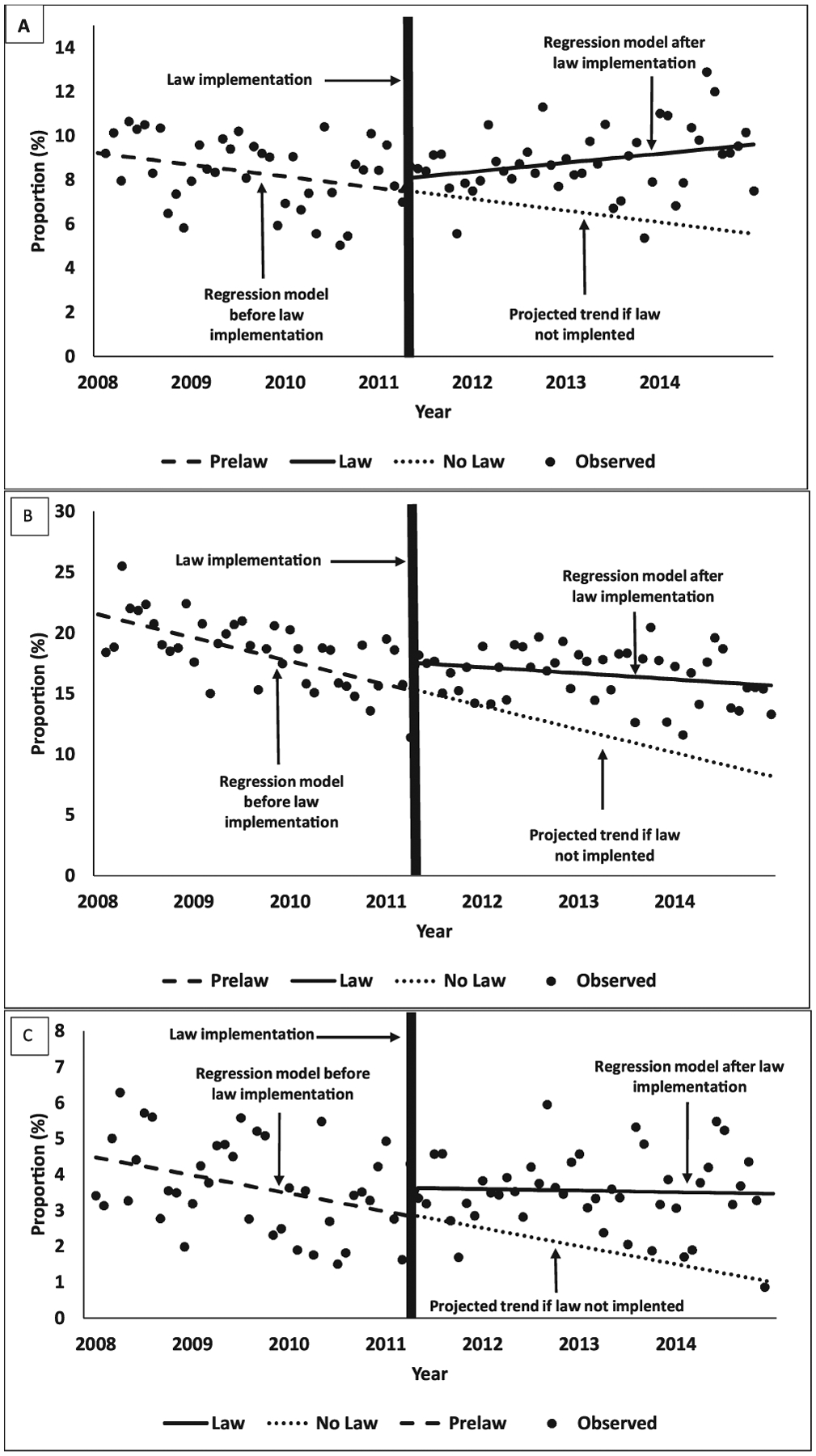
Description:Background: ; We examined marijuana and alcohol use trends among drivers aged ≥16 years evaluated at Level I trauma centers before and after Arizona legalized medical marijuana in April 2011. ; Methods: ; We conducted interrupted time series (ITS) analysis of urine drug screens for marijuana metabolites and blood alcohol concentration (BAC) data from the 2008–2014 Arizona State Trauma Registry. ; Results: ; Among 30,083 injured drivers, 14,710 had marijuana test results, and 2590 were positive for marijuana; of these, 1087 (42%) also tested positive for alcohol. Among 23,186 drivers with BAC results, 5266 exceeded the legal limit for their age. Compared with prelaw trends (models if law had not been enacted), postlaw models showed small but significant annual increases in the proportions of drivers testing positive for either substance. By the end of 2014, the proportion of drivers testing positive for marijuana was 9.6% versus a projected 5.6% if the law had not been enacted, and the proportion of drivers with illegal BACs was 15.7% versus a projected 8.2%. When ITS was restricted to only substance-tested drivers, no significant differences were detected. ; Conclusions: ; Despite the small annual postlaw increases in the proportion of marijuana-positive drivers compared with the prelaw trend, alcohol-impaired driving remains a more prevalent threat to road safety in Arizona.
-
Subjects:
-
Keywords:
-
Source:Drug Alcohol Depend. 204:107539
-
Pubmed ID:31585358
-
Pubmed Central ID:PMC7045804
-
Document Type:
-
Funding:
-
Volume:204
-
Download URL:
-
File Type:
 [PDF - 247.15 KB]
 -
Collection(s):
-
Main Document Checksum:urn:sha256:957516f5bea7fda6097a89162cda6269124ba15be3c3d7c0724b362eb5884931
Supporting Files


File Language:
English
 Was this page helpful?
 Found an issue?


CDC STACKS serves as an archival repository of CDC-published products including
scientific findings, journal articles, guidelines, recommendations, or other public health information authored or
co-authored by CDC or funded partners.
As a repository, CDC STACKS retains documents in their original published format to ensure public access to scientific information.
As a repository, CDC STACKS retains documents in their original published format to ensure public access to scientific information.
You May Also Like
COLLECTION
CDC Public Access