


Automated phenotyping of patients with non-alcoholic fatty liver disease reveals clinically relevant disease subtypes
Supporting Files

-
2020
-
File Language:
English
Details
-
Alternative Title:Pac Symp Biocomput
-
Personal Author:
-
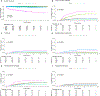
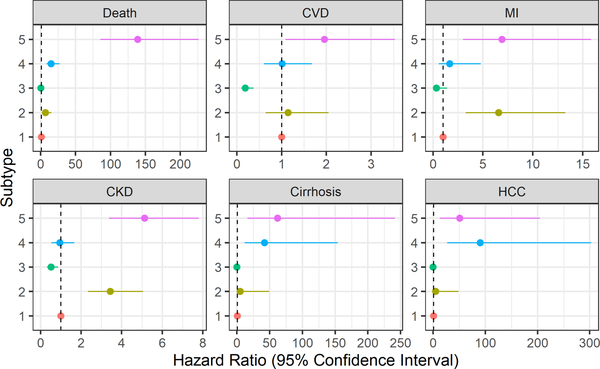
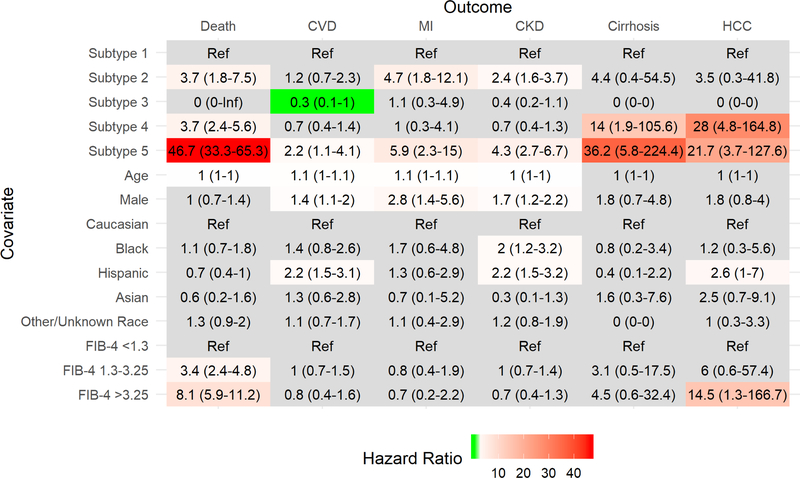
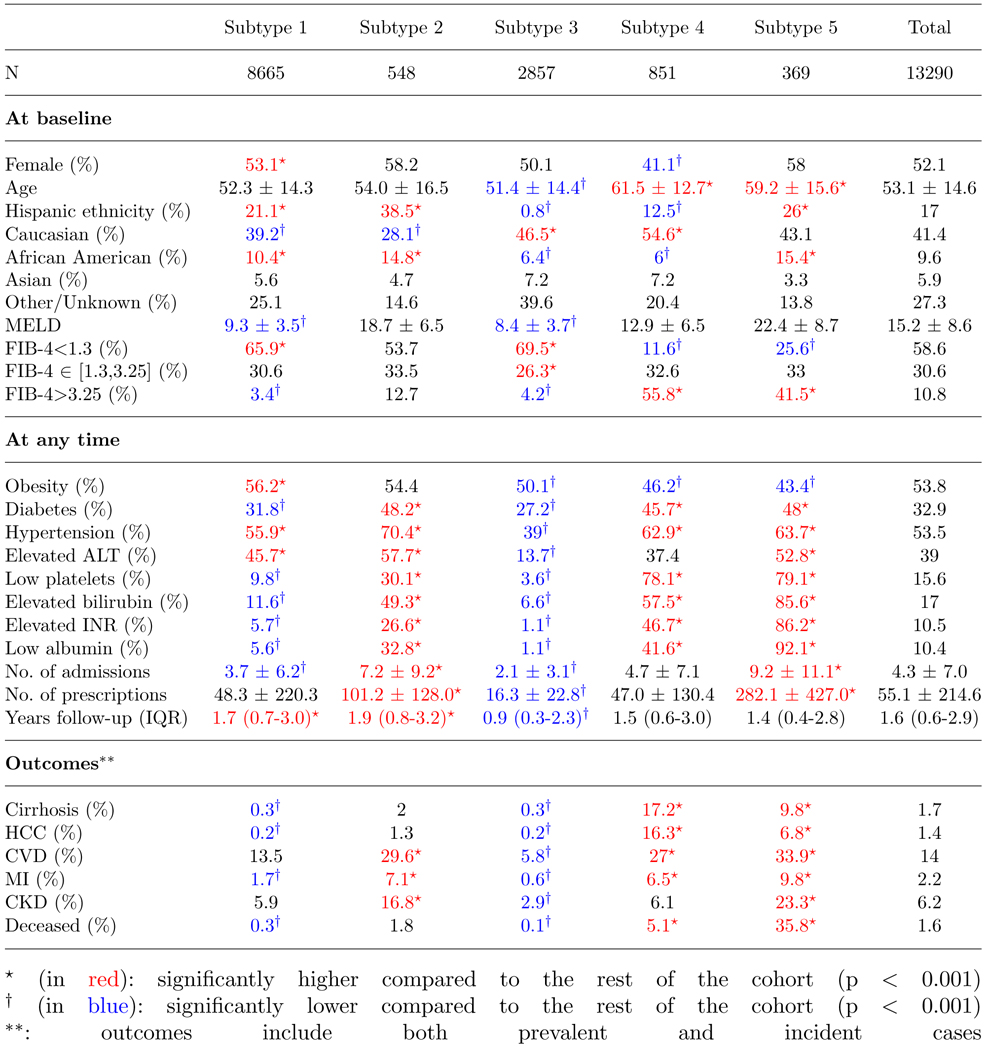
Description:Non-alcoholic fatty liver disease (NAFLD) is a complex heterogeneous disease which affects more than 20% of the population worldwide. Some subtypes of NAFLD have been clinically identified using hypothesis-driven methods. In this study, we used data mining techniques to search for subtypes in an unbiased fashion. Using electronic signatures of the disease, we identified a cohort of 13,290 patients with NAFLD from a hospital database. We gathered clinical data from multiple sources and applied unsupervised clustering to identify five subtypes among this cohort. Descriptive statistics and survival analysis showed that the subtypes were clinically distinct and were associated with different rates of death, cirrhosis, hepatocellular carcinoma, chronic kidney disease, cardiovascular disease, and myocardial infarction. Novel disease subtypes identified in this manner could be used to risk-stratify patients and guide management.
-
Subjects:
-
Source:Pac Symp Biocomput. 25:91-102
-
Pubmed ID:31797589
-
Pubmed Central ID:PMC7043281
-
Document Type:
-
Funding:
-
Volume:25
-
Collection(s):
-
Main Document Checksum:urn:sha256:0c905117dc23d1ca0384dba0a2af94b1bf964f447f3ad7ec602f9fc4b6f6b38b
-
Download URL:
-
File Type:
 [PDF
- 1.35 MB
]
[PDF
- 1.35 MB
]
Supporting Files


File Language:
English
ON THIS PAGE



CDC STACKS serves as an archival repository of CDC-published products including
scientific findings,
journal articles, guidelines, recommendations, or other public health information authored or
co-authored by CDC or funded partners.
As a repository, CDC STACKS retains documents in their original published format to ensure public access to scientific information.
As a repository, CDC STACKS retains documents in their original published format to ensure public access to scientific information.
You May Also Like
COLLECTION
CDC Public Access