



Safety climate, hearing climate and hearing protection device use among transportation road maintainers
Supporting Files

-
May 19 2019 ; 7-2019
-
Available in CDC Stacks on 2020-07-01T00:00:00Z
File Language:
English
Details
-
Alternative Title:Am J Ind Med
-
Personal Author:
-
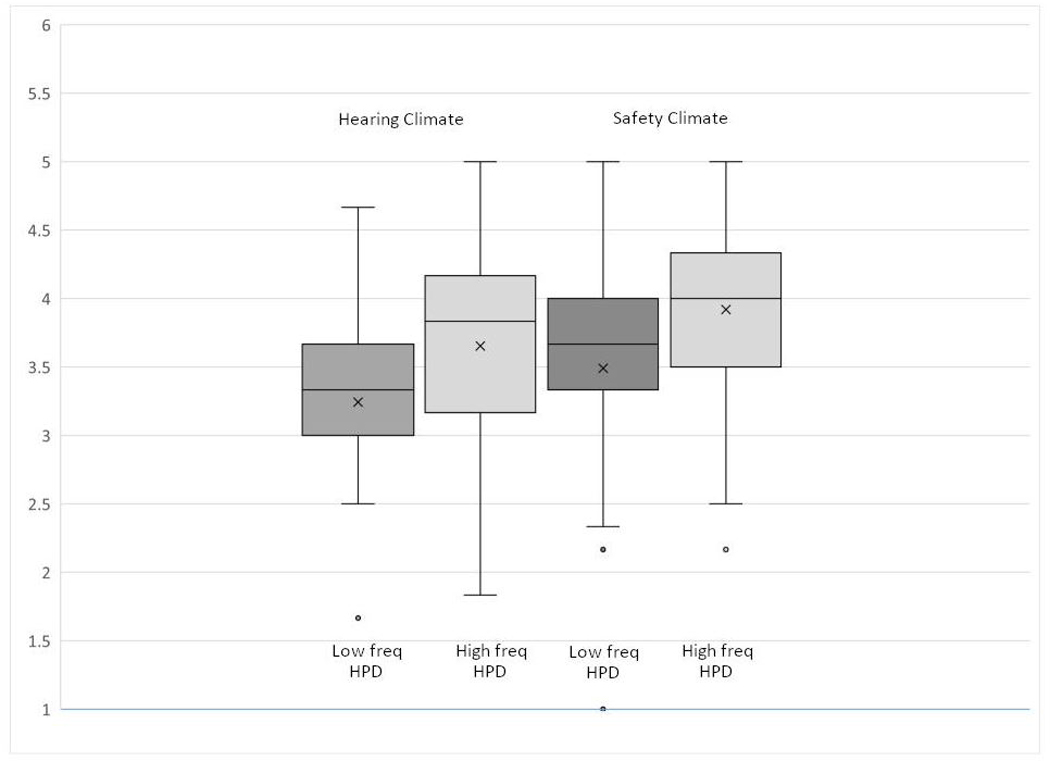
Description:Background: ; It is important to understand workplace factors including safety climate that influence hearing protection device (HPD) use. We sought to characterize and investigate the association between HPD use, safety climate, and hearing climate, a new climate measure specific to hearing. ; Methods: ; Using a participatory, Total Worker Health® approach, a survey was developed and distributed among transportation ‘maintainers’ who perform road maintenance and repair. A new hearing climate measure was designed by adapting a safety climate measure. HPD use was assessed by asking workers how often they wear HPD while in noise. The differences in safety climate and hearing climate were compared by frequency of HPD use using ANOVA. Log binomial regression models were used to identify if safety climate and hearing climate predict the prevalence of HPD use. ; Results: ; Among 166 maintainers, 54% reported always or almost always wearing HPD (high frequency). As compared to low frequency, high frequency HPD users reported a statistically significant higher safety climate (mean (std) of 3.94(0.65) versus 3.64 (0.65), p=0.004) and hearing climate (mean (std) of 3.78 (0.75) versus 3.38 (0.57), p=0.003). Hearing climate (p=0.03), but not safety climate (p=0.40), was a statistically significant predictor of increased prevalence of HPD use. ; Conclusions: ; Hearing climate predicts frequency of HPD use and may be a useful measure when assessing and improving hearing conservation programs. Results from this study provide baseline, pre-intervention hearing climate and HPD use frequencies that are expected to increase subsequent to the implementation of a hearing health intervention.
-
Subjects:
-
Source:Am J Ind Med. 62(7):590-599
-
Pubmed ID:31104314
-
Pubmed Central ID:PMC7031859
-
Document Type:
-
Funding:
-
Volume:62
-
Issue:7
-
Download URL:
-
File Type:
 [PDF - 636.33 KB]
 -
Collection(s):
-
Main Document Checksum:urn:sha256:b380fe348ffaf229802b8760d54e93f5130920632f34e206b9006e4b37c9f0a0
Supporting Files


File Language:
English
 Was this page helpful?
 Found an issue?




CDC STACKS serves as an archival repository of CDC-published products including
scientific findings, journal articles, guidelines, recommendations, or other public health information authored or
co-authored by CDC or funded partners.
As a repository, CDC STACKS retains documents in their original published format to ensure public access to scientific information.
As a repository, CDC STACKS retains documents in their original published format to ensure public access to scientific information.
You May Also Like
COLLECTION
CDC Public Access