



Traumatic Brain Injury–Related Deaths by Race/Ethnicity, Sex, Intent, and Mechanism of Injury — United States, 2000–2017
Supporting Files
Public Domain

-
November 22 2019
File Language:
English
Details
-
Journal Article:Morbidity and Mortality Weekly Report (MMWR)
-
Personal Author:
-
Corporate Authors:
-
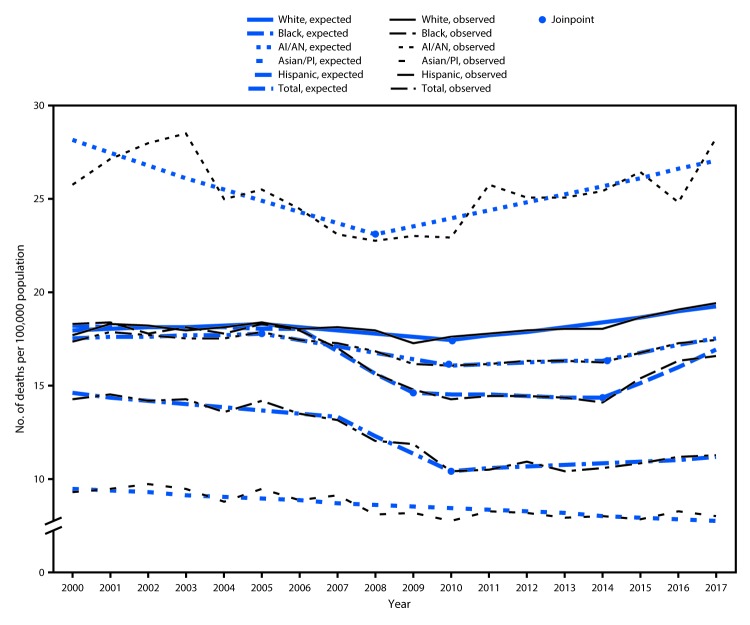
Description:Traumatic brain injury (TBI) affects the lives of millions of Americans each year (1). To describe the Trends in TBI-related deaths among different racial/ethnic groups and by sex, CDC analyzed death data from the National Vital Statistics System (U.S.) (NVSS) over an 18-year period (2000-2017). Injuries were also categorized by intent, and unintentional injuries were further categorized by mechanism of injury. In 2017, TBI contributed to 61,131 deaths in the United States, representing 2.2% of approximately 2.8 million deaths that year. From 2015 to 2017, 44% of TBI-related deaths were categorized as intentional injuries (i.e., homicides or suicides). The leading category of TBI-related death varied over time and by race/ethnicity. For example, during the last 10 years of the study period, suicide surpassed unintentional motor vehicle crashes as the leading category of TBI-related death. This shift was in part driven by a 32% increase in TBI-related suicide deaths among non-Hispanic whites. Firearm injury was the underlying mechanism of injury in nearly all (97%) TBI-related suicides among all groups. An Analysis of TBI-related death rates by sex and race/ethnicity found that TBI-related deaths were significantly higher among males and persons who were American Indians/Alaska Natives (AI/ANs) than among all other groups across all years. Other leading categories of TBI-related deaths included unintentional motor vehicle crashes, unintentional falls, and homicide. Understanding the leading contributors to TBI-related death and identifying groups at increased risk is important in preventing this injury. Broader implementation of evidence-based TBI Prevention efforts for the leading categories of injury, such as those aimed at stemming the significant increase in TBI-related deaths from suicide, are warranted.
-
Subjects:
-
Source:MMWR Morbidity Mortal Weekly Rep. 68(46):1050-1056
-
Series:
-
ISSN:0149-2195 (print) ; 1545-861X (digital)
-
Pubmed ID:31751321
-
Pubmed Central ID:PMC6871899
-
Document Type:
-
Genre:
-
Place as Subject:
-
Pages in Document:7 pdf pages
-
Volume:68
-
Issue:46
-
Download URL:
-
File Type:
 [PDF - 625.66 KB]
 -
Collection(s):
-
Main Document Checksum:urn:sha-512:012a521349ea0a93419ac60b88df36447be544b0cc7088cce9bfd49ece6dfdd7ace8e282ed5bef9c98d39f3427f8bc5b158e47697fa8acd3a5b3cc2172f61a17
Supporting Files


File Language:
English
 Was this page helpful?
 Found an issue?


CDC STACKS serves as an archival repository of CDC-published products including
scientific findings, journal articles, guidelines, recommendations, or other public health information authored or
co-authored by CDC or funded partners.
As a repository, CDC STACKS retains documents in their original published format to ensure public access to scientific information.
As a repository, CDC STACKS retains documents in their original published format to ensure public access to scientific information.
You May Also Like
COLLECTION
Morbidity and Mortality Weekly Report (MMWR)