


Design, implementation, and analysis considerations for cluster-randomized trials in infection control and hospital epidemiology: A systematic review
Supporting Files

-
May 02 2019
-
File Language:
English
Details
-
Alternative Title:Infect Control Hosp Epidemiol
-
Personal Author:
-
Corporate Authors:
-
Description:Background:
In cluster-randomized trials (CRT), groups rather than individuals are randomized to interventions. The aim of this study was to present critical design, implementation, and analysis issues to consider when planning a CRT in the healthcare setting and to synthesize characteristics of published CRT in the field of healthcare epidemiology.
Methods:
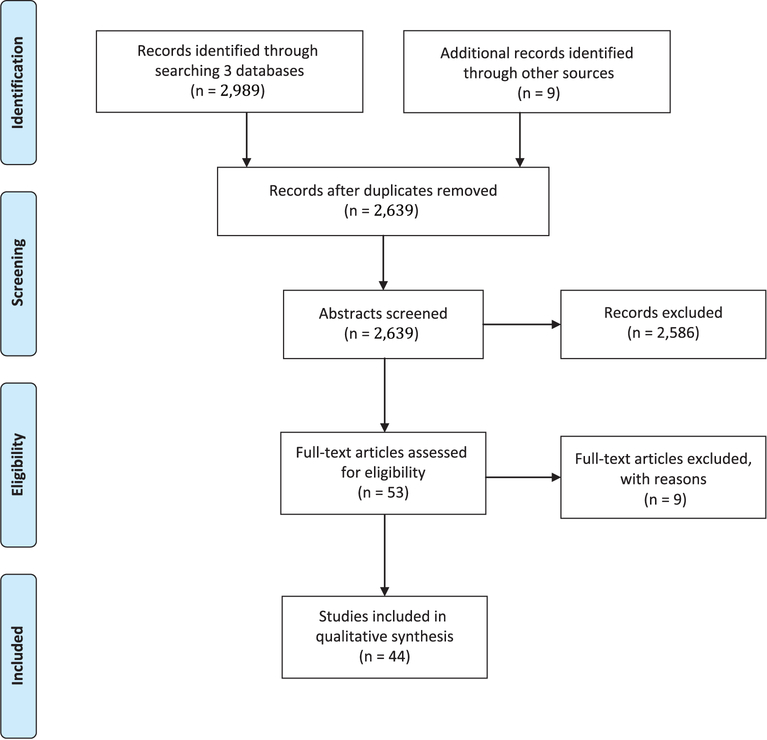
A systematic review was conducted to identify CRT with infection control outcomes.
Results:
We identified the following 7 epidemiological principles: (1) identify design type and justify the use of CRT; (2) account for clustering when estimating sample size and report intraclass correlation coefficient (ICC)/coefficient of variation (CV); (3) obtain consent; (4) define level of inference; (5) consider matching and/or stratification; (6) minimize bias and/or contamination; and (7) account for clustering in the analysis. Among 44 included studies, the most common design was CRT with crossover (n = 15, 34%), followed by parallel CRT (n = 11, 25%) and stratified CRT (n = 7, 16%). Moreover, 22 studies (50%) offered justification for their use of CRT, and 20 studies (45%) demonstrated that they accounted for clustering at the design phase. Only 15 studies (34%) reported the ICC, CV, or design effect. Also, 15 studies (34%) obtained waivers of consent, and 7 (16%) sought consent at the cluster level. Only 17 studies (39%) matched or stratified at randomization, and 10 studies (23%) did not report efforts to mitigate bias and/or contamination. Finally, 29 studies (88%) accounted for clustering in their analyses.
Conclusions:
We must continue to improve the design and reporting of CRT to better evaluate the effectiveness of infection control interventions in the healthcare setting.
-
Subjects:
-
Source:Infect Control Hosp Epidemiol. 40(6):686-692
-
Pubmed ID:31043183
-
Pubmed Central ID:PMC6897299
-
Document Type:
-
Funding:
-
Volume:40
-
Issue:6
-
Collection(s):
-
Main Document Checksum:urn:sha256:0d9efa3df9918d8b8c9f10f5eaa6a685014631ec3a0c093211b55883dbf6923a
-
Download URL:
-
File Type:
 [PDF
- 150.49 KB
]
[PDF
- 150.49 KB
]


File Language:
English
ON THIS PAGE


CDC STACKS serves as an archival repository of CDC-published products including
scientific findings,
journal articles, guidelines, recommendations, or other public health information authored or
co-authored by CDC or funded partners.
As a repository, CDC STACKS retains documents in their original published format to ensure public access to scientific information.
As a repository, CDC STACKS retains documents in their original published format to ensure public access to scientific information.
You May Also Like
COLLECTION
CDC Public Access