


Epidemiology of a Mumps Outbreak in a Highly Vaccinated Island Population and Use of Third Measles-Mumps-Rubella Vaccine Dose for Outbreak Control– Guam 2009—2010
Supporting Files

-
Apr 2013
-
File Language:
English
Details
-
Journal Article:Pediatr Infect Dis J
-
Personal Author:Nelson, George E. ; Aguon, Annette ; Valencia, Engracia Quiambao ; Oliva, Rita ; Guerrero, Michele Leon ; Reyes, Richard ; Lizama, Anna ; Diras, Daryl ; Mathew, Annakutty ; Camacho, E. Jessica ; Monforte, Moryne-Nicole ; Chen, Tai-Ho ; Mahamud, Abdirahman ; Kutty, Preeta K. ; Hickman, Carole ; Bellini, William J. ; Seward, Jane ; Gallagher, Kathleen ; Fiebelkorn, Amy Parker
-
Description:Background
Despite high two-dose measles-mumps-rubella (MMR) vaccine coverage, a large mumps outbreak occurred on the U.S. Territory of Guam during 2009–2010, primarily in school-aged children.
Methods
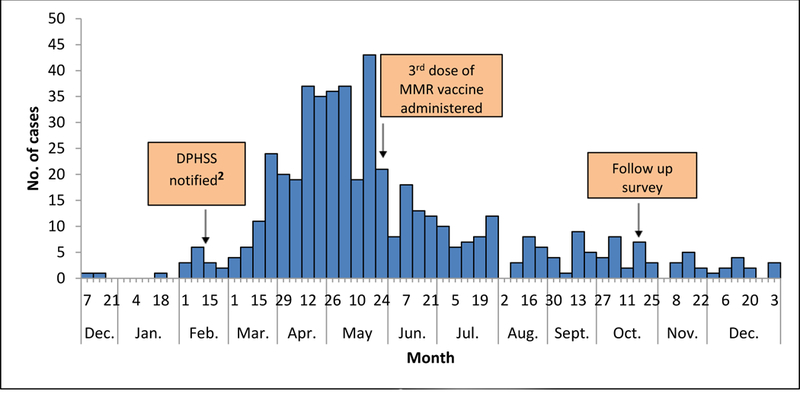
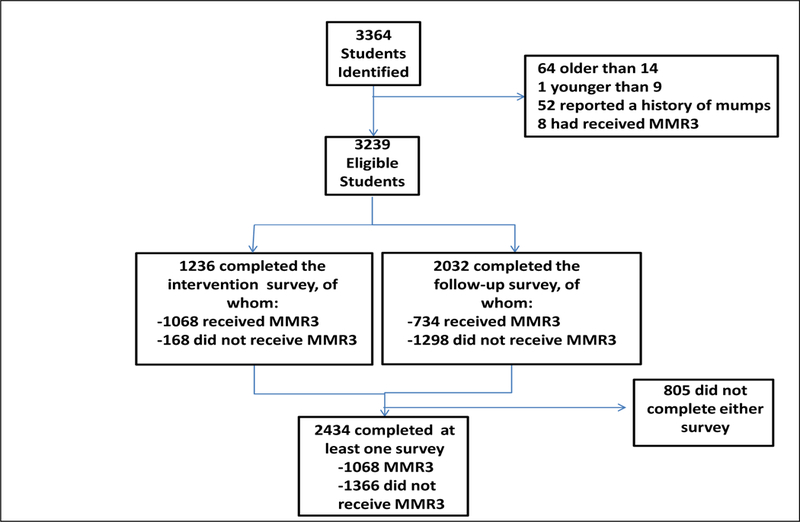
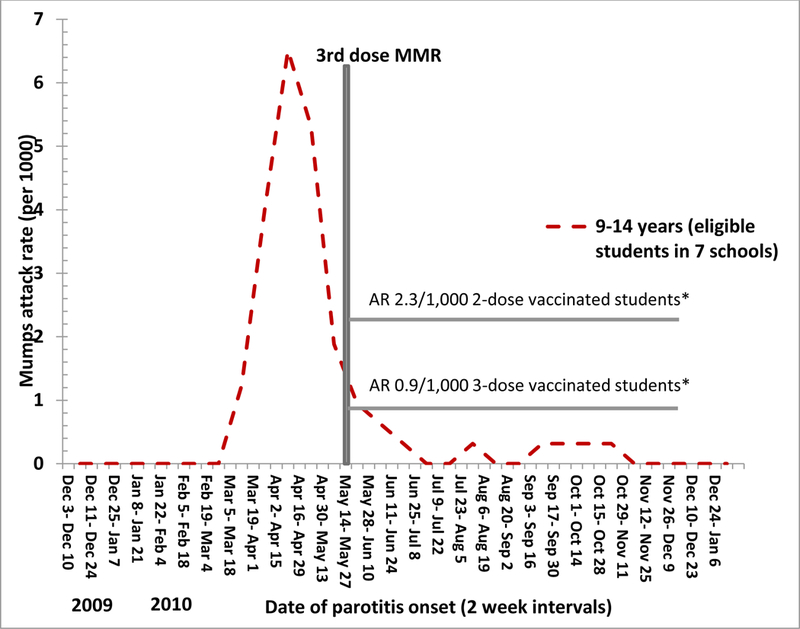
We implemented active surveillance in April 2010 during the outbreak peak and characterized the outbreak epidemiology. We administered third doses of MMR vaccine to eligible students aged 9–14 years in 7 schools with the highest attack rates (ARs) between 5/18/2010—5/21/2010. Baseline surveys, follow-up surveys, and case-reports were used to determine mumps ARs. Adverse events post-vaccination were monitored.
Results
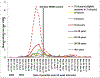
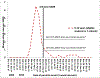
Between 12/1/2009—12/31/2010, 505 mumps cases were reported. Self-reported Pohnpeians and Chuukese had the highest relative risks (54.7 and 19.7, respectively) and highest crowding indices (mean: 3.1 and 3.0 persons/bedroom, respectively). Among 287 (57%) school-aged case-patients, 270 (93%) had ≥2 MMR doses. A third MMR dose was administered to 1068 (33%) eligible students. Three-dose vaccinated students had an AR of 0.9/1000 compared to 2.4/1000 among two-dose vaccinated students >1 incubation period post-intervention, but the difference was not significant (p= 0.67). No serious adverse events were reported.
Conclusions
This mumps outbreak occurred in a highly vaccinated population. The highest ARs occurred in ethnic minority populations with the highest household crowding indices. After the third dose MMR intervention in highly affected schools, the AR in three-dose MMR recipients was 60% lower than two-dose vaccine recipients, but the difference was not statistically significant and the intervention occurred after the outbreak peaked. This outbreak may have persisted due to crowding at home and high student contact rates.
-
Subjects:
-
Source:Pediatr Infect Dis J. 32(4):374-380
-
DOI:
-
Pubmed ID:23099425
-
Pubmed Central ID:PMC6893844
-
Document Type:
-
Funding:
-
Genre:
-
Place as Subject:
-
Volume:32
-
Issue:4
-
Collection(s):
-
Main Document Checksum:urn:sha-512:045eef8fb34349a4d4855345ee5582252a7eb3276ed450b3f8b730495eb835c37920e227a4b7b9e3b6fab7203a412c2de25f915eab163653b923195e1dc59c8e
-
Download URL:
-
File Type:
 [PDF
- 473.54 KB
]
[PDF
- 473.54 KB
]
Supporting Files


File Language:
English
ON THIS PAGE


CDC STACKS serves as an archival repository of CDC-published products including
scientific findings,
journal articles, guidelines, recommendations, or other public health information authored or
co-authored by CDC or funded partners.
As a repository, CDC STACKS retains documents in their original published format to ensure public access to scientific information.
As a repository, CDC STACKS retains documents in their original published format to ensure public access to scientific information.
You May Also Like
COLLECTION
CDC Public Access