



Toilet Training in Fragile X Syndrome
Supporting Files

-
December 2019
-
Available in CDC Stacks on December 01, 2020, 12:00 AM
File Language:
English
Details
-
Alternative Title:J Dev Behav Pediatr
-
Personal Author:
-
Description:Objective
To characterize bladder and bowel toileting skill acquisition in children with Fragile X syndrome (FXS) and to identify associated demographic, behavioral and clinical factors.
Method
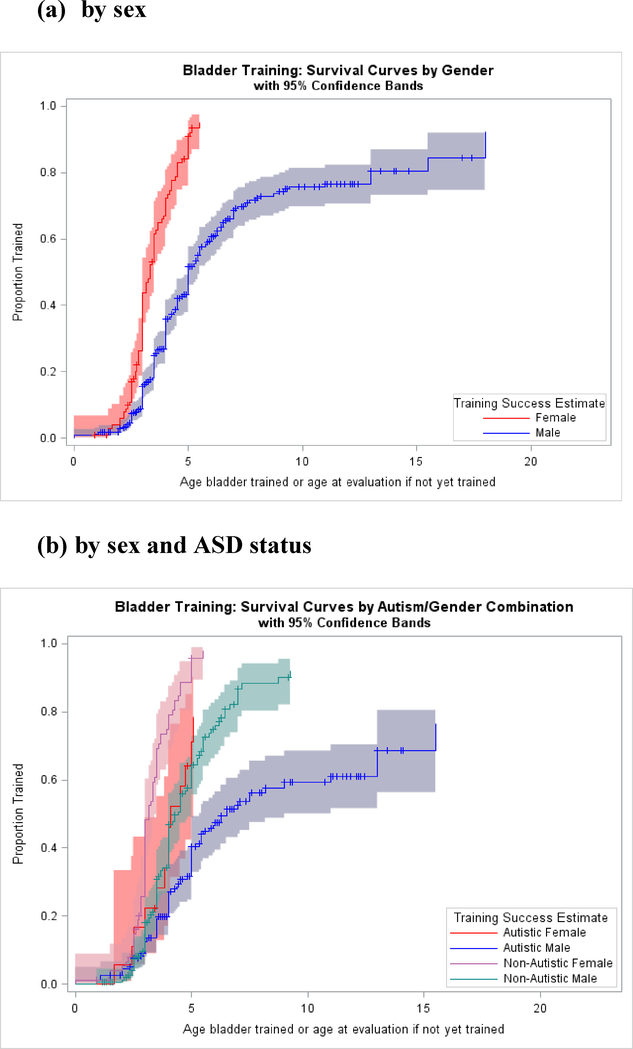
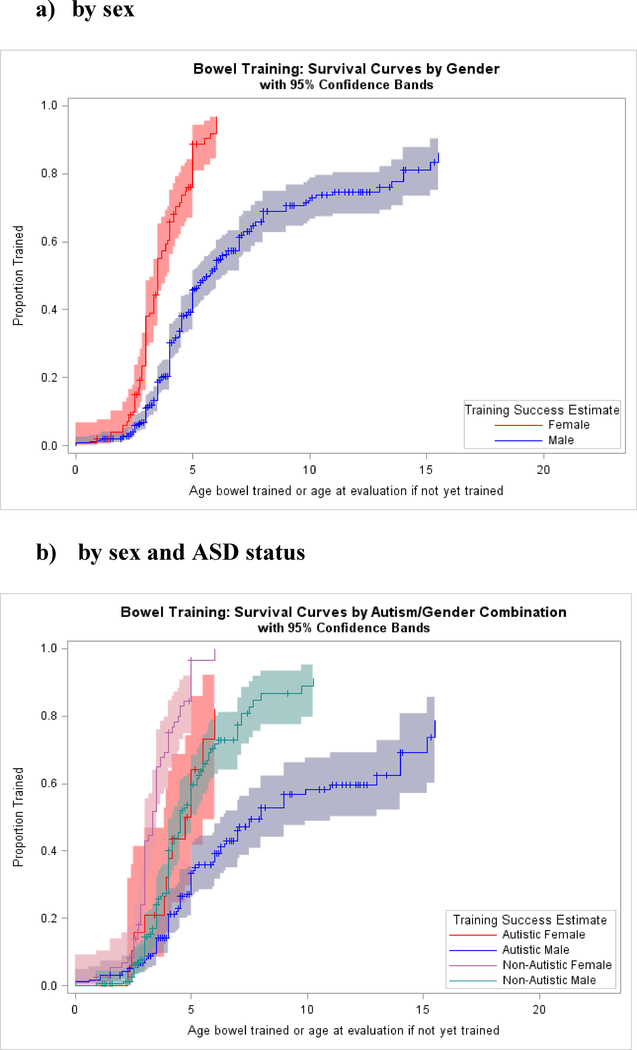
Using baseline data from the Fragile X Online Registry with Accessible Research Database (FORWARD), bivariate analyses and logistic regression models were used to identify differences between subjects who were and were not bowel and/or bladder trained by age 10 years. Cox proportional hazards models were used to assess the rate of completion of toilet training as a function of sex and autism spectrum disorder (ASD) diagnosis.
Results
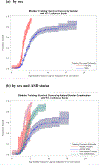
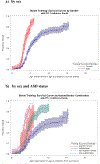
In bivariate analyses, male sex, lower language level, inability to write one’s name, more impaired intellectual level, ASD, and more severe behavioral deficits all predicted lack of bladder training (n=313, p<0.001) and bowel training (n=300, p=0.0004 to 0.0001) by age 10. In logistic regression models, lower level of language acquisition (p<0. 001) and higher Aberrant Behavior Checklist Irritability scores (p<0.04) were associated with lower odds of bladder training by age 10. Lower level of language acquisition (p<0. 001) and ASD (p<0.025) were associated with lower odds of bowel training by age 10. For both bladder and bowel training, Cox proportional hazard models indicated that delayed training was associated with male gender, lower levels of language acquisition and ASD for both bladder training (n=486; p<.001) and bowel training (n=472; p<.001).
Conclusion
These findings emphasize the importance of both slower language development and ASD diagnosis in predicting bowel and bladder training delays, and can be used to develop and evaluate targeted approaches to toilet training based on sex, ASD diagnosis, and other clinical features identified in this study. -
Subjects:
-
Source:J Dev Behav Pediatr. 40(9):751-761
-
Pubmed ID:31593026
-
Pubmed Central ID:PMC6878164
-
Document Type:
-
Funding:U01DD001189/ACL/ACL HHS/United States ; U01 DD000231/DD/NCBDD CDC HHS/United States ; U19 DD000753/DD/NCBDD CDC HHS/United States ; U01 DD001188/DD/NCBDD CDC HHS/United States ; U01DD001186/ACL/ACL HHS/United States ; U01 DD001189/DD/NCBDD CDC HHS/United States ; U01 DD001190/DD/NCBDD CDC HHS/United States
-
Volume:40
-
Issue:9
-
Download URL:
-
File Type:
 [PDF - 552.80 KB]
 -
Collection(s):
-
Main Document Checksum:urn:sha256:17e4d13d4fa8713fc28fc3e72f03d96276b67628d630c8e7e2b11f9ce5282935
Supporting Files


File Language:
English
 Was this page helpful?
 Found an issue?

CDC STACKS serves as an archival repository of CDC-published products including
scientific findings, journal articles, guidelines, recommendations, or other public health information authored or
co-authored by CDC or funded partners.
As a repository, CDC STACKS retains documents in their original published format to ensure public access to scientific information.
As a repository, CDC STACKS retains documents in their original published format to ensure public access to scientific information.
You May Also Like
COLLECTION
CDC Public Access