


Relationship of Climate, Geography, and Geology to the Incidence of Rift Valley Fever in Kenya during the 2006–2007 Outbreak
Supporting Files
Public Domain

-
Feb 2012
-
File Language:
English
Details
-
Alternative Title:Am J Trop Med Hyg
-
Personal Author:
-
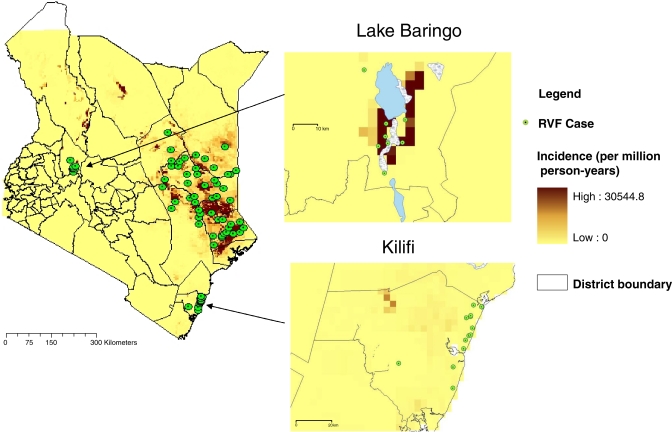
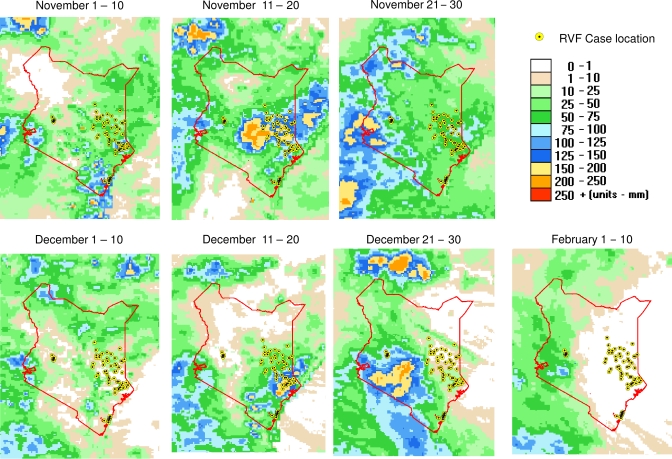
Description:We estimated Rift Valley fever (RVF) incidence as a function of geological, geographical, and climatological factors during the 2006-2007 RVF epidemic in Kenya. Location information was obtained for 214 of 340 (63%) confirmed and probable RVF cases that occurred during an outbreak from November 1, 2006 to February 28, 2007. Locations with subtypes of solonetz, calcisols, solonchaks, and planosols soil types were highly associated with RVF occurrence during the outbreak period. Increased rainfall and higher greenness measures before the outbreak were associated with increased risk. RVF was more likely to occur on plains, in densely bushed areas, at lower elevations, and in the Somalia acacia ecological zone. Cases occurred in three spatial temporal clusters that differed by the date of associated rainfall, soil type, and land usage.
-
Subjects:
-
Source:Am J Trop Med Hyg. 2012; 86(2):373-380.
-
Document Type:
-
Place as Subject:
-
Volume:86
-
Issue:2
-
Collection(s):
-
Main Document Checksum:urn:sha256:c88fe668eaa3b1271c18056da461366d1fec0d3f6337ef7c8c367508440bf7d8
-
Download URL:
-
File Type:
 [PDF
- 1.44 MB
]
[PDF
- 1.44 MB
]
Supporting Files


File Language:
English
ON THIS PAGE

CDC STACKS serves as an archival repository of CDC-published products including
scientific findings,
journal articles, guidelines, recommendations, or other public health information authored or
co-authored by CDC or funded partners.
As a repository, CDC STACKS retains documents in their original published format to ensure public access to scientific information.
As a repository, CDC STACKS retains documents in their original published format to ensure public access to scientific information.
You May Also Like
COLLECTION
CDC Public Access