



Effect of Time of Day of Infection on Chlamydia Infectivity and Pathogenesis
Supporting Files

-
August 06 2019
-
Available in CDC Stacks on August 06, 2019, 12:00 AM
File Language:
English
Details
-
Alternative Title:Sci Rep
-
Personal Author:
-
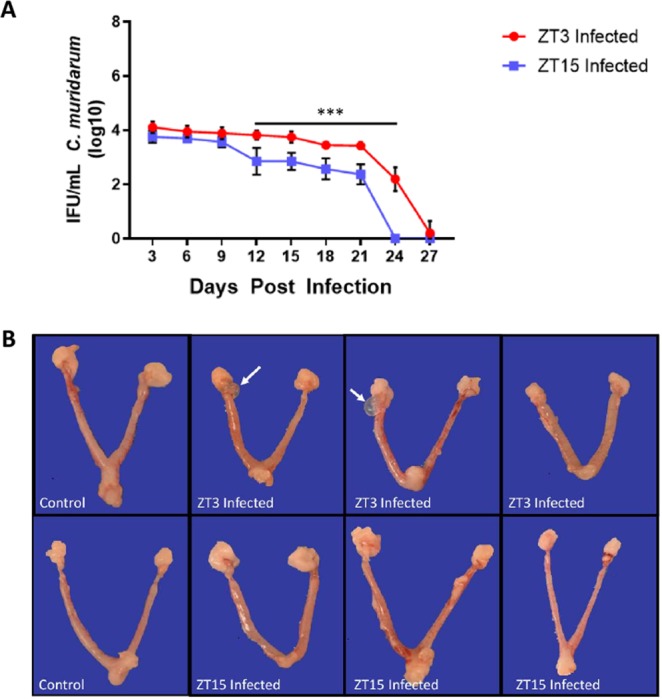
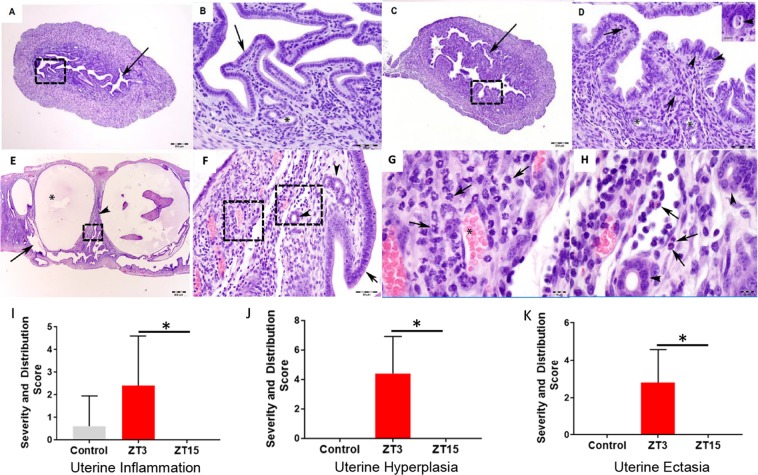
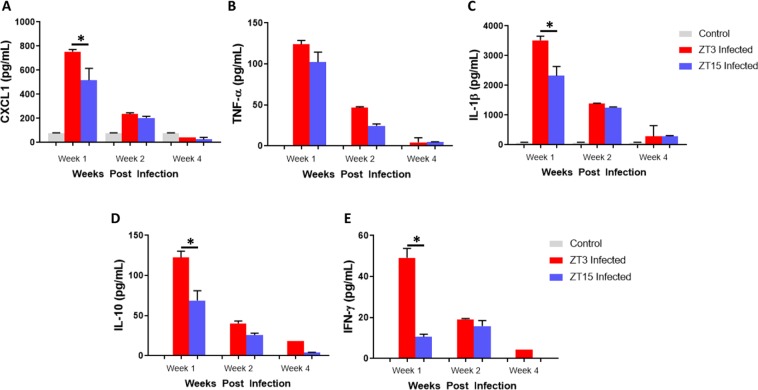
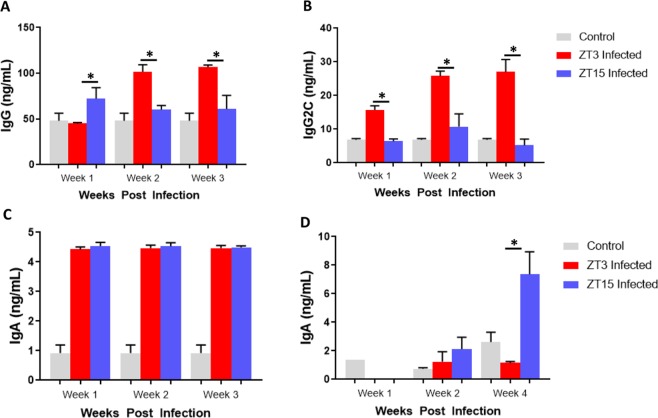
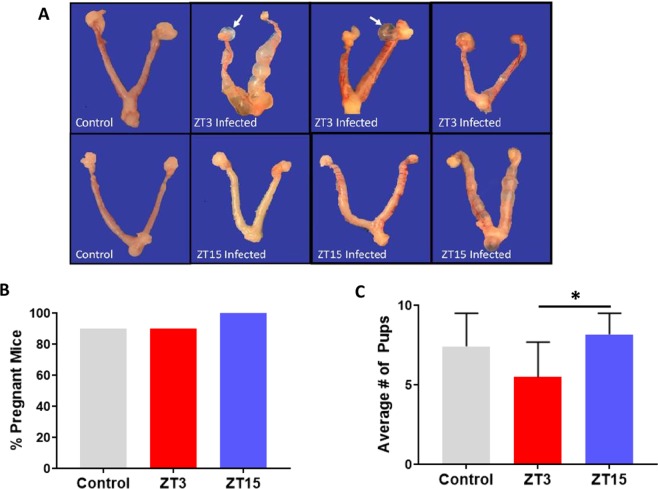
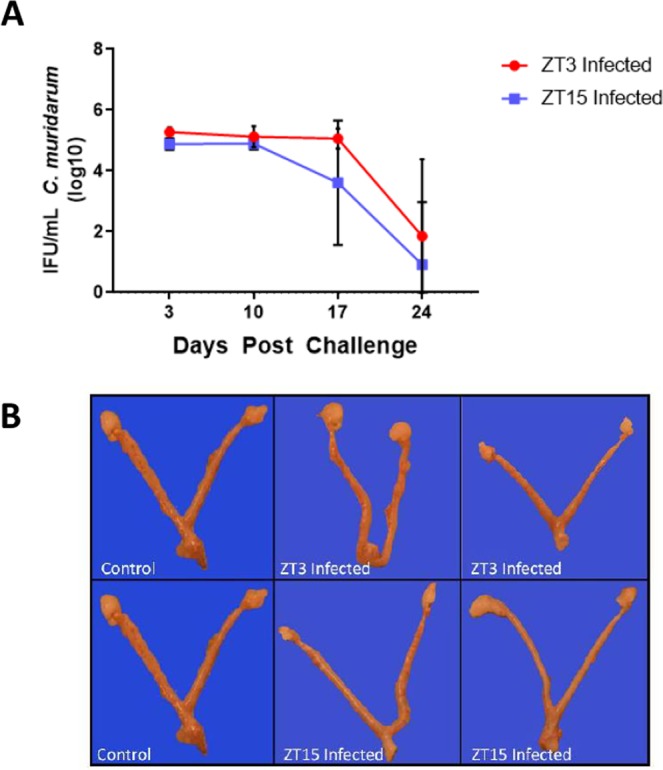
Description:Genital chlamydia infection in women causes complications such as pelvic inflammatory disease and tubal factor infertility, but it is unclear why some women are more susceptible than others. Possible factors, such as time of day of chlamydia infection on chlamydial pathogenesis has not been determined. We hypothesised that infections during the day, will cause increased complications compared to infections at night. Mice placed under normal 12:12 light: dark (LD) cycle were infected intravaginally with Chlamydia muridarum either at zeitgeber time 3, ZT3 and ZT15. Infectivity was monitored by periodic vaginal swabs and chlamydiae isolation. Blood and vaginal washes were collected for host immunologic response assessments. The reproductive tracts of the mice were examined histopathologically, and fertility was determined by embryo enumeration after mating. Mice infected at ZT3 shed significantly more C. muridarum than mice infected at ZT15. This correlated with the increased genital tract pathology observed in mice infected at ZT3. Mice infected at ZT3 were less fertile than mice infected at ZT15. The results suggest that the time of day of infection influences chlamydial pathogenesis, it indicates a possible association between complications from chlamydia infection and host circadian clock, which may lead to a better understanding of chlamydial pathogenesis.
-
Subjects:
-
Source:Sci Rep. 9
-
Pubmed ID:31388084
-
Pubmed Central ID:PMC6684580
-
Document Type:
-
Funding:SC1 AI103041/AI/NIAID NIH HHS/United States ; 1SC1GM109861/U.S. Department of Health & Human Services ; NIH ; National Institute of General Medical Sciences (NIGMS)/ ; U54 MD007588/MD/NIMHD NIH HHS/United States ; S21MD000101/U.S. Department of Health & Human Services ; NIH ; National Institute on Minority Health and Health Disparities (NIMHD)/ ; 1SC2HD086066-01A1/U.S. Department of Health & Human Services ; NIH ; Eunice Kennedy Shriver National Institute of Child Health and Human Development (NICHD)/ ; G12 RR003034/RR/NCRR NIH HHS/United States ; 1R35GM127044/U.S. Department of Health & Human Services ; NIH ; National Institute of General Medical Sciences (NIGMS)/ ; 8G12MD007602/U.S. Department of Health & Human Services ; NIH ; National Institute on Minority Health and Health Disparities (NIMHD)/ ; R35 GM127044/GM/NIGMS NIH HHS/United States ; U54MD007588/U.S. Department of Health & Human Services ; NIH ; National Institute on Minority Health and Health Disparities (NIMHD)/ ; UL1 TR002378/TR/NCATS NIH HHS/United States ; S21 MD000101/MD/NIMHD NIH HHS/United States ; 1SC1AII03041-01A1/U.S. Department of Health & Human Services ; NIH ; National Institute of General Medical Sciences (NIGMS)/ ; G12 MD007602/MD/NIMHD NIH HHS/United States ; SC2 HD086066/HD/NICHD NIH HHS/United States ; SC1 GM109861/GM/NIGMS NIH HHS/United States
-
Volume:9
-
Download URL:
-
File Type:
 [PDF - 1.76 MB]
 -
Collection(s):
-
Main Document Checksum:urn:sha256:66f88020b6263a99c107088b8306751666e064433b7f99d2aa288fa0d765cab1
Supporting Files


File Language:
English
 Was this page helpful?
 Found an issue?





CDC STACKS serves as an archival repository of CDC-published products including
scientific findings, journal articles, guidelines, recommendations, or other public health information authored or
co-authored by CDC or funded partners.
As a repository, CDC STACKS retains documents in their original published format to ensure public access to scientific information.
As a repository, CDC STACKS retains documents in their original published format to ensure public access to scientific information.
You May Also Like
COLLECTION
CDC Public Access