



The role of point-of-care viral load monitoring in achieving the target of 90% suppression in HIV-infected patients in Nigeria: study protocol for a randomized controlled trial
Supporting Files

-
May 02 2019
-
Available in CDC Stacks on May 02, 2019, 12:00 AM
File Language:
English
Details
-
Alternative Title:BMC Infect Dis
-
Personal Author:
-
Description:Background
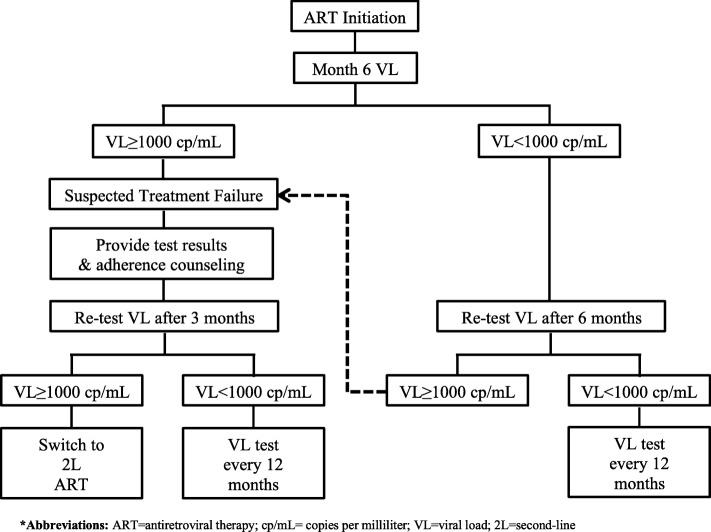
The Joint United Nations Programme on HIV/AIDS 90–90-90 goal envisions 90% of all people receiving antiretroviral therapy to be virally suppressed by 2020. Implied in that goal is that viral load be quantified for all patients receiving treatment, which is a challenging undertaking given the complexity and high cost of standard-of-care viral load testing methods. Recently developed point-of-care viral load testing devices offer new promise to improve access to viral load testing by bringing the test closer to the patient and also returning results faster, often same-day. While manufactures have evaluated point-of-care assays using reference panels, empiric data examining the impact of the new technology against standard-of-care monitoring in low- and middle-income settings are lacking. Our goal in this trial is to compare a point-of-care to standard-of-care viral load test on impact on various clinical outcomes as well to assess the acceptability and feasibility of using the assay in a resource-limited setting.
Methods
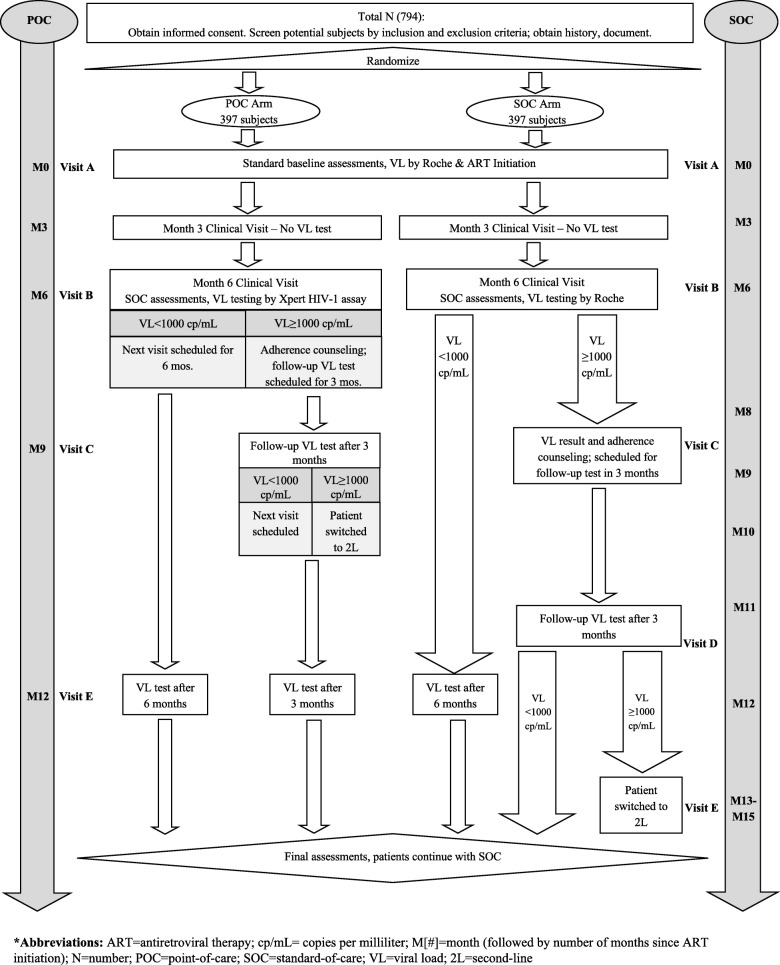
Using a two-arm randomized control trial design, we will enroll 794 patients from two different HIV treatment sites in Nigeria. Patients will be randomized 1:1 for point-of-care or standard-of-care viral load monitoring (397 patients per arm). Following initiation of treatment, viral load will be monitored at patients’ 6- and 12-month follow-up visits using either point-of-care or standard-of-care testing methods, based on trial assignment. The monitoring schedule will follow national treatment guidelines. The primary outcome measure in this trial is proportion of patients with viral suppression at month 12 post-initiation of treatment. The secondary outcome measures encompass acceptability, feasibility, and virologic impact variables.
Discussion
This clinical trial will provide information on the impact of using point-of-care versus standard-of-care viral load testing on patient clinical outcomes; the study will also supply data on the acceptability and feasibility of point-of-care viral load monitoring in a resource-limited setting. If this method of testing is acceptable and feasible, and also superior to standard of care, the results of the trial and the information gathered will inform future scaled implementation and further optimization of the clinic-laboratory network that is critical for monitoring achievement of the 90–90-90 goals.
Trial registration
US National Institutes of Health Clinical Trials.gov: NCT03533868. Date of Registration: 23 May 2018. Protocol Version: 10. Protocol Date: 30 March 2018. -
Subjects:
-
Source:BMC Infect Dis. 19
-
Pubmed ID:31046695
-
Pubmed Central ID:PMC6495593
-
Document Type:
-
Funding:
-
Place as Subject:
-
Location:
-
Volume:19
-
Download URL:
-
File Type:
 [PDF - 1.13 MB]
 -
Collection(s):
-
Main Document Checksum:urn:sha256:646c43a2c531f0ab370b0d16357abc5b20f462f093ca86c49ffc4c9ae2df495f
Supporting Files


File Language:
English
 Was this page helpful?
 Found an issue?

CDC STACKS serves as an archival repository of CDC-published products including
scientific findings, journal articles, guidelines, recommendations, or other public health information authored or
co-authored by CDC or funded partners.
As a repository, CDC STACKS retains documents in their original published format to ensure public access to scientific information.
As a repository, CDC STACKS retains documents in their original published format to ensure public access to scientific information.
You May Also Like
COLLECTION
CDC Public Access