


918. Typhoid Fever in the US Pediatric Population, 1999–2015, and the Potential Benefits of New Vaccines
Supporting Files
Public Domain

-
November 26 2018
-
Details
-
Alternative Title:Open Forum Infect Dis
-
Personal Author:
-
Description:Background
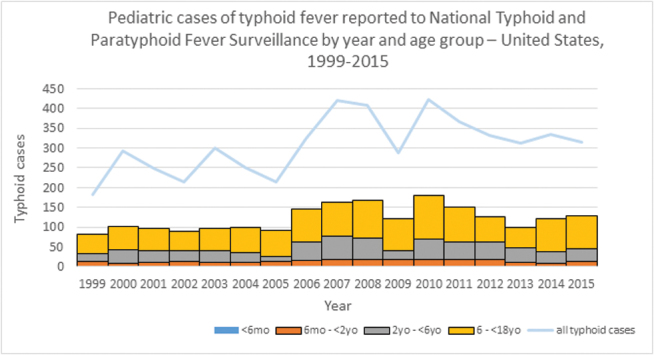
In the United States, typhoid fever is rare. About 300 typhoid cases are reported to CDC annually through the National Typhoid and Paratyphoid Fever Surveillance (NTPFS) system. Most are acquired during international travel and while visiting friends and relatives. CDC recommends pretravel vaccination of at-risk children with one of two currently available vaccines: oral (age ≥6 years) or injectable (age ≥2 years). In anticipation of licensure of new protein-conjugate typhoid vaccines that could be administered to children ≥6 months old, we characterized clinical, epidemiologic, and antimicrobial resistance data of pediatric typhoid fever cases reported to CDC.
Methods
We reviewed laboratory-confirmed Salmonella enterica serotype Typhi infections reported to NTPFS and antimicrobial resistance data on Typhi isolates in the National Antimicrobial Resistance Monitoring System (NARMS) from 1999 to 2015.
Results
Of 2,051 pediatric (≤18 years) cases of typhoid fever, 80% had traveled internationally within 30 days of illness onset (most frequently to South Asia [82%]), 81% were hospitalized (median duration 6 days; range 0–77 days), and none died. Eight hundred twenty-seven (40%) were <6 years old; 219 (26%) were 6 months–2 years old. While 76% of pediatric cases were vaccine eligible (travelers ≥2 years old), only 6% were known to be vaccinated. Of 2,020 isolates tested for antimicrobial susceptibility, 1,211 (60%) had decreased susceptibility or resistance to ciprofloxacin, of which 277 (23%) were also resistant to ampicillin, chloramphenicol, and trimethoprim/sulfamethoxazole (multidrug-resistant [MDR]). None were resistant to ceftriaxone or azithromycin. MDR isolates were more likely in children than adults (16% vs. 9%, P < 0.05) and in travel-associated than domestically acquired cases (16% vs. 6%, P < 0.05).
Conclusion
Among pediatric cases of typhoid fever, 94% of currently vaccine-eligible travelers were unvaccinated. Emphasis on current vaccine indications and an effective pretravel typhoid vaccine for children between 6 months and 2 years old available during routine immunization visits could begin to reduce the burden of disease, and help prevent drug-resistant infections, in this vulnerable age group.
Disclosures
All authors: No reported disclosures.
-
Subjects:
-
Source:Open Forum Infect Dis. 2018; 5(Suppl 1):S26
-
Pubmed Central ID:PMC6252716
-
Document Type:
-
Volume:5
-
Collection(s):
-
Main Document Checksum:urn:sha256:483b1df72fd02ccb8fecd595fd73dc9dd7633e7a6fcd047ab3734c2116d8074c
-
Download URL:
-
File Type:
 [PDF
- 181.17 KB
]
[PDF
- 181.17 KB
]
Supporting Files


ON THIS PAGE

CDC STACKS serves as an archival repository of CDC-published products including
scientific findings,
journal articles, guidelines, recommendations, or other public health information authored or
co-authored by CDC or funded partners.
As a repository, CDC STACKS retains documents in their original published format to ensure public access to scientific information.
As a repository, CDC STACKS retains documents in their original published format to ensure public access to scientific information.
You May Also Like
COLLECTION
CDC Public Access