


Atomic insights into the genesis of cellular filaments by globular proteins
Supporting Files

-
August 03 2018
-
File Language:
English
Details
-
Alternative Title:Nat Struct Mol Biol
-
Personal Author:
-
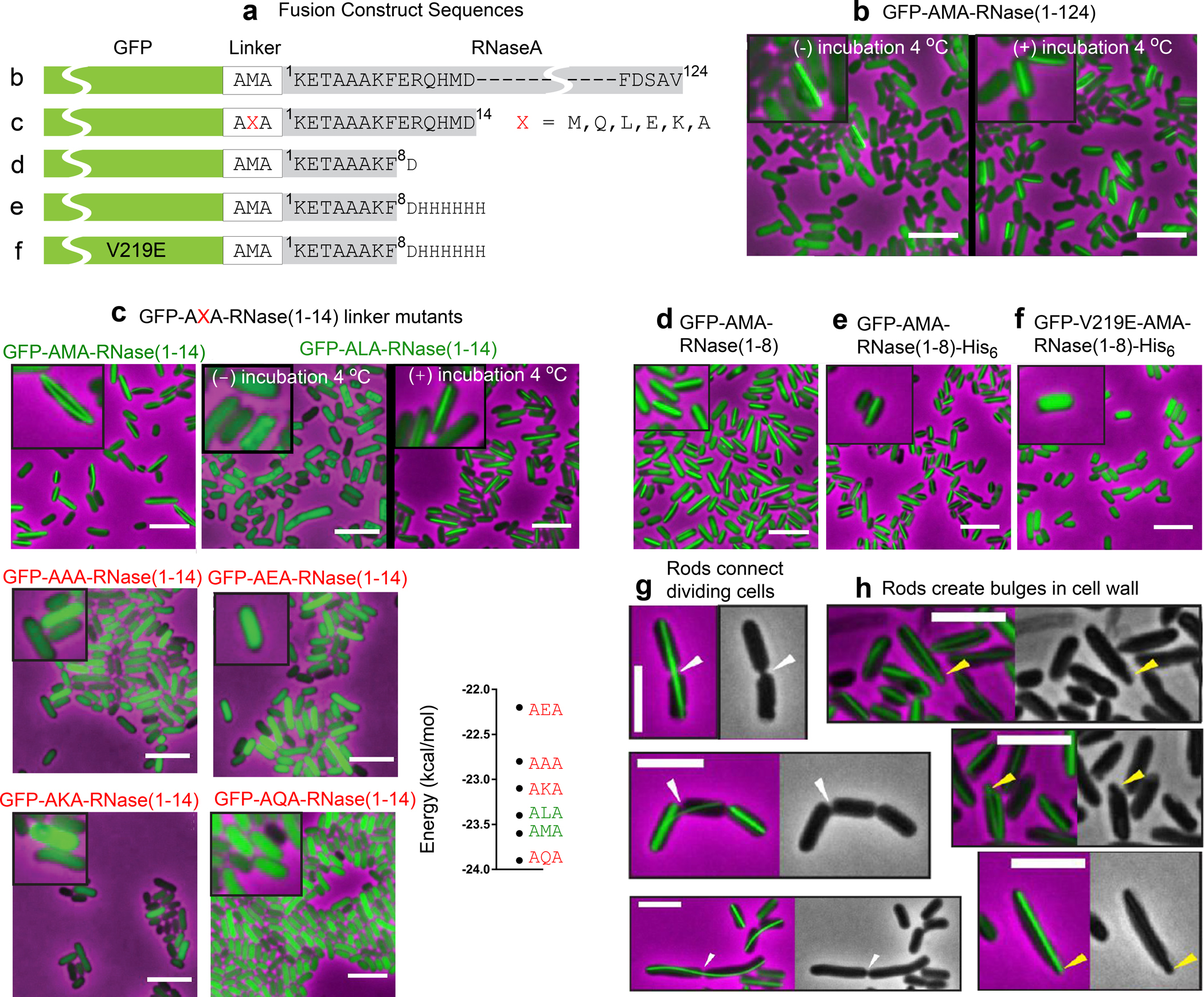
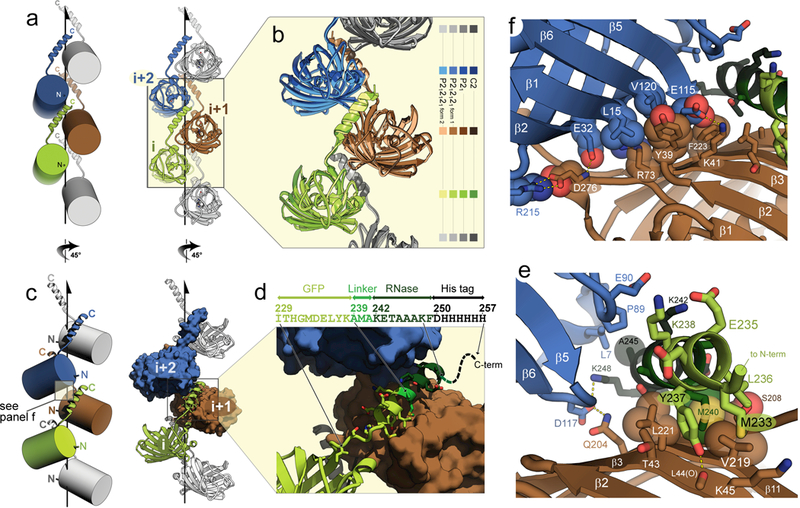
Description:Self-assembly of proteins into filaments, such as actin and tubulin filaments, underlies essential cellular processes in all three domains of life. The early emergence of filaments in evolutionary history suggests that filament genesis might be a robust process. Here we describe the fortuitous construction of GFP fusion proteins that self-assemble as fluorescent polar filaments in Escherichia coli. Filament formation is achieved by appending as few as 12 residues to GFP. Crystal structures reveal that each protomer donates an appendage to fill a groove between the two following protomers along the filament. This exchange of appendages resembles runaway domain swapping but is distinguished by higher efficiency because monomers cannot competitively bind their own appendages. Ample evidence for this 'runaway domain coupling' mechanism in nature suggests it could facilitate the evolutionary pathway from globular protein to polar filament, requiring a minimal extension of protein sequence and no substantial refolding.
-
Subjects:
-
Source:Nat Struct Mol Biol. 25(8):705-714
-
Pubmed ID:30076408
-
Pubmed Central ID:PMC6185745
-
Document Type:
-
Funding:S10 RR029205/NCRR NIH HHS/National Center for Research Resources/United States ; P41 GM103403/NIGMS NIH HHS/National Institute of General Medical Sciences/United States ; Howard Hughes Medical Institute/United States ; R01 GM115941/NIGMS NIH HHS/National Institute of General Medical Sciences/United States ; DP1 OD003806/ODCDC CDC HHS/Office of the Director/United States
-
Volume:25
-
Issue:8
-
Collection(s):
-
Main Document Checksum:urn:sha256:152914e9fe9323ab36e705087a630d277dd4540328e4e284479470d49d4e5a85
-
Download URL:
-
File Type:
 [PDF
- 1.46 MB
]
[PDF
- 1.46 MB
]
Supporting Files


File Language:
English
ON THIS PAGE


CDC STACKS serves as an archival repository of CDC-published products including
scientific findings,
journal articles, guidelines, recommendations, or other public health information authored or
co-authored by CDC or funded partners.
As a repository, CDC STACKS retains documents in their original published format to ensure public access to scientific information.
As a repository, CDC STACKS retains documents in their original published format to ensure public access to scientific information.
You May Also Like
COLLECTION
CDC Public Access