



Sepsis Attributed to Bacterial Contamination of Platelets Associated with a Potential Common Source — Multiple States, 2018
Supporting Files
Public Domain

-
June 14 2019
File Language:
English
Details
-
Journal Article:Morbidity and Mortality Weekly Report (MMWR)
-
Personal Author:Jones, Sydney A. ; Jones, Jefferson M. ; Leung, Vivian ; Nakashima, Allyn K. ; Oakeson, Kelly F. ; Smith, Amanda R. ; Hunter, Robert ; Kim, Janice J. ; Cumming, Melissa ; McHale, Eileen ; Young, Pampee P. ; Fridey, Joy L. ; Kelley, Walter E. ; Stramer, Susan L. ; Wagner, Stephen J. ; West, F. Bernadette ; Herron, Ross ; Snyder, Edward ; Hendrickson, Jeanne E. ; Peaper, David R. ; Gundlapalli, Adi V. ; Langelier, Charles ; Miller, Steve ; Nambiar, Ashok ; Moayeri, Morvarid ; Kamm, Jack ; Moulton-Meissner, Heather ; Annambhotla, Pallavi ; Gable, Paige ; McAllister, Gillian A. ; Breaker, Erin ; Sula, Erisa ; Halpin, Alison Laufer ; Basavaraju, Sridhar V.
-
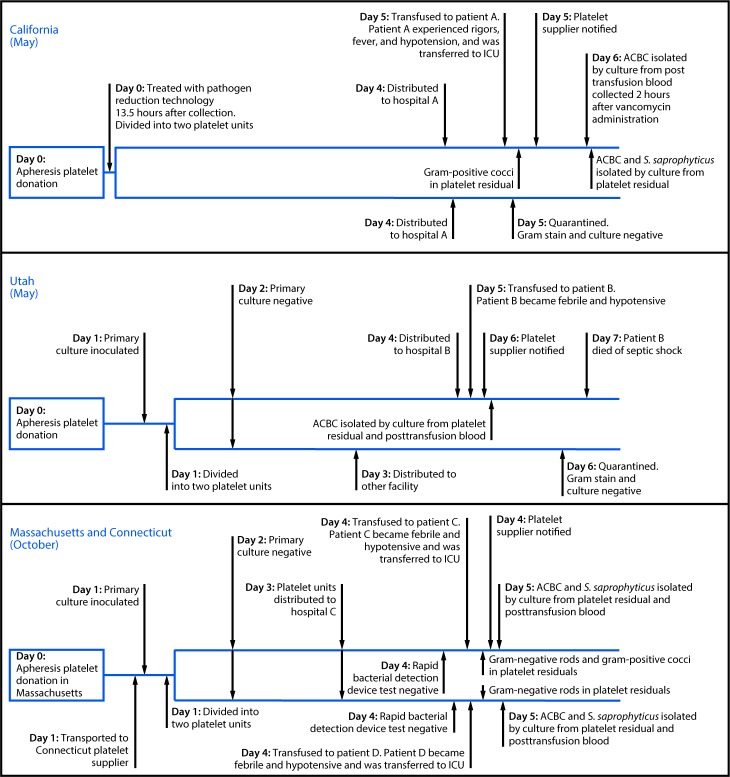
Description:During May-October 2018, four patients from three states experienced sepsis after transfusion of apheresis platelets contaminated with Acinetobacter calcoaceticus-baumannii complex (ACBC) and Staphylococcus saprophyticus; one patient died. ACBC isolates from patients' blood, transfused platelet residuals, and two environmental samples were closely related by whole genome sequencing. S. saprophyticus isolates from two patients' blood, three transfused platelet residuals, and one hospital environmental sample formed two whole genome sequencing clusters. This whole genome sequencing Analysis indicated a potential common source of bacterial contamination; investigation into the contamination source continues. All platelet donations were collected using apheresis cell separator machines and collection sets from the same manufacturer; two of three collection sets were from the same lot. One implicated platelet unit had been treated with pathogen-inactivation technology, and two had tested negative with a rapid bacterial detection device after negative primary culture. Because platelets are usually stored at room temperature, bacteria in contaminated platelet units can proliferate to clinically relevant levels by the time of transfusion. Clinicians should monitor for sepsis after platelet transfusions even after implementation of bacterial contamination mitigation strategies. Recognizing adverse transfusion reactions and reporting to the platelet supplier and hemovigilance systems is crucial for public health practitioners to detect and prevent sepsis associated with contaminated platelets.
-
Subjects:
-
Source:MMWR Morbidity Mortal Weekly Rep. 68(23):519-523
-
Series:
-
DOI:
-
ISSN:0149-2195 (print) ; 1545-861X (digital)
-
Pubmed ID:31194723
-
Pubmed Central ID:PMC6613552
-
Document Type:
-
Place as Subject:
-
Pages in Document:5 pdf pages
-
Volume:68
-
Issue:23
-
Download URL:
-
File Type:
 [PDF - 272.14 KB]
 -
Collection(s):
-
Main Document Checksum:urn:sha-512:d6e3445f175de1a3b0bf6c456a1e86dbb14d42a8e9eb6c8f752771c03e02722e906bffa7bf495ccc054023d30128bf9b27963a1e6dd45e40912e79ea31d4f596
Supporting Files


File Language:
English
 Was this page helpful?
 Found an issue?

CDC STACKS serves as an archival repository of CDC-published products including
scientific findings, journal articles, guidelines, recommendations, or other public health information authored or
co-authored by CDC or funded partners.
As a repository, CDC STACKS retains documents in their original published format to ensure public access to scientific information.
As a repository, CDC STACKS retains documents in their original published format to ensure public access to scientific information.
You May Also Like
COLLECTION
Morbidity and Mortality Weekly Report (MMWR)