


USING CITIZEN SCIENCE TO ENHANCE SURVEILLANCE OF AEDES AEGYPTI IN ARIZONA, 2015–17
Supporting Files
Public Domain

-
3 2019
-
File Language:
English
Details
-
Alternative Title:J Am Mosq Control Assoc
-
Personal Author:
-
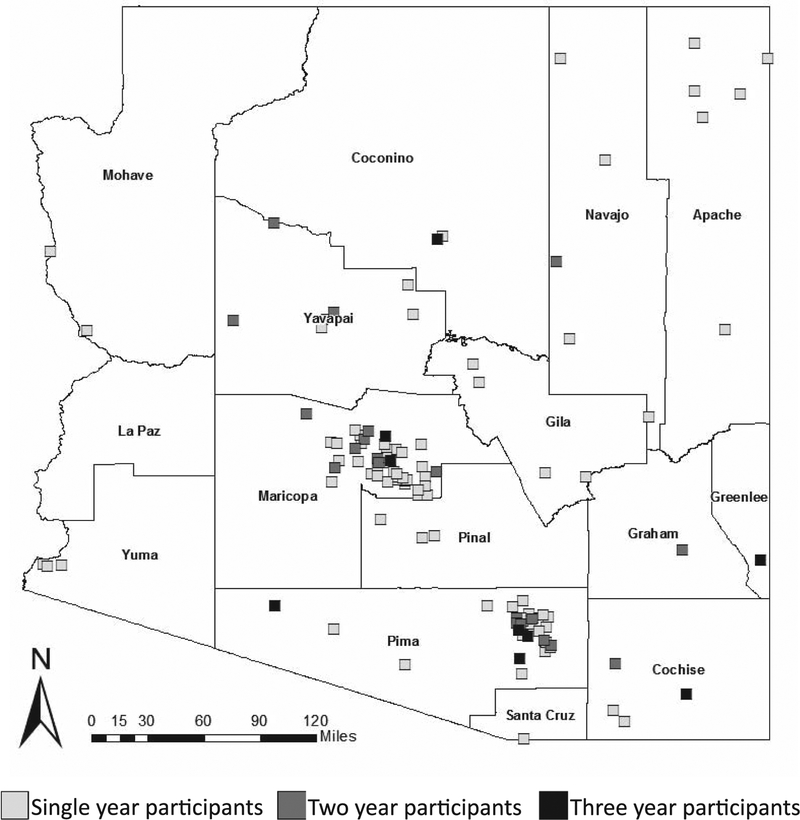
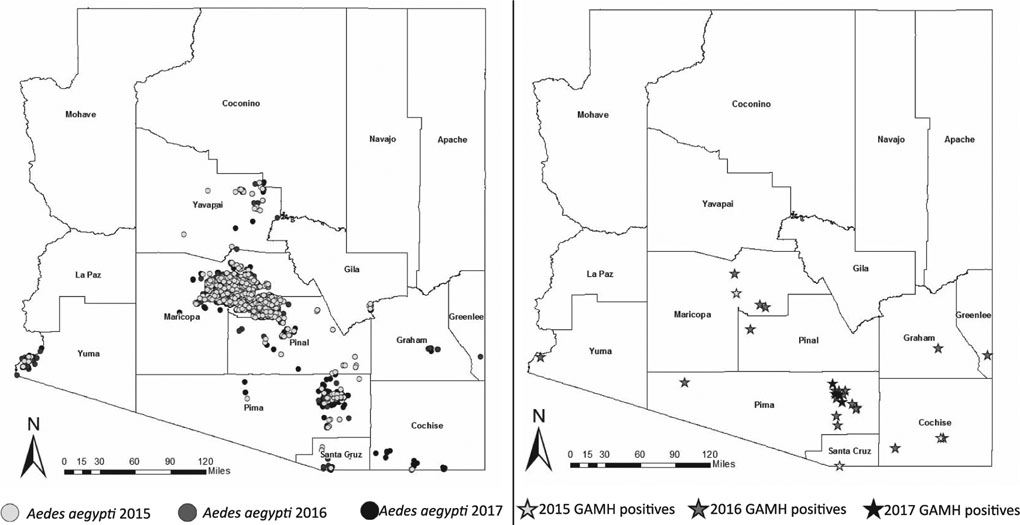
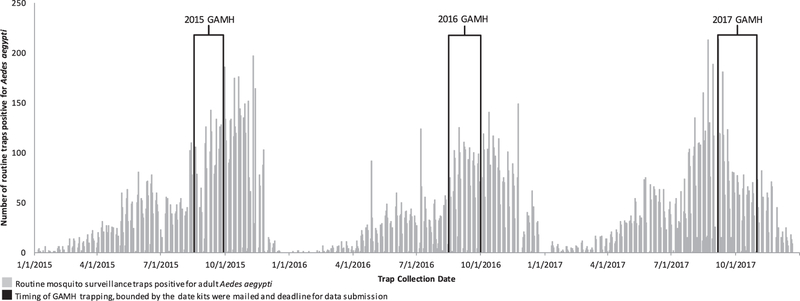
Description:Vector surveillance is an essential component of vector-borne disease prevention, but many communities lack resources to support extensive surveillance. The Great Arizona Mosquito Hunt (GAMH) was a collaborative citizen science project conducted during 2015-17 to enhance surveillance for | in Arizona. Citizen science projects engage the public in scientific research in order to further scientific knowledge while improving community understanding of a specific field of science and the scientific process. Participating schools and youth organizations across the state conducted oviposition trapping for 1-4 wk during peak | season in Arizona and returned the egg sheets to collaborating entomologists for identification. During the 3-year program, 120 different schools and youth organizations participated. Few participants actually collected | eggs in their traps in 2015 or 2017, but about one-third of participants collected eggs during 2016, including 3 areas that were not previously reported to have |. While relatively few new areas of | activity were identified, GAMH was found to be a successful method of engaging citizen scientists. Future citizen science mosquito surveillance projects might be useful to further define the ecology and risk for vector-borne diseases in Arizona.
-
Source:J Am Mosq Control Assoc. 35(1):11-18
-
Document Type:
-
Volume:35
-
Issue:1
-
Collection(s):
-
Main Document Checksum:urn:sha-512:8f8dfa1db3be592318ce0e0d2afe1281e85a3ba7a4d866e74b81427ca33ccdbeb690fb6502a36db0bdf28416643d34566ea4dcfb0cfa8138f35de9024c9a612f
-
Download URL:
-
File Type:
 [PDF
- 842.19 KB
]
[PDF
- 842.19 KB
]
Supporting Files


File Language:
English
ON THIS PAGE


CDC STACKS serves as an archival repository of CDC-published products including
scientific findings,
journal articles, guidelines, recommendations, or other public health information authored or
co-authored by CDC or funded partners.
As a repository, CDC STACKS retains documents in their original published format to ensure public access to scientific information.
As a repository, CDC STACKS retains documents in their original published format to ensure public access to scientific information.
You May Also Like
COLLECTION
CDC Public Access