


Advanced Clinical Decision Support for Vaccine Adverse Event Detection and Reporting
Supporting Files

-
June 09 2015
-
File Language:
English
Details
-
Alternative Title:Clin Infect Dis
-
Personal Author:
-
Description:Importance:
Reporting of adverse events (AEs) following vaccination can help identify rare or unexpected complications of immunizations and aid in characterizing potential vaccine safety signals.
Objective:
To create an electronic health record (EHR) module to assist clinicians with AE detection and reporting.
Design:
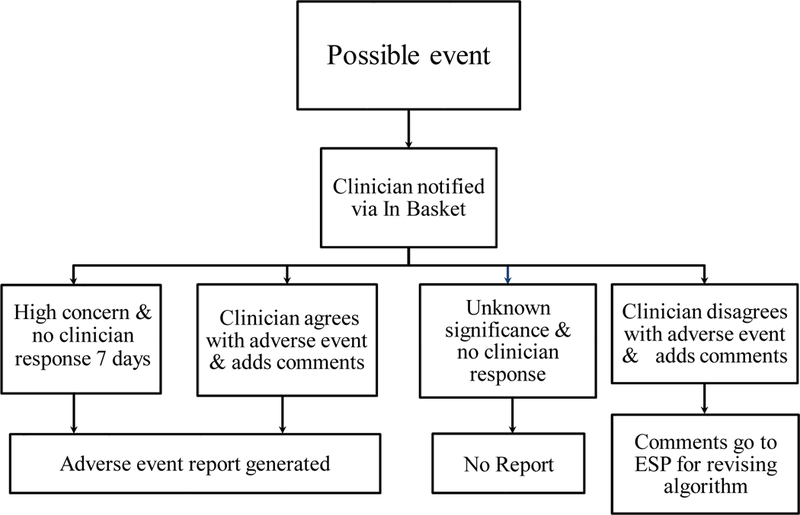
We developed an open-source, generalizable clinical decision system called Electronic Support for Public Health–Vaccine Adverse Event Reporting System (ESP-VAERS) to facilitate automated AE detection and reporting using EHRs. ESP-VAERS prospectively monitors patients’ electronic records for new diagnoses, changes in laboratory values and new allergies for up to 6 weeks following vaccinations. When suggestive events are found, ESP-VAERS sends a secure electronic message to the patient’s clinician. The clinician is invited to affirm or refute the event, add comments, and if they wish, submit an automated, pre-populated electronic case report to the national VAERS. High probability AEs following vaccination are reported automatically even if the clinician does not respond.
Setting:
We implemented ESP-VAERS in December 2012 at the MetroHealth System, an inpatient and outpatient integrated healthcare system in Ohio with nearly 1 million encounters per year. We queried the VAERS database to determine MetroHealth’s baseline reporting rates from 1/2009–3/2012 and then assessed changes in reporting rates with ESP-VAERS.
Participants:
All patients receiving vaccinations between 12/04/2012 and 08/03/2013 and their clinicians.
Exposure:
ESP-VAERS
Main outcome and measure:
The odds ratio of a VAERS report submission during the intervention period compared to the comparable pre-intervention period.
Results:
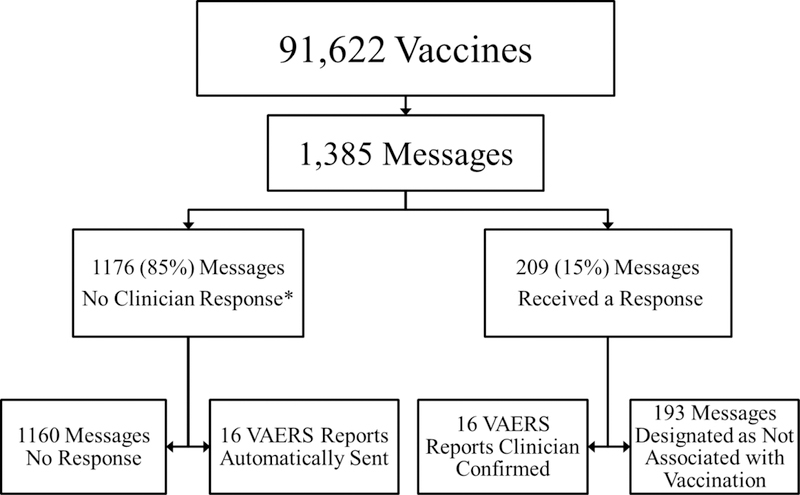
In the 8 months following implementation, 91,622 vaccinations were given. ESP-VAERS sent 1,385 messages to responsible clinicians describing potential AEs (15 per 1000 vaccinations, mean 0.4 alerts per clinician per month (range 0–8)). Clinicians reviewed 1,304 (94%) messages, responded to 209 (15%), and confirmed 16 for transmission to VAERS. An additional 16 high probability AEs were sent automatically. Reported events included seizure, pleural effusion, and lymphocytopenia. The odds of a VAERS report submission during the pilot period were 30.2 (95% CI, 9.52–95.5) times greater than the odds during the comparable pre-pilot period.
Conclusion and relevance:
An open-source EHR-based clinical decision support system can increase AE detection and reporting rates in VAERS.
-
Subjects:
-
Source:Clin Infect Dis. 61(6):864-870
-
Pubmed ID:26060294
-
Pubmed Central ID:PMC6642796
-
Document Type:
-
Funding:
-
Volume:61
-
Issue:6
-
Collection(s):
-
Main Document Checksum:urn:sha256:fea483b1aa351053bf57aefc81a72bb97142c31add9bf51e26ac4a1bd8287db0
-
Download URL:
-
File Type:
 [PDF
- 235.66 KB
]
[PDF
- 235.66 KB
]
Supporting Files


File Language:
English
ON THIS PAGE


CDC STACKS serves as an archival repository of CDC-published products including
scientific findings,
journal articles, guidelines, recommendations, or other public health information authored or
co-authored by CDC or funded partners.
As a repository, CDC STACKS retains documents in their original published format to ensure public access to scientific information.
As a repository, CDC STACKS retains documents in their original published format to ensure public access to scientific information.
You May Also Like
COLLECTION
CDC Public Access