


Pregnancy loss history at first parity and selected adverse pregnancy outcomes
Supporting Files

-
May 13 2016
File Language:
English
Details
-
Alternative Title:Ann Epidemiol
-
Personal Author:
-
Description:Purpose:
To evaluate the association between pregnancy loss history and adverse pregnancy outcomes.
Methods:
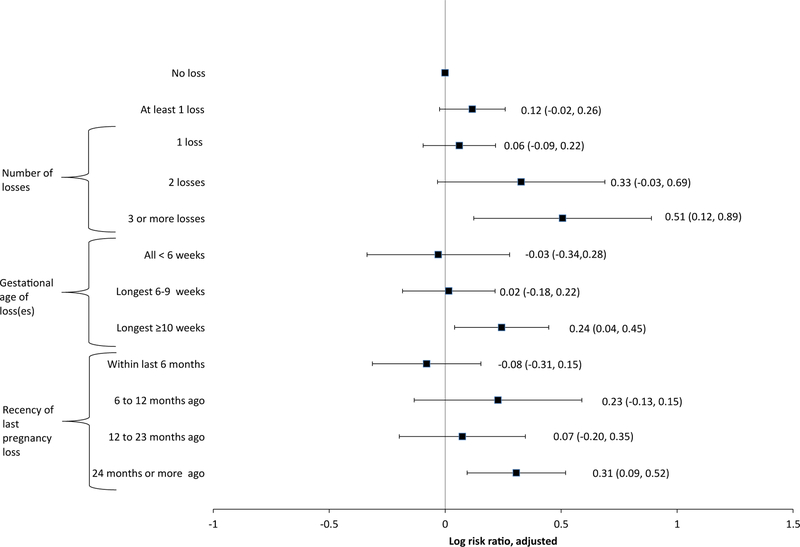
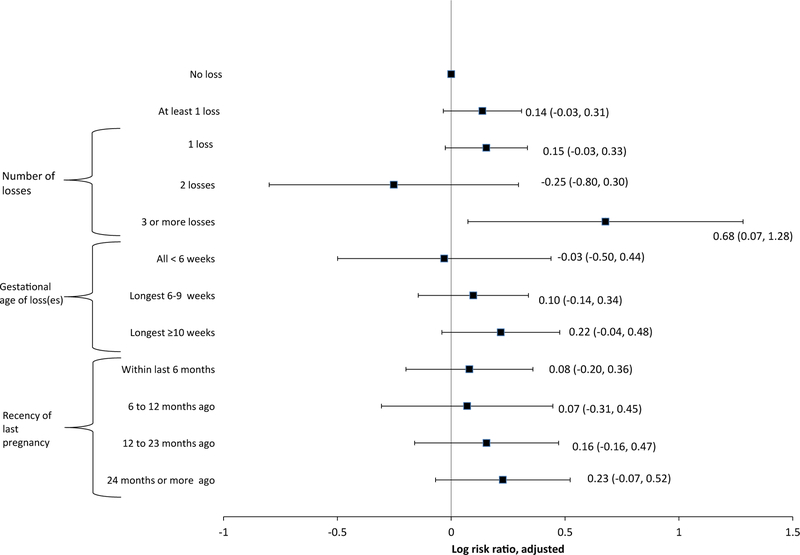
Pregnancy history was captured during a computer-assisted personal interview for 21,277 women surveyed in the National Survey of Family Growth (1995–2013). History of pregnancy loss (<20 weeks) at first parity was categorized in three ways: number of losses, maximum gestational age of loss(es), and recency of last pregnancy loss. We estimated risk ratios for a composite measure of selected adverse pregnancy outcomes (preterm, stillbirth, or low birthweight) at first parity and in any future pregnancy, separately, using predicted margins from adjusted logistic regression models.
Results:
At first parity, compared with having no loss, having 3+ previous pregnancy losses (adjusted risk ratio (aRR) = 1.66 [95% CI = 1.13, 2.43]), a maximum gestational age of loss(es) at ≥10 weeks (aRR = 1.28 [1.04, 1.56]) or having experienced a loss 24+ months ago (aRR = 1.36 [1.10, 1.68]) were associated with increased risks of adverse pregnancy outcomes. For future pregnancies, only having a history of 3+ previous pregnancy losses at first parity was associated with increased risks (aRR = 1.97 [1.08, 3.60]).
Conclusion:
Number, gestational age, and recency of pregnancy loss at first parity were associated with adverse pregnancy outcomes in U.S. women.
-
Subjects:
-
Source:Ann Epidemiol. 26(7):474-481.e9
-
Pubmed ID:27262817
-
Pubmed Central ID:PMC6626662
-
Document Type:
-
Funding:
-
Place as Subject:
-
Volume:26
-
Issue:7
-
Collection(s):
-
Main Document Checksum:urn:sha256:72f29d9f2cad4870e66c59fae127380ca6b593013792738ef1280564e07aeb5e
-
Download URL:
-
File Type:
 [PDF
- 621.48 KB
]
[PDF
- 621.48 KB
]
Supporting Files


File Language:
English
ON THIS PAGE


CDC STACKS serves as an archival repository of CDC-published products including
scientific findings,
journal articles, guidelines, recommendations, or other public health information authored or
co-authored by CDC or funded partners.
As a repository, CDC STACKS retains documents in their original published format to ensure public access to scientific information.
As a repository, CDC STACKS retains documents in their original published format to ensure public access to scientific information.
You May Also Like
COLLECTION
CDC Public Access