



Residential Racial Isolation and Spatial Patterning of Hypertension in Durham, North Carolina
Supporting Files
Public Domain

-
March 28 2019
File Language:
English
Details
-
Journal Article:Preventing Chronic Disease (PCD)
-
Personal Author:
-
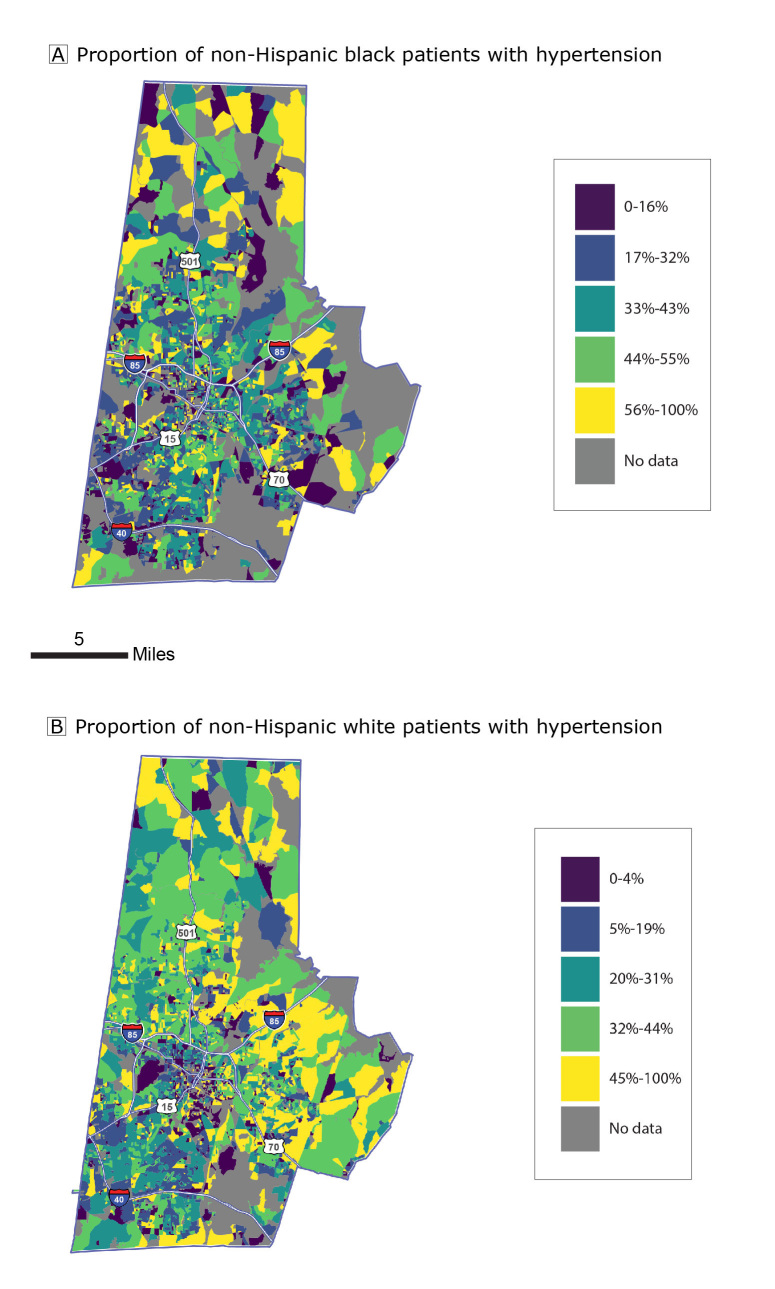
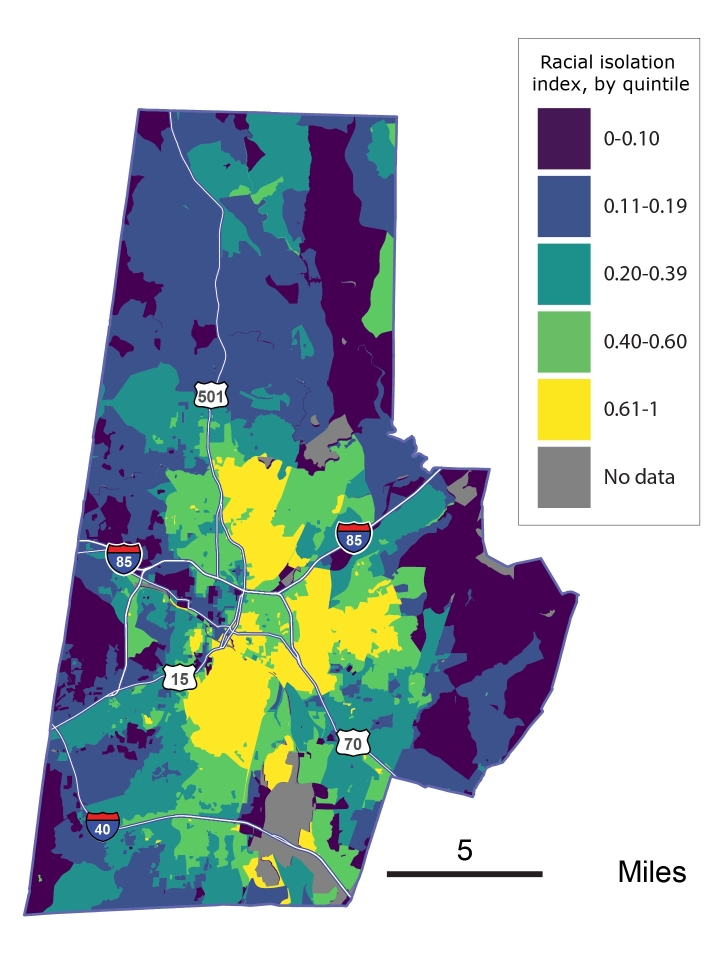
Description:Introduction ; Neighborhood characteristics such as racial segregation may be associated with hypertension, but studies have not examined these relationships using spatial models appropriate for geographically patterned health outcomes. The objectives of our study were to 1) evaluate the geographic heterogeneity of hypertension; 2) describe whether and how patient-level risk factors and racial isolation relate to geographic heterogeneity in hypertension; and 3) examine cross-sectional associations of hypertension with racial isolation. ; Methods ; We obtained electronic health records from the Duke Medicine Enterprise Data Warehouse for 2007–2011. We linked patient data with data on racial isolation determined by census block of residence. We constructed a local spatial index of racial isolation for non-Hispanic black patients; the index is scaled from 0 to 1, with 1 indicating complete isolation. We used aspatial and spatial Bayesian models to assess spatial variation in hypertension and estimate associations with racial isolation. ; Results ; Racial isolation ranged from 0 (no isolation) to 1 (completely isolated). A 0.20-unit increase in racial isolation was associated with 1.06 (95% credible interval, 1.03–1.10) and 1.11 (95% credible interval, 1.07–1.16) increased odds of hypertension among non-Hispanic black and non-Hispanic white patients, respectively. Across Durham, census block-level odds of hypertension ranged from 0.62 to 1.88 among non-Hispanic black patients and from 0.32 to 2.41 among non-Hispanic white patients. Compared with spatial models that included patient age and sex, residual heterogeneity in spatial models that included age, sex, and block-level racial isolation was 33% lower for non-Hispanic black patients and 20% lower for non-Hispanic white patients. ; Conclusion ; Racial isolation of non-Hispanic black patients was associated with increased odds of hypertension among both non-Hispanic black and non-Hispanic white patients. Further research is needed to identify latent spatially patterned factors contributing to hypertension.
-
Subjects:
-
Source:Prev Chronic Dis. 16
-
DOI:
-
ISSN:1545-1151
-
Pubmed ID:30925142
-
Pubmed Central ID:PMC6464129
-
Document Type:
-
Place as Subject:
-
Location:
-
Volume:16
-
Download URL:
-
File Type:
 [PDF - 612.62 KB]
 -
Collection(s):
-
Main Document Checksum:urn:sha-512:c3b4185aa08e93a8a4811965fd3f64b43170b25a30ddd671af1544b84e567ae6c1943e1de7be0f91bf3017be22b9c35701f8f8817d44050859774c94b288b187
Supporting Files


File Language:
English
 Was this page helpful?
 Found an issue?

CDC STACKS serves as an archival repository of CDC-published products including
scientific findings, journal articles, guidelines, recommendations, or other public health information authored or
co-authored by CDC or funded partners.
As a repository, CDC STACKS retains documents in their original published format to ensure public access to scientific information.
As a repository, CDC STACKS retains documents in their original published format to ensure public access to scientific information.
You May Also Like
COLLECTION
Preventing Chronic Disease