



3D Stereophotogrammetry versus Traditional Craniofacial Anthropometry: Comparing Measurements from the 3D Facial Norms Database to Farkas’s North American Norms.
Supporting Files

-
May 2019
File Language:
English
Details
-
Alternative Title:Am J Orthod Dentofacial Orthop
-
Personal Author:
-
Description:Introduction:
Datasets of soft-tissue craniofacial anthropometric norms collected using different methods are available, but there is little understanding of how the measurements compare. Here we compare a set of standard facial measurements between two large datasets: the 3D Facial Norms (3DFN) dataset collected using 3D stereophotogrammetry (N=2454) and the Farkas craniofacial norms collected using direct anthropometry (N=2326).
Methods:
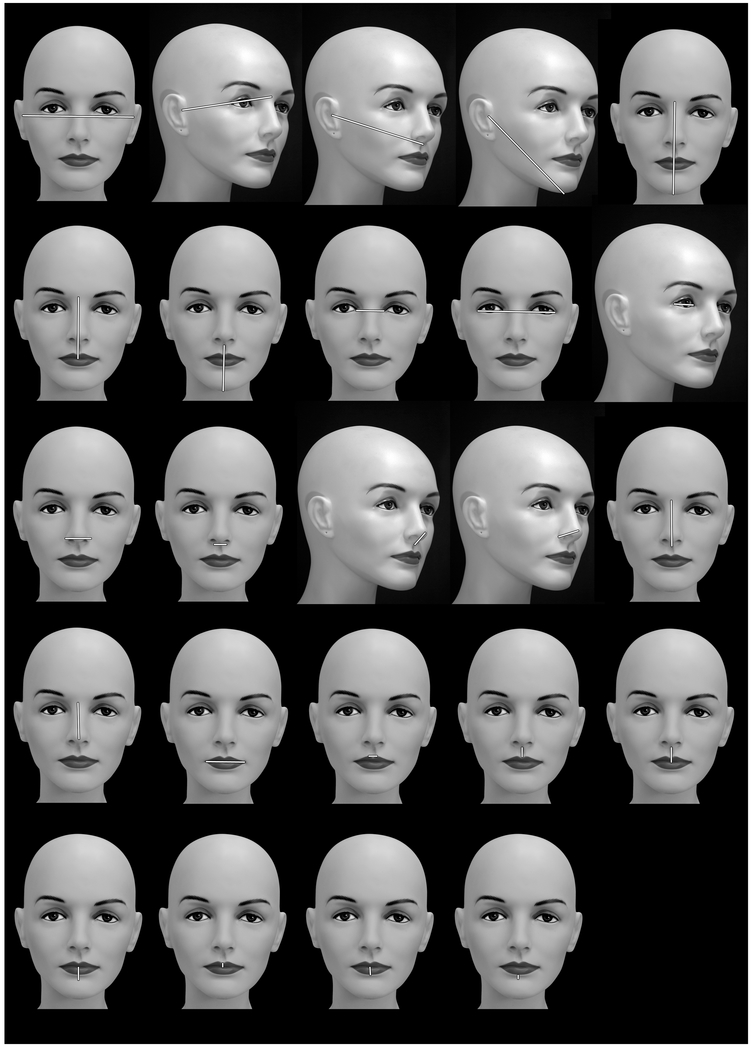
A common set of 24 craniofacial linear distances were compared by computing standardized effects sizes (Cohen’s d) for each measurement, which describe the overall direction and magnitude of the difference between the two datasets.
Results:
Variables with higher mean d-values (suggesting greater discrepancy across datasets) included measurements involving the ear landmark tragion, the landmark nasion, the width of nasolabial structures, the vermilion portion of the lips, and palpebral fissure length. Variables with lower mean d-values included smaller midline measurements involving the lips and lower face and horizontal distance measures between the eyes. Eight measurements showed a significant negative correlation (p < 0.05) between Cohen’s d and age, indicating greater similarity across the two datasets as age increased.
Conclusions:
There are considerable differences between the 3DFN and Farkas norms. In addition to the measurement method, other factors accounting for discrepancies may include secular trends in craniofacial morphology or differences in ethnic composition.
-
Subjects:
-
Source:Am J Orthod Dentofacial Orthop. 155(5):693-701
-
Pubmed ID:31053285
-
Pubmed Central ID:PMC6571015
-
Document Type:
-
Funding:
-
Place as Subject:
-
Volume:155
-
Issue:5
-
Collection(s):
-
Main Document Checksum:urn:sha256:8d4df327a22471f2af8b65d490e25d86ecb9065cf816196d2c873e972f68ee97
-
Download URL:
-
File Type:
 [PDF
- 1.02 MB
]
[PDF
- 1.02 MB
]
Supporting Files


File Language:
English
 Was this page helpful?
 Found an issue?


CDC STACKS serves as an archival repository of CDC-published products including
scientific findings,
journal articles, guidelines, recommendations, or other public health information authored or
co-authored by CDC or funded partners.
As a repository, CDC STACKS retains documents in their original published format to ensure public access to scientific information.
As a repository, CDC STACKS retains documents in their original published format to ensure public access to scientific information.
You May Also Like
COLLECTION
CDC Public Access