



Intestinal microbiome disruption in patients in a long-term acute care hospital: a case for development of microbiome disruption indices to improve infection prevention
Supporting Files

-
7 01 2016 ; 7-01-
-
Available in CDC Stacks on May 28, 2019, 12:00 AM
File Language:
English
Details
-
Alternative Title:Am J Infect Control
-
Personal Author:Halpin, AL ; de Man, TJ ; Kraft, CS ; Perry, KA ; Chan, AW ; Lieu, S ; Mikell, J ; Limbago, BM ; McDonald, LC
-
Description:Background
Composition and diversity of intestinal microbial communities (microbiota) are generally accepted as a risk factor for poor outcomes; however, we cannot yet use this information to prevent adverse outcomes.
Methods
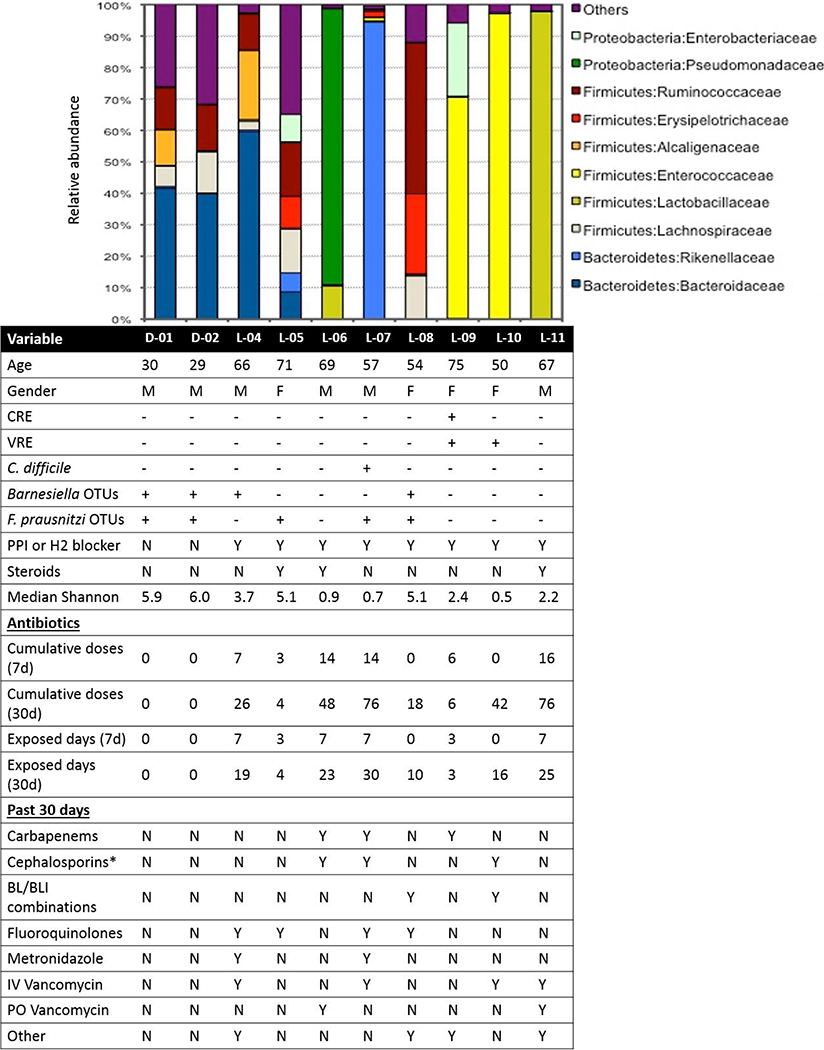
Stool was collected from eight long-term acute care hospital (LTACH) patients experiencing diarrhea and two fecal microbiota transplant donors; 16S rDNA V1-V2 hypervariable regions were sequenced. Composition and diversity of each sample were described. Stool was also tested for Clostridium difficile, vancomycin-resistant enterococci (VRE), and carbapenem-resistant Enterobacteriaceae. Associations between microbiota diversity and demographic and clinical characteristics, including antibiotic use, were analyzed.
Results
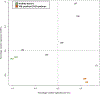
Antibiotic exposure and Charlson Comorbidity Index were inversely correlated with diversity (Spearman = −0.7). Two patients were positive for VRE; both had microbiomes dominated by Enterococcus faecium, accounting for 67–84% of their microbiome.
Discussion
Antibiotic exposure correlated with diversity; however, other environmental and host factors not easily obtainable in a clinical setting are also known to impact the microbiota. Therefore, direct measurement of microbiome disruption by sequencing, rather than reliance on surrogate markers, might be most predictive of adverse outcomes.
Conclusions
If and when microbiome characterization becomes a standard diagnostic test, improving our understanding of microbiome dynamics will allow for interpretation of results to improve patient outcomes. -
Subjects:
- Adult
- Aged
- Bacteria
- Cluster Analysis
- Cross-Sectional Studies
- DNA, Bacterial
- DNA, Ribosomal
- Diarrhea
- Fecal Microbiota Transplantation
- Feces
- Female
- Gastrointestinal Microbiome
- Hospitals
- Humans
- Long-Term Care
- Male
- Microbiota
- Middle Aged
- Phylogeny
- Pilot Projects
- RNA, Ribosomal, 16S
- Sequence Analysis, DNA
-
Keywords:
-
Source:Am J Infect Control. 44(7):830-836
-
Pubmed ID:26905790
-
Pubmed Central ID:PMC6538413
-
Document Type:
-
Funding:
-
Volume:44
-
Issue:7
-
Download URL:
-
File Type:
 [PDF - 775.16 KB]
 -
Collection(s):
-
Main Document Checksum:urn:sha256:0927240028140a10e3dbb3cd0fdd2ae1c6504a18ead1b41fc3502bb8ac486990
Supporting Files


File Language:
English
 Was this page helpful?
 Found an issue?




CDC STACKS serves as an archival repository of CDC-published products including
scientific findings, journal articles, guidelines, recommendations, or other public health information authored or
co-authored by CDC or funded partners.
As a repository, CDC STACKS retains documents in their original published format to ensure public access to scientific information.
As a repository, CDC STACKS retains documents in their original published format to ensure public access to scientific information.
You May Also Like
COLLECTION
CDC Public Access