


Patterns of Heat Strain Among a Sample of US Underground Miners
Supporting Files

-
Mar 2019
-
File Language:
English
Details
-
Journal Article:J Occup Environ Med
-
Personal Author:
-
Description:Objective
This study characterizes physiological measures of heat exposure among US underground miners.
Methods
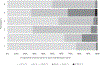
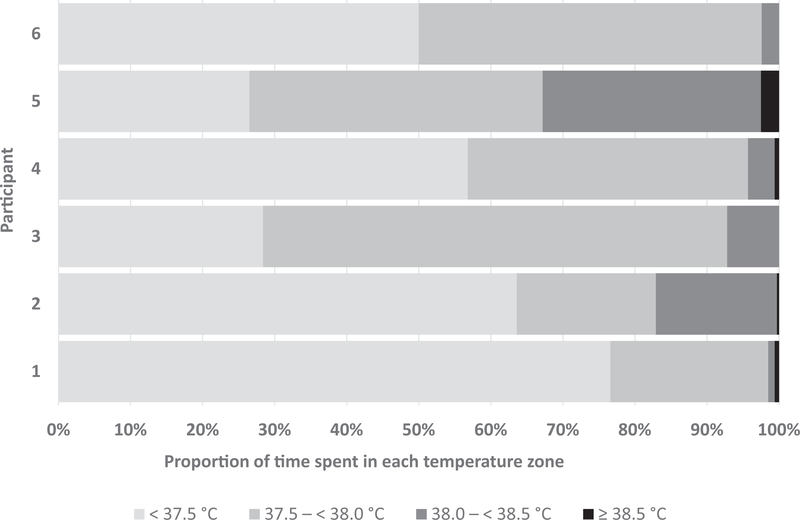
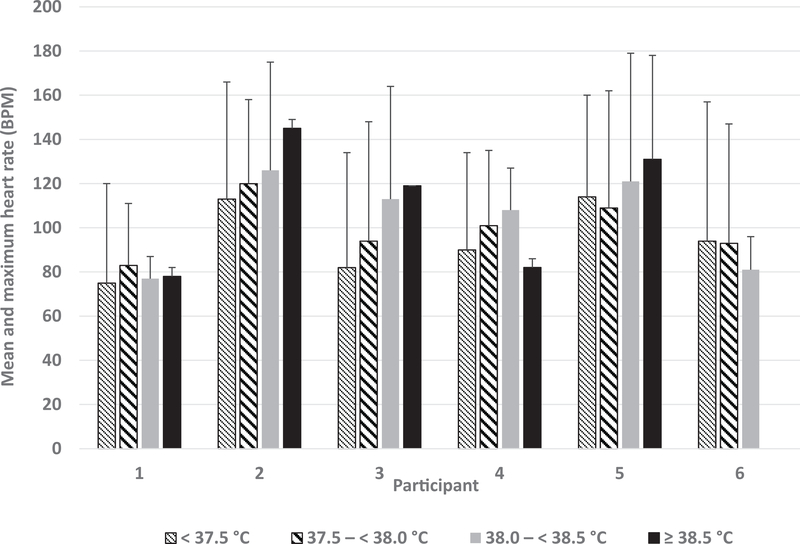
Core body temperature measured by using ingestible sensors during subjects’ normal work shifts was categorized into four temperature zones: less than 37.5 °C, 37.5 °C to less than 38 °C, 38 °C to less than 38.5 °C, and more than or equal to 38.5 °C.
Results
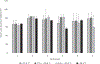
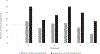
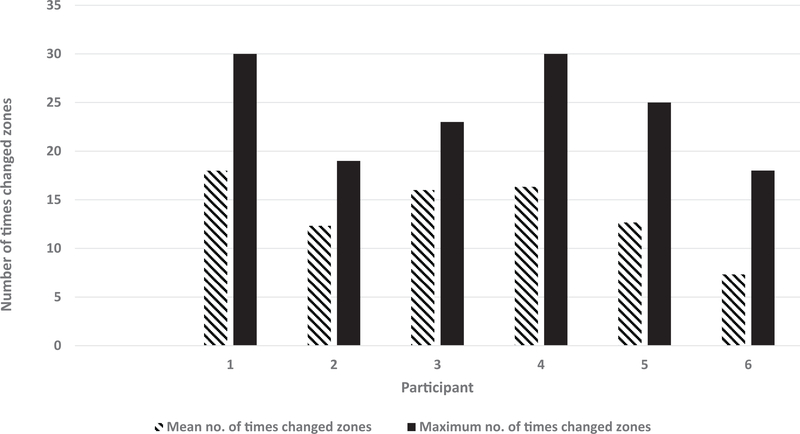
On average, subjects changed temperature zones 13.8 times per shift. Temperatures increased above the recommended limit of 38 °C nearly 5 times per shift for an average of 26minutes each episode.
Conclusions
Unlike previous heat stress research that reported only maximum and mean temperature measurements, this analysis demonstrates a dynamic pattern of physiologic heat strain, with core body temperatures changing frequently and exceeding the 38 °C limit multiple times per shift. Further research is needed on the impact of multiple short-term, intermittent heat exposures on miners.
-
Subjects:
-
Source:J Occup Environ Med. 61(3):212-218
-
DOI:
-
Pubmed ID:30531375
-
Pubmed Central ID:PMC6537892
-
Document Type:
-
Funding:
-
Genre:
-
Volume:61
-
Issue:3
-
Collection(s):
-
Main Document Checksum:urn:sha-512:34d8707662b7b1bc661e3f73f5af39f721b4eb5141a50a7f56c74d16828a341b84f1ae04fa5495935fb79451c15b7976805becc748db47cee35a4a5955119f8f
-
Download URL:
-
File Type:
 [PDF
- 1014.59 KB
]
[PDF
- 1014.59 KB
]
Supporting Files


File Language:
English
ON THIS PAGE




CDC STACKS serves as an archival repository of CDC-published products including
scientific findings,
journal articles, guidelines, recommendations, or other public health information authored or
co-authored by CDC or funded partners.
As a repository, CDC STACKS retains documents in their original published format to ensure public access to scientific information.
As a repository, CDC STACKS retains documents in their original published format to ensure public access to scientific information.
You May Also Like
COLLECTION
CDC Public Access