



Field Identification Key and Guide for Bats of the United States of America
Supporting Files

-
2019/01/17
-
File Language:
English
Details
-
Alternative Title:Occas Pap Tex Tech Univ Mus
-
Personal Author:
-
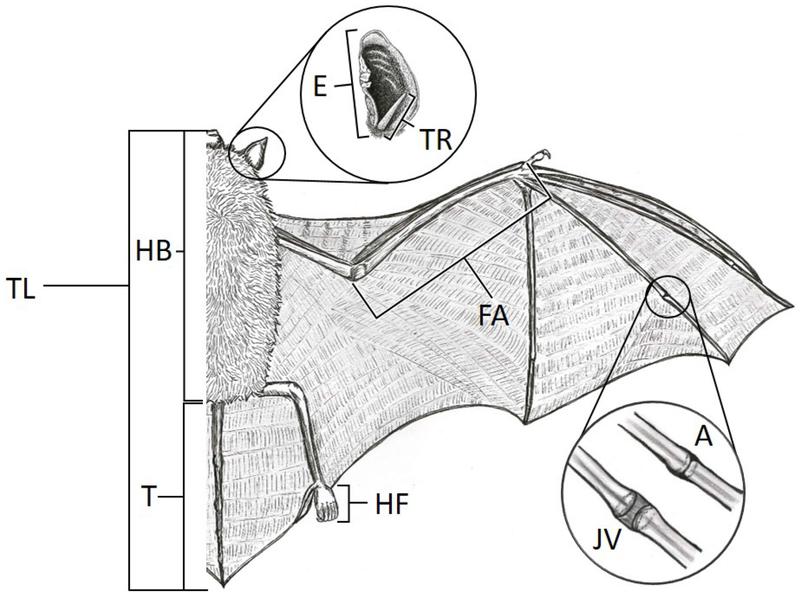
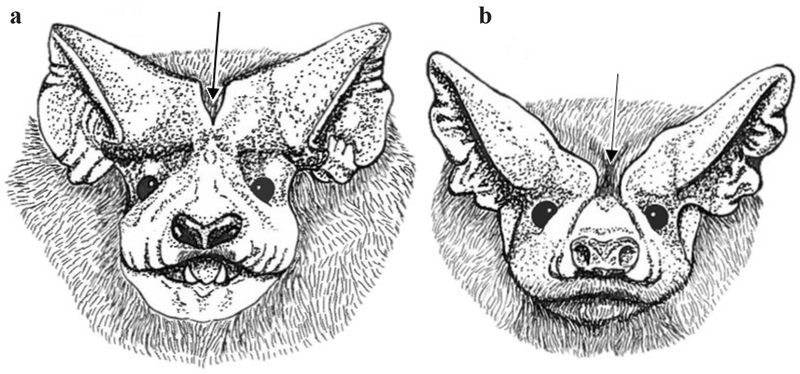
Description:Bats are the second most speciose lineage of mammals with more than 1,300 recognized species. Overall, bats are extremely ecologically and morphologically diverse, making them of interest to a wide variety of biologists. Bats are also known reservoirs for an assortment of zoonotic diseases, including rabies, for which they are commonly tested if identified as sick, behaving abnormally, or in instances where there has been a significant human exposure. In these cases, proper identification of bat species is important to public health experts as it will inform future testing procedures and management practices, as well as broaden our understanding of rabies virus bat variant distributions and disease ecology. Despite the multiple disciplines interested in bats, no key has been developed which includes all species found within the United States. For this reason, a dichotomous key and bat identification guide, designed to differentiate bats to species level, has been developed. This document can be used by people with a variety of backgrounds to morphologically identify bats quickly and accurately using only a scale, a ruler, and attention to detail.
-
Subjects:
-
Source:Occas Pap Tex Tech Univ Mus. 360
-
Pubmed ID:31148880
-
Pubmed Central ID:PMC6537616
-
Document Type:
-
Funding:
-
Genre:
-
Volume:360
-
Collection(s):
-
Main Document Checksum:urn:sha-512:0c983a812a5e85c0a498a65bf1ff64c7e3c9d598024c9e5d1d3ab3e12b9ace7c0ef6dfd9d477fd086180a27d9e3325d6ee0a2f98349d1d9a5a857875c0fd84c7
-
Download URL:
-
File Type:
 [PDF
- 5.74 MB
]
[PDF
- 5.74 MB
]
Supporting Files


File Language:
English
 Was this page helpful?
 Found an issue?


























CDC STACKS serves as an archival repository of CDC-published products including
scientific findings,
journal articles, guidelines, recommendations, or other public health information authored or
co-authored by CDC or funded partners.
As a repository, CDC STACKS retains documents in their original published format to ensure public access to scientific information.
As a repository, CDC STACKS retains documents in their original published format to ensure public access to scientific information.
You May Also Like
COLLECTION
CDC Public Access