


Factors associated with unsafe sex among Kenyan youth: Results from a nationally representative population-based survey
Supporting Files

-
Feb 2018
-
File Language:
English
Details
-
Alternative Title:East Afr J Appl Health Monitor Eval
-
Personal Author:
-
Description:BACKGROUND
Understanding sexual risk among youth can inform the design of effective HIV prevention interventions.
METHODS
The 2012 Kenya AIDS Indicator Survey was a nationally representative population-based survey. We administered a questionnaire and collected blood samples for HIV testing. We examined factors associated with unsafe sex among unmarried youth aged 15–19 and 20–24 years.
RESULTS
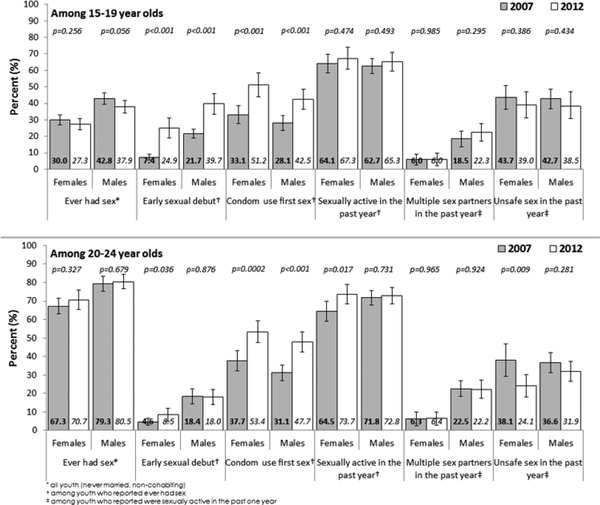
Of 2,090 unmarried youth aged 15–19 years, 33.3% (95% confidence interval [CI] 30.6–36.1) had ever had sex. Among those, 66.0% (95% CI 61.3–70.7) had sex in the past year (sexually active), and of these, 38.7% (95% 33.4 –44.0) reported unsafe sex. No differences were observed in unsafe sex by sex. Factors associated with increased adjusted odds of unsafe sex among youth aged 15–19 years were residence in Central province; having primary or lower education; sexual debut before age 15 years; ever receiving money, gifts or favours for sex (transactional sex); multiple sexual partners in the past year; and low self-perceived risk of HIV. Of the 1,079 unmarried youth aged 20–24 years, 77.2% (95% CI 74.2–80.2) had ever had sex. Of these, 73.1% (95% CI69.8–76.3) were sexually active, and 24.1% (95% CI 18.1–30.1) of women and 31.9% (95% CI 26.4–37.5) of men reported unsafe sex in the past year. Factors associated with increased adjusted odds of unsafe sex among youth aged 20–24 years were primary or lower education, transactional sex and multiple partners in the past year.
CONCLUSION
Unsafe sex is common among Kenyan youth, especially those aged 15–19 years. HIV prevention efforts need to target youth, support educational progression and economic empowerment.
-
Subjects:
-
Source:East Afr J Appl Health Monitor Eval. 2:25-37
-
Pubmed ID:31149660
-
Pubmed Central ID:PMC6537612
-
Document Type:
-
Funding:
-
Place as Subject:
-
Volume:2
-
Collection(s):
-
Main Document Checksum:urn:sha256:12a52cb48f54ccd236d575b77f684e7bb7ce87b0610ccbd13c3e357f9add709d
-
Download URL:
-
File Type:
 [PDF
- 311.38 KB
]
[PDF
- 311.38 KB
]
Supporting Files


File Language:
English
ON THIS PAGE

CDC STACKS serves as an archival repository of CDC-published products including
scientific findings,
journal articles, guidelines, recommendations, or other public health information authored or
co-authored by CDC or funded partners.
As a repository, CDC STACKS retains documents in their original published format to ensure public access to scientific information.
As a repository, CDC STACKS retains documents in their original published format to ensure public access to scientific information.
You May Also Like
COLLECTION
CDC Public Access