


In Vivo Tibiofemoral Skeletal Kinematics and Cartilage Contact Arthrokinematics during Decline Walking after Isolated Meniscectomy
Supporting Files

-
November 06 2017
-
File Language:
English
Details
-
Journal Article:Med Eng Phys
-
Personal Author:
-
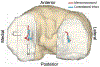
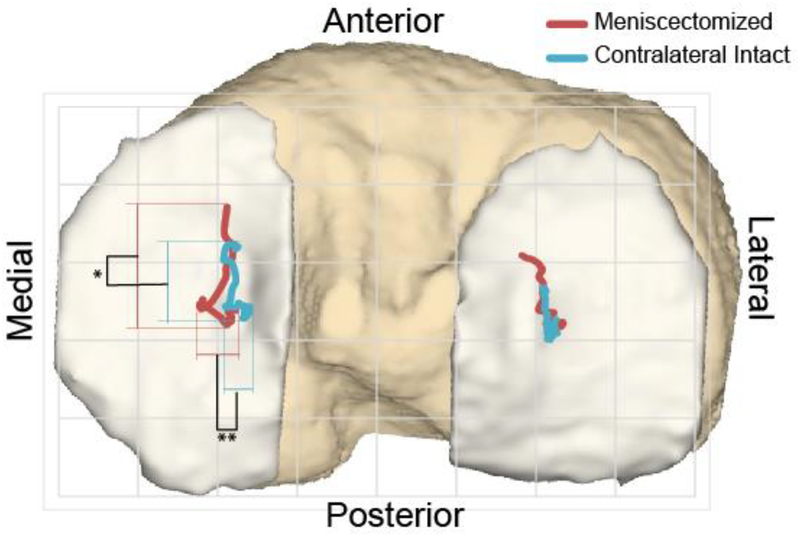
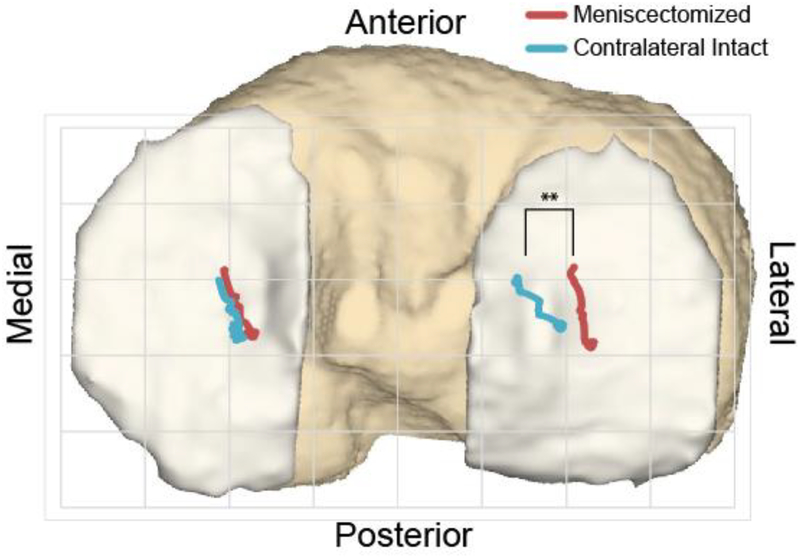
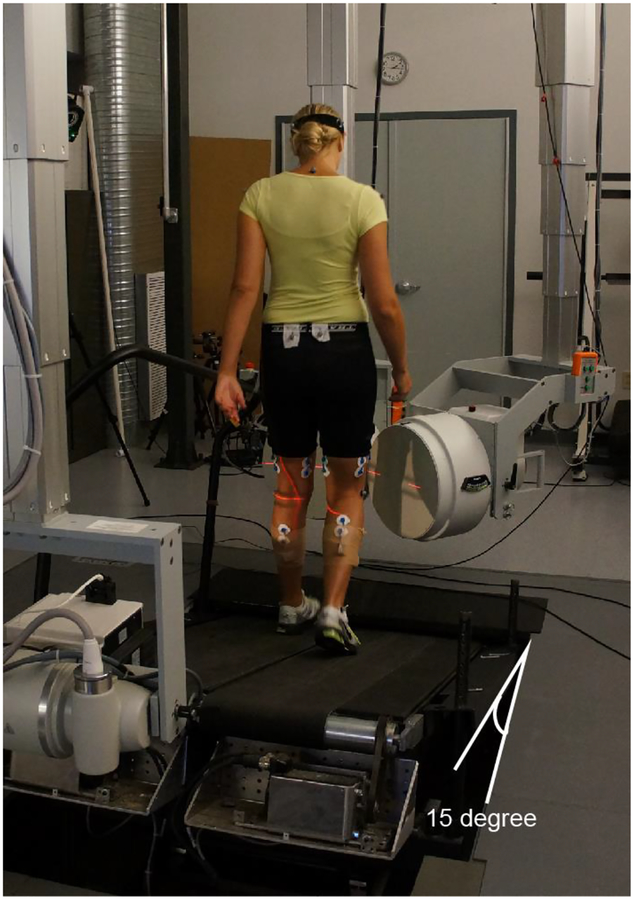
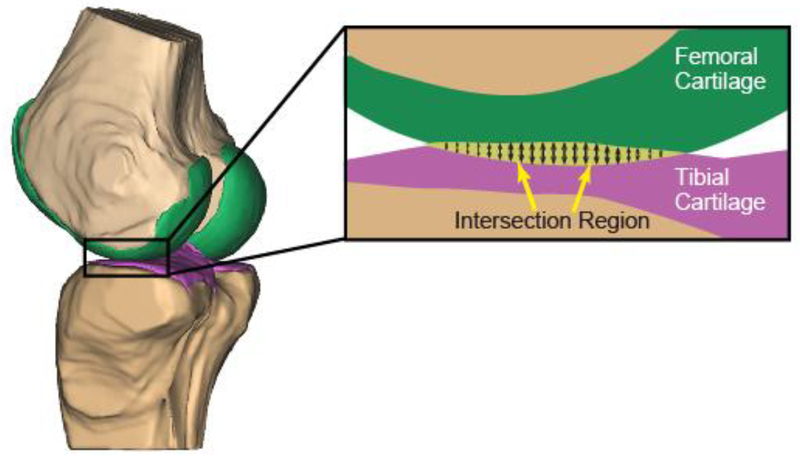
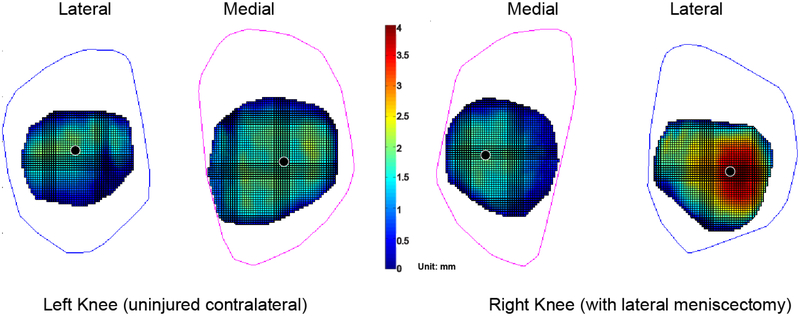
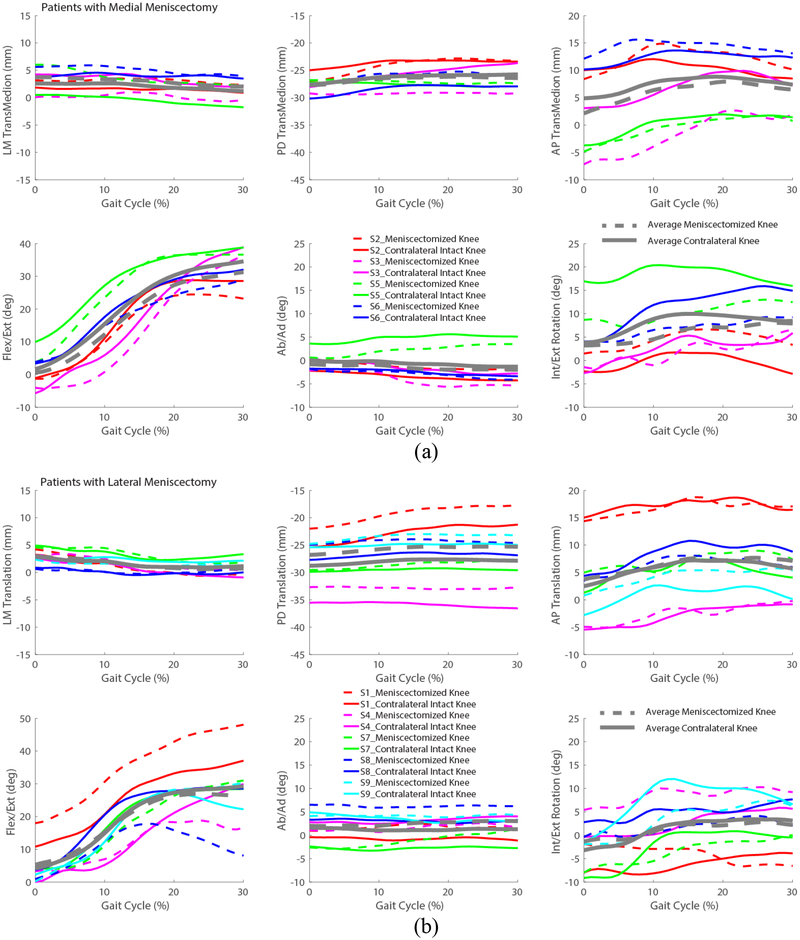
Description:We investigated the effects of isolated meniscectomy on tibiofemoral skeletal kinematics and cartilage contact arthrokinematics in vivo. We recruited nine patients who had undergone isolated medial or lateral meniscectomy, and used a dynamic stereo-radiography (DSX) system to image the patients' knee motion during decline walking. A volumetric model-based tracking process determined 3D tibiofemoral kinematics from the recorded DSX images. Cartilage contact arthrokinematics was derived from the intersection between tibial and femoral cartilage models co-registered to the bones. The kinematics and arthrokinematics were analyzed for early stance and loading response phase (30% of a gait cycle), comparing the affected and intact knees. Results showed that four patients with medial meniscectomy had significantly greater contact centroid excursions in the meniscectomized medial compartments while five patients with lateral meniscectomy had significantly greater cartilage contact area and lateral shift of contact centroid path in the meniscectomized lateral compartments, comparing to those of the same compartments in the contralateral intact knees. No consistent difference however was identified in the skeletal kinematics. The current study demonstrated that cartilage-based intra-articular arthrokinematics is more sensitive and insightful than the skeletal kinematics in assessing the meniscectomy effects.
-
Subjects:
-
Source:Med Eng Phys. 51:41-48
-
DOI:
-
Pubmed ID:29122451
-
Pubmed Central ID:PMC6537593
-
Document Type:
-
Funding:
-
Genre:
-
Volume:51
-
Collection(s):
-
Main Document Checksum:urn:sha-512:fc8b2dffc4b36d29ed306839300a0d31d0179629c7f008553608da52bb4feed8248a7834103bac5abeb7dcecacd0a429472ae24ca52ad20a08d0a2430f91b52e
-
Download URL:
-
File Type:
 [PDF
- 1.58 MB
]
[PDF
- 1.58 MB
]
Supporting Files


File Language:
English
ON THIS PAGE





CDC STACKS serves as an archival repository of CDC-published products including
scientific findings,
journal articles, guidelines, recommendations, or other public health information authored or
co-authored by CDC or funded partners.
As a repository, CDC STACKS retains documents in their original published format to ensure public access to scientific information.
As a repository, CDC STACKS retains documents in their original published format to ensure public access to scientific information.
You May Also Like
COLLECTION
CDC Public Access