



A Method for Measuring Fluid Pressures in the Shoe–Floor–Fluid Interface: Application to Shoe Tread Evaluation
Supporting Files

-
November 24 2014
-
Available in CDC Stacks on May 16, 2019, 12:00 AM
File Language:
English
Details
-
Journal Article:IIE Trans Occup
-
Personal Author:
-
Description:Background:
Fluid contaminants cause slipping accidents by reducing shoe–floor friction. Fluid pressures in the shoe–floor interface reduce contact between the surfaces and, thus, reduce friction between the surfaces. A technological gap for measuring fluid pressures, however, has impeded improved understanding of what factors influence these pressures.
Purpose:
This study aimed to introduce a technique for measuring fluid pressures under the shoe and to demonstrate the utility of the technique by quantifying the effects of tread depth and fluid viscosity on fluid pressures for two different shoes.
Methods:
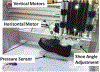
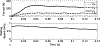
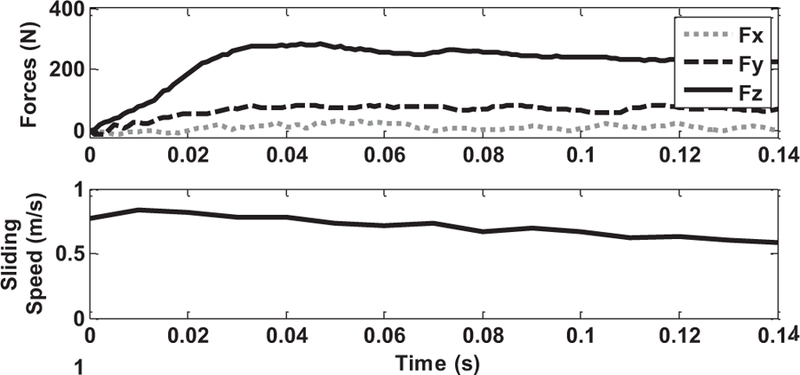
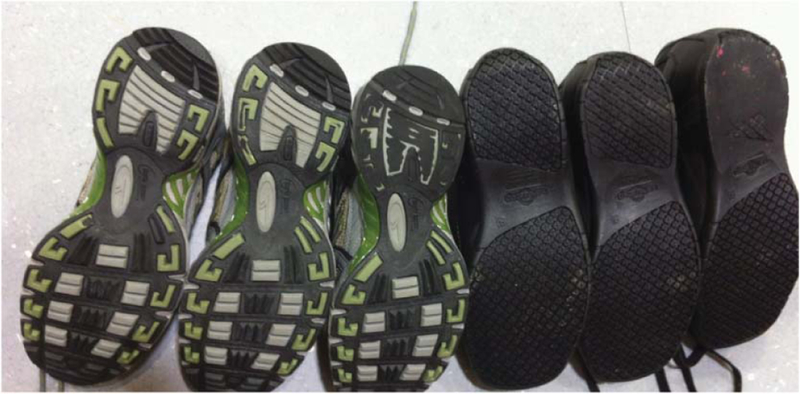
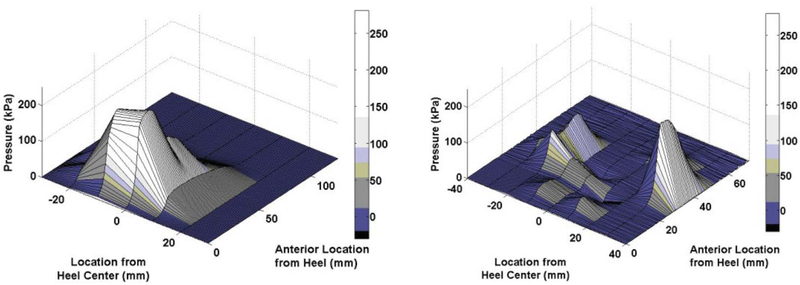
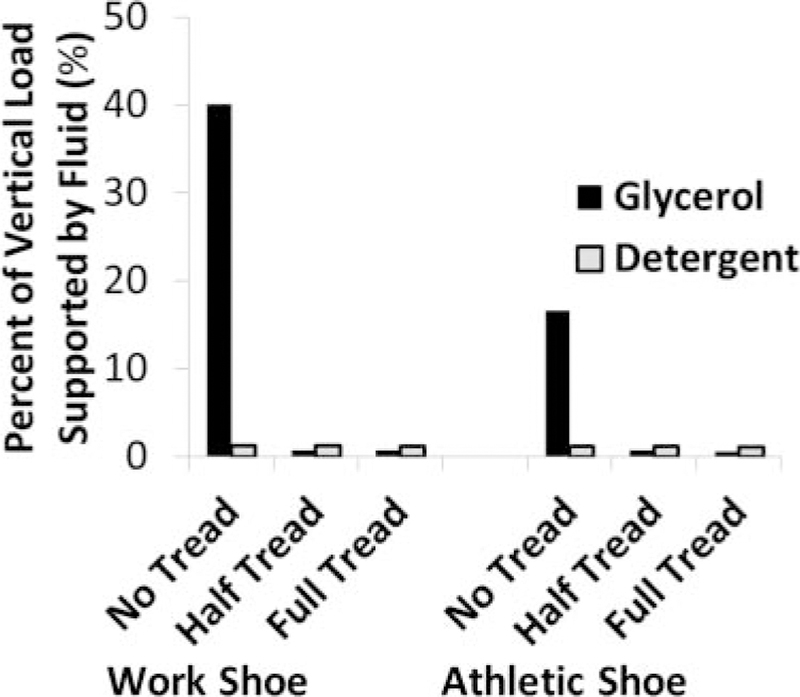
A fluid pressure sensor embedded in the floor surface was used to measure fluid pressures, while a robotic slip-tester traversed the shoe over the floor surface. Multiple scans were collected to develop 2D fluid pressure maps across the shoe surface. Two shoe tread types (an athletic shoe and a work shoe), two fluids (high-viscosity diluted glycerol and a low-viscosity detergent solution), and three tread depths (full tread, half tread, and no tread) were tested, while fluid pressures were measured.
Results:
Untreaded shoes combined with a high-viscosity fluid resulted in high fluid pressures, while treaded shoes or low-viscosity fluids resulted in low fluid pressures. The increased fluid pressures that were observed for the untreaded shoes are consistent with tribology theory and evidence from human slipping studies.
Conclusions:
The methods described here successfully measured fluid pressures and yielded results consistent with tribological theory and human slipping experiments. This approach offers significant potential in evaluating the slip-resistance of tread designs and determining wear limits for replacing shoes. -
Subjects:
-
Source:IIE Trans Occup. 2(2):53-59
-
DOI:
-
Pubmed ID:31106007
-
Pubmed Central ID:PMC6521712
-
Document Type:
-
Funding:
-
Genre:
-
Volume:2
-
Issue:2
-
Download URL:
-
File Type:
 [PDF - 746.99 KB]
 -
Collection(s):
-
Main Document Checksum:urn:sha-512:718cbbb6d68dfb1dfa4b8badba622da3007625016cc7a332372c121a99006a46c16b55b15306d32402e0c05be9a4ed853805b2423026edfc2bbc13498555600c
Supporting Files


File Language:
English
 Was this page helpful?
 Found an issue?



CDC STACKS serves as an archival repository of CDC-published products including
scientific findings, journal articles, guidelines, recommendations, or other public health information authored or
co-authored by CDC or funded partners.
As a repository, CDC STACKS retains documents in their original published format to ensure public access to scientific information.
As a repository, CDC STACKS retains documents in their original published format to ensure public access to scientific information.
You May Also Like
COLLECTION
CDC Public Access