



Progress and challenges in measles and rubella elimination in the WHO European Region
Supporting Files

-
8 28 2018
-
Available in CDC Stacks on 2019-08-28T00:00:00Z
File Language:
English
Details
-
Journal Article:Vaccine
-
Personal Author:
-
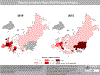
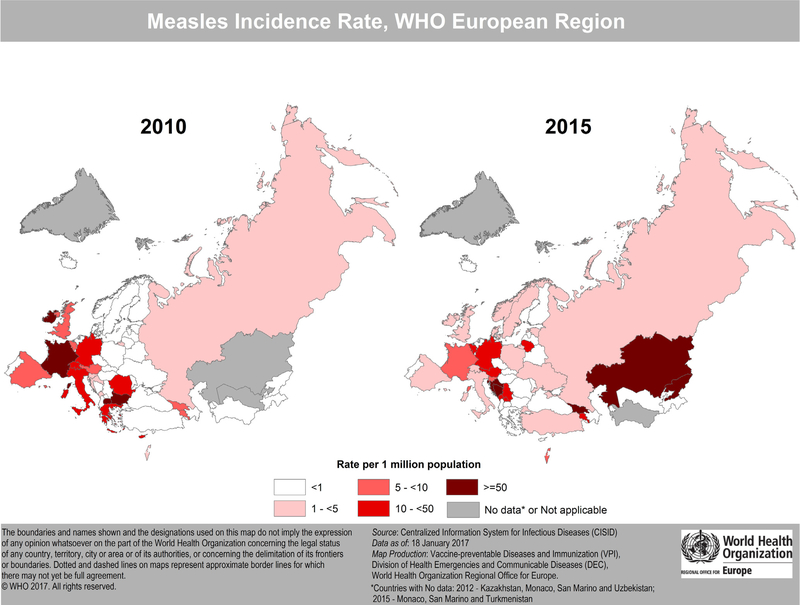
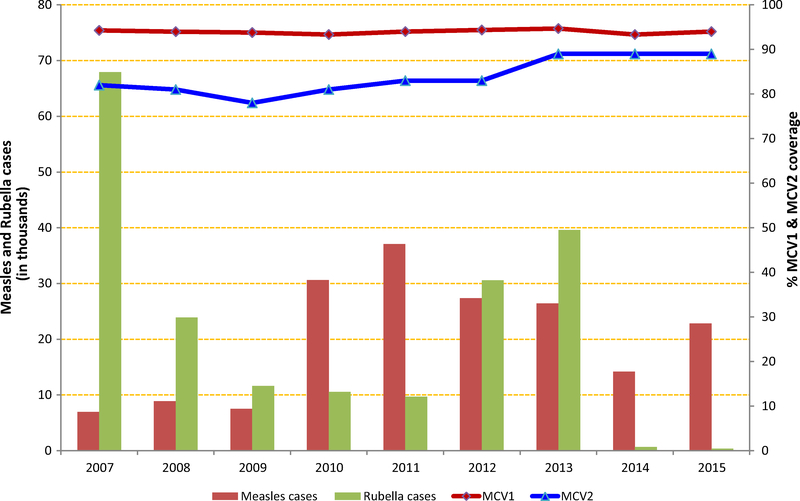
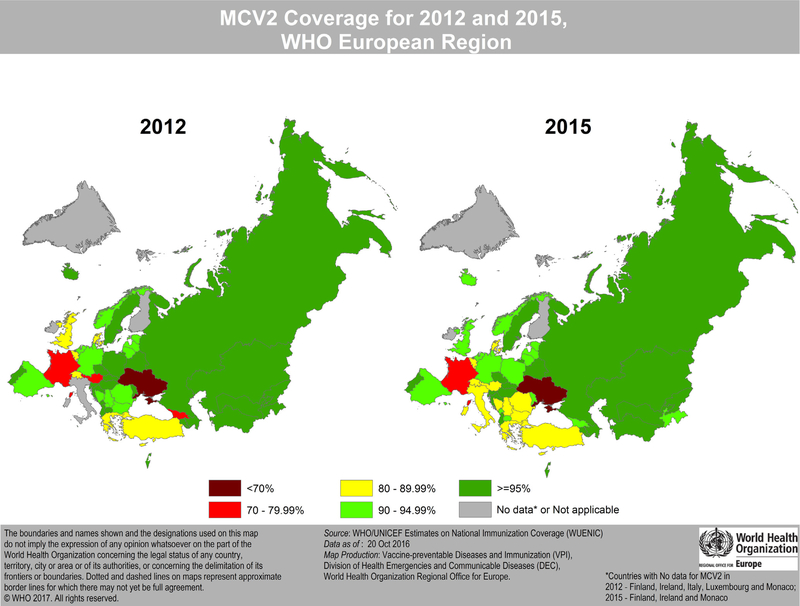
Description:Introduction ; Despite availability of safe and cost-effective vaccines to prevent it, measles remains one of the significant causes of death among children under five years of age globally. The World Health Organization (WHO) European Region has seen a drastic decline in measles and rubella cases in recent years, and a few of the once common measles genotypes are no longer detected. Buoyed by this success, all Member States of the Region reconfirmed their commitment in 2010 to eliminating measles and rubella, and made this a central objective of the European Vaccine Action Plan 2015–2020 (EVAP). Nevertheless, sporadic outbreaks continue, recently affecting primarily adolescents and young adults with no vaccination or an incomplete vaccination history. The European Regional Verification Commission for Measles and Rubella Elimination was established in 2011 to evaluate the status of measles and rubella elimination based on documentation submitted annually by each country’s national verification committee. ; Discussion ; Each country’s commitment to eliminate measles and rubella is influenced by competing health priorities, and in some cases lack of capacity and resources. All countries need to improve case-base surveillance for both measles and rubella, ensure documentation of each outbreak and strengthen the link between epidemiology and laboratory data. Achieving high coverage with measles- and rubella-containing vaccines will require a multisectoral approach to address the root causes of lower uptake in identified communities including service delivery challenges or vaccine safety concerns caused by circulating myths about vaccination. ; Conclusions ; The WHO European Region has made steady progress towards eliminating measles and rubella and over half of the countries interrupted endemic transmission of both diseases by 2015. The programmatic challenges in disease surveillance, vaccination service delivery and communication in the remaining endemic countries should be addressed through periodic evaluation of the strategies by all stakeholders and exploring additional opportunities to accelerate the ongoing elimination activities.
-
Subjects:
-
Keywords:
-
Source:Vaccine. 36(36):5408-5415
-
DOI:
-
Pubmed ID:28651838
-
Pubmed Central ID:PMC6524644
-
Document Type:
-
Funding:
-
Genre:
-
Volume:36
-
Issue:36
-
Download URL:
-
File Type:
 [PDF - 1.23 MB]
 -
Collection(s):
-
Main Document Checksum:urn:sha-512:4f646951cafbcc790a9ccbf6398ca212f03b43aaf62399ef6ba0eac5f345fc4b863f4949a56460922f9935bc5dba9aa32452b71271035d98ff573691afe028b7
Supporting Files


File Language:
English
 Was this page helpful?
 Found an issue?





CDC STACKS serves as an archival repository of CDC-published products including
scientific findings, journal articles, guidelines, recommendations, or other public health information authored or
co-authored by CDC or funded partners.
As a repository, CDC STACKS retains documents in their original published format to ensure public access to scientific information.
As a repository, CDC STACKS retains documents in their original published format to ensure public access to scientific information.
You May Also Like
COLLECTION
CDC Public Access