


Self-Efficacy, Beliefs and Goals: Moderation of Declining Physical Activity during Adolescence
Supporting Files

-
April 11 2019
-
File Language:
English
Details
-
Alternative Title:Health Psychol
-
Personal Author:
-
Description:Objective.
To examine whether the decline in physical activity observed from childhood through adolescence is explained by moderating effects of self-efficacy on concurrent changes in children’s goals and beliefs about their physical activity environments.
Methods.
Latent growth modeling was used in longitudinal tests in a cohort of 79 boys and 108 girls assessed in 5th, 6th, 7th, 9th and 11th grades.
Results.
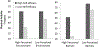
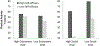
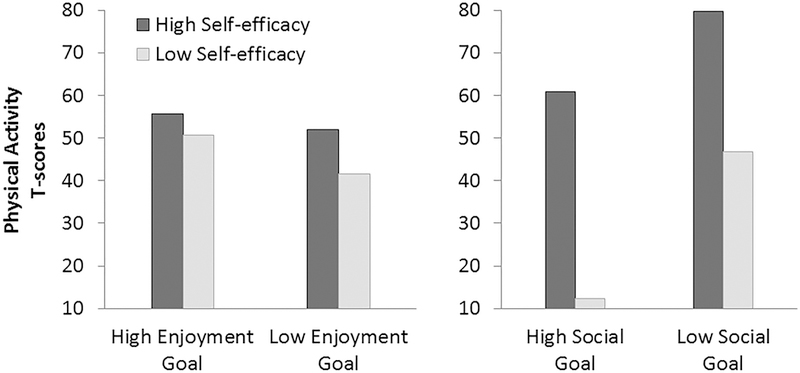
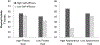
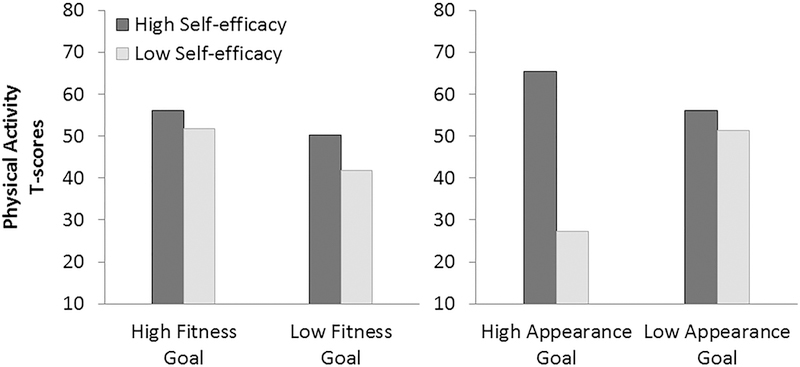
Physical activity measured objectively by an accelerometer declined most in students who had bigger declines in self-efficacy and: (1) maintained higher perceptions of barriers to physical activity, (2) had bigger declines in enjoyment and fitness goals, or (3) had smaller declines in appearance and social goals.
Conclusions.
Trials of physical activity interventions based on social-cognitive theory should consider that the influence of changing goals on physical activity may differ according to whether students maintain high efficacy beliefs about overcoming barriers to physical activity coincident with perceptions of their physical activity environment.
-
Subjects:
-
Source:Health Psychol. 38(6):483-493
-
Pubmed ID:30973746
-
Pubmed Central ID:PMC6522322
-
Document Type:
-
Funding:
-
Volume:38
-
Issue:6
-
Collection(s):
-
Main Document Checksum:urn:sha256:c28f7c60e6dd26bd8d4acd34a327159856d5a01c983deb90012ac0bb37a3d449
-
Download URL:
-
File Type:
 [PDF
- 532.32 KB
]
[PDF
- 532.32 KB
]
Supporting Files


File Language:
English
ON THIS PAGE


CDC STACKS serves as an archival repository of CDC-published products including
scientific findings,
journal articles, guidelines, recommendations, or other public health information authored or
co-authored by CDC or funded partners.
As a repository, CDC STACKS retains documents in their original published format to ensure public access to scientific information.
As a repository, CDC STACKS retains documents in their original published format to ensure public access to scientific information.
You May Also Like
COLLECTION
CDC Public Access