



Economic value of vaccinating geographically hard-to-reach populations with measles vaccine: A modeling application in Kenya
Supporting Files

-
4 17 2019
-
Available in CDC Stacks on 2019-10-17T00:00:00Z
File Language:
English
Details
-
Journal Article:Vaccine
-
Personal Author:Lee, Bruce Y. ; Brown, Shawn T. ; Haidari, Leila A. ; Clark, Samantha ; Abimbola, Taiwo ; Pallas, Sarah E. ; Wallace, Aaron S. ; Mitgang, Elizabeth A. ; Leonard, Jim ; Bartsch, Sarah M. ; Yemeke, Tatenda T. ; Zenkov, Eli ; Ozawa, Sachiko
-
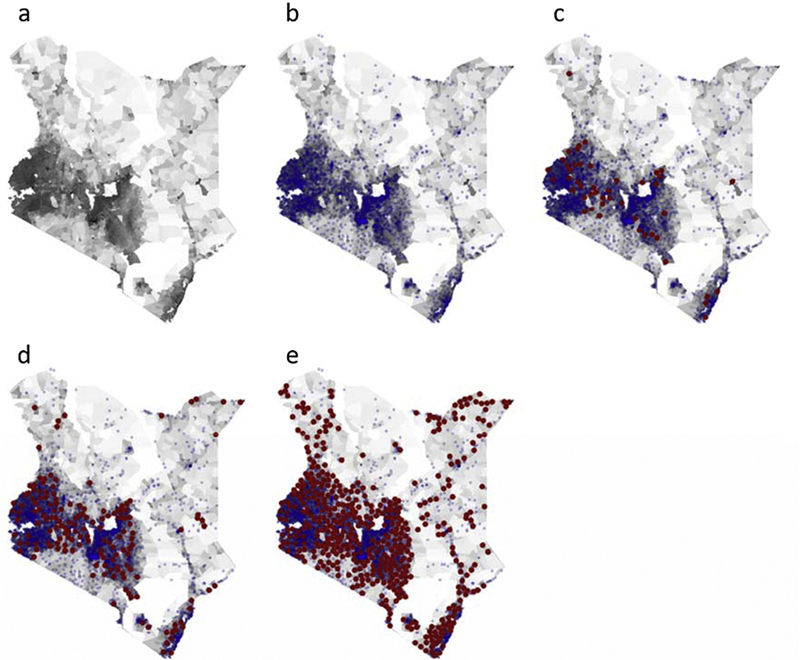
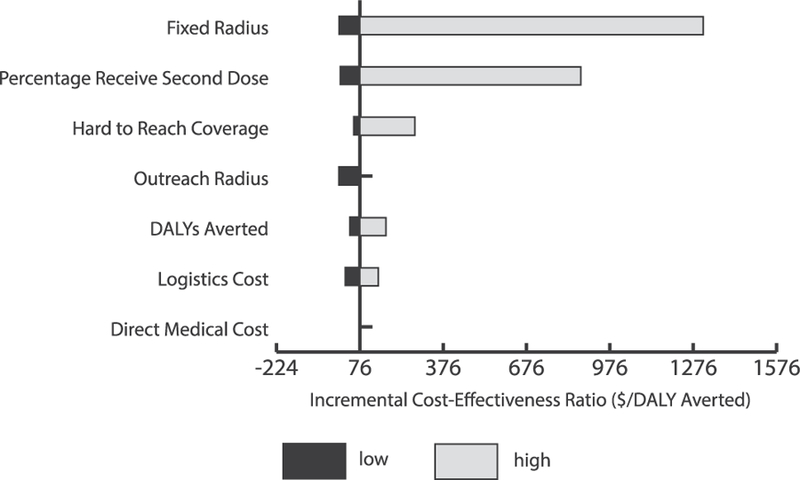
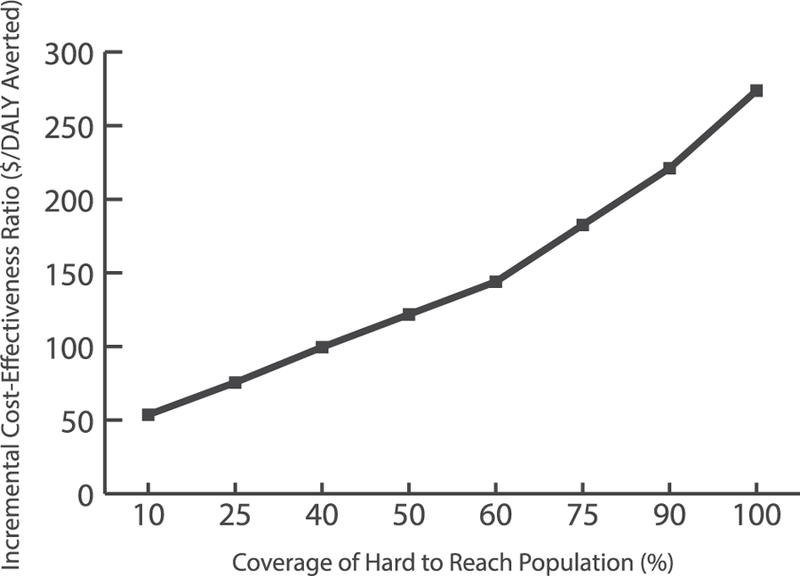
Description:Background: ; Since special efforts are necessary to vaccinate people living far from fixed vaccination posts, decision makers are interested in knowing the economic value of such efforts. ; Methods: ; Using our immunization geospatial information system platform and a measles compartment model, we quantified the health and economic value of a 2-dose measles immunization outreach strategy for children <24 months of age in Kenya who are geographically hard-to-reach (i.e., those living outside a specified catchment radius from fixed vaccination posts, which served as a proxy for access to services). ; Findings: ; When geographically hard-to-reach children were not vaccinated, there were 1427 total measles cases from 2016 to 2020, resulting in $9.5 million ($3.1–$18.1 million) in direct medical costs and productivity losses and 7504 (3338–12,903) disability-adjusted life years (DALYs). The outreach strategy cost $76 ($23–$142)/DALY averted (compared to no outreach) when 25% of geographically hard-to-reach children received MCV1, $122 ($40–$226)/DALY averted when 50% received MCV1, and $274 ($123–$478)/DALY averted when 100% received MCV1. ; Conclusion: ; Outreach vaccination among geographically hard-to-reach populations was highly cost-effective in a wide variety of scenarios, offering support for investment in an effective outreach vaccination strategy.
-
Subjects:
-
Keywords:
-
Source:Vaccine. 37(17):2377-2386
-
DOI:
-
Pubmed ID:30922700
-
Pubmed Central ID:PMC6487493
-
Document Type:
-
Funding:
-
Genre:
-
Volume:37
-
Issue:17
-
Download URL:
-
File Type:
 [PDF - 598.90 KB]
 -
Collection(s):
-
Main Document Checksum:urn:sha-512:beda38d6e7c6d73fef178dba0104a79e362eb86c7928042086eaf18e1ac8b58200817a7d25c1a6ae3ecadfaf2772cc2f40e981c24c6e6440f71be3ad0b7ada0e
Supporting Files


File Language:
English
 Was this page helpful?
 Found an issue?


CDC STACKS serves as an archival repository of CDC-published products including
scientific findings, journal articles, guidelines, recommendations, or other public health information authored or
co-authored by CDC or funded partners.
As a repository, CDC STACKS retains documents in their original published format to ensure public access to scientific information.
As a repository, CDC STACKS retains documents in their original published format to ensure public access to scientific information.
You May Also Like
COLLECTION
CDC Public Access