



Comparing trap designs and methods for assessing density of synanthropic flies in Odisha, India
Supporting Files

-
February 07 2019
-
Available in CDC Stacks on February 07, 2019, 12:00 AM
File Language:
English
Details
-
Journal Article:Parasit Vectors
-
Personal Author:
-
Description:Background
There are many different traps available for studying fly populations. The aim of this study was to find the most suitable trap to collect synanthropic fly populations to assess the impact of increased latrine coverage in the state of Odisha, India.
Methods
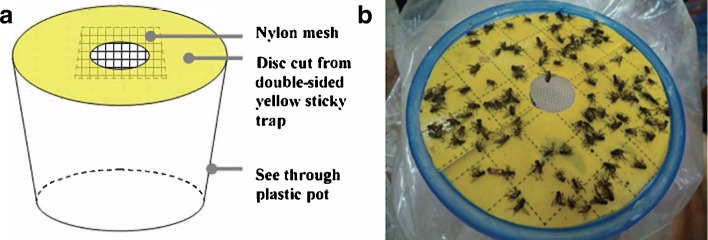
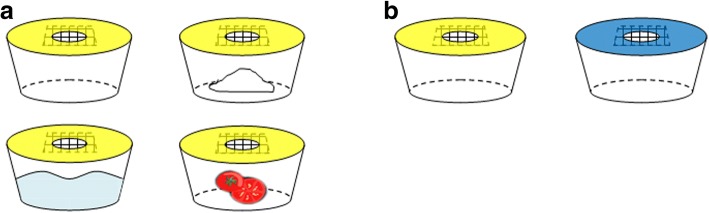
Different baits were assessed for use in sticky pot traps (60% sucrose solution, 60 g dry sucrose, half a tomato and an non-baited control), followed by different colours of trap (blue versus yellow) and finally different types of trap (baited sticky pot trap versus sticky card traps). The experiments were undertaken in a semi-urban slum area of Bhubaneswar, the capital of Odisha. The first experiment was conducted in 16 households over 30 nights while experiments 2 and 3 were conducted in 5 households over 30 nights.
Results
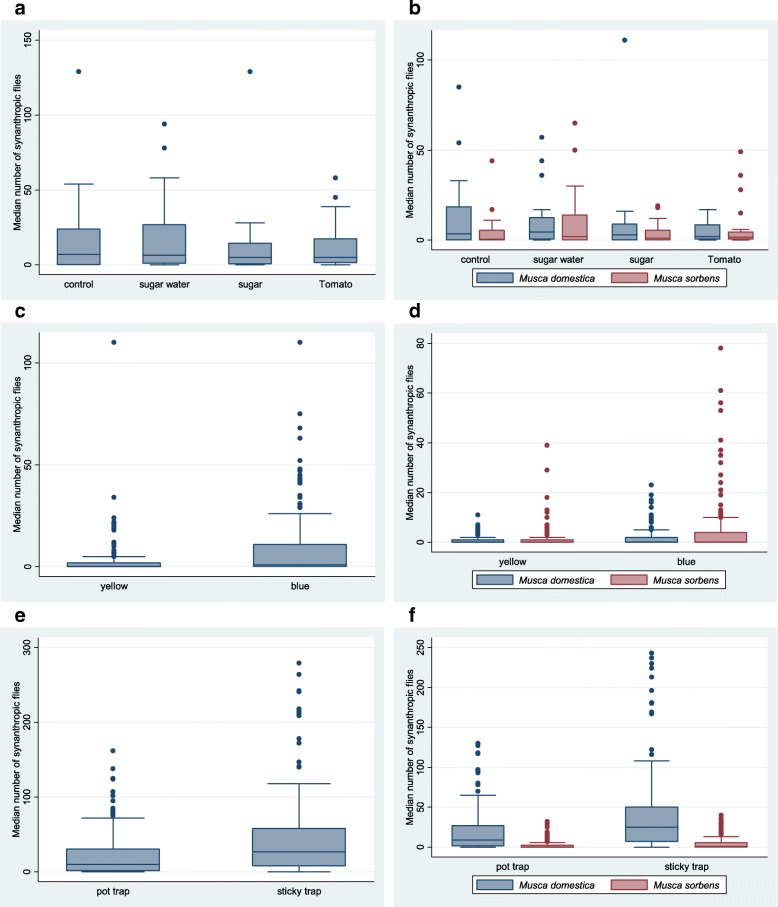
The traps predominantly caught adult Musca domestica and M. sorbens (78.4, 62.6, 83.8% combined total in experiments 1–3 respectively). Non-baited traps did not catch more flies (median 7.0, interquartile range, IQR: 0.0–24.0) compared with baited traps (sucrose solution: 6.5, 1.0–27.0; dry sucrose: 5.0, 0.5–14.5; tomato: 5.0, 1.5–17.5). However, there were significantly more flies collected on blue sticky pot traps, which caught nearly three times as many flies as yellow sticky pot traps (Incidence Rate Ratio, IRR = 2.91; 95% CI: 1.77–4.79); P < 0.001). Sticky card traps (27, 8–58) collected significantly more flies than the non-baited sticky pot traps (10, 1.5–30.5).
Conclusions
Blue sticky card traps can be recommended for the capture of synanthropic fly species as they are non-intrusive to residents, easy to use, readily allow for species identification, and collect sufficient quantities of flies over 12 hours for use in monitoring and control programmes. -
Subjects:
-
Source:Parasit Vectors. 12
-
DOI:
-
Pubmed ID:30732628
-
Pubmed Central ID:PMC6367737
-
Document Type:
-
Funding:
-
Genre:
-
Place as Subject:
-
Volume:12
-
Download URL:
-
File Type:
 [PDF - 1001.75 KB]
 -
Collection(s):
-
Main Document Checksum:urn:sha-512:b7da8f16f10d1d143499880fdc28f51be56fd1bd4db4ed950cbff6b42d7e7cc2e61910453a3c50691224d701db72596d1998989a11ff89c28c35e6d061b58279
Supporting Files


File Language:
English
 Was this page helpful?
 Found an issue?

CDC STACKS serves as an archival repository of CDC-published products including
scientific findings, journal articles, guidelines, recommendations, or other public health information authored or
co-authored by CDC or funded partners.
As a repository, CDC STACKS retains documents in their original published format to ensure public access to scientific information.
As a repository, CDC STACKS retains documents in their original published format to ensure public access to scientific information.
You May Also Like
COLLECTION
CDC Public Access