



Bacteriophage K Antimicrobial-Lock Technique for Treatment of Staphylococcus aureus Central Venous Catheter–Related Infection: A Leporine Model Efficacy Analysis
Supporting Files

-
Aug 01 2014
-
Available in CDC Stacks on April 16, 2019, 12:00 AM
File Language:
English
Details
-
Journal Article:J Vasc Interv Radiol
-
Personal Author:
-
Description:Purpose:
To determine whether a bacteriophage antimicrobial-lock technique can reduce bacterial colonization and biofilm formation on indwelling central venous catheters in a rabbit model.
Materials and Methods:
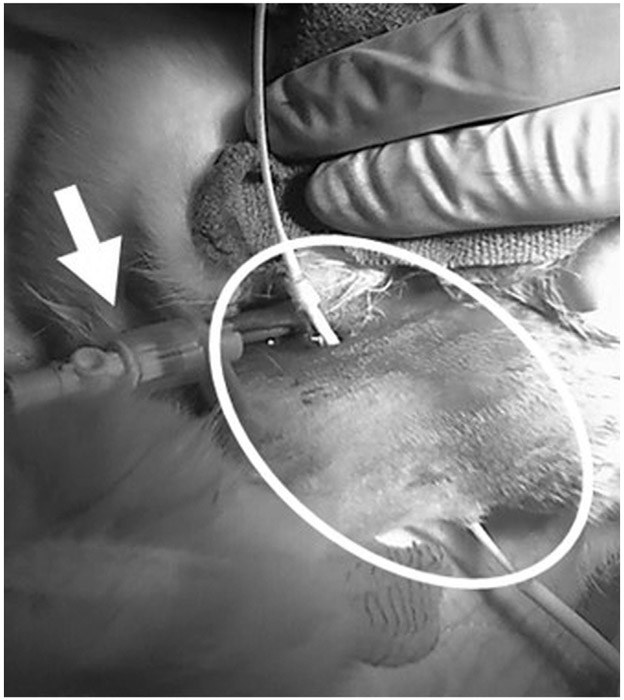
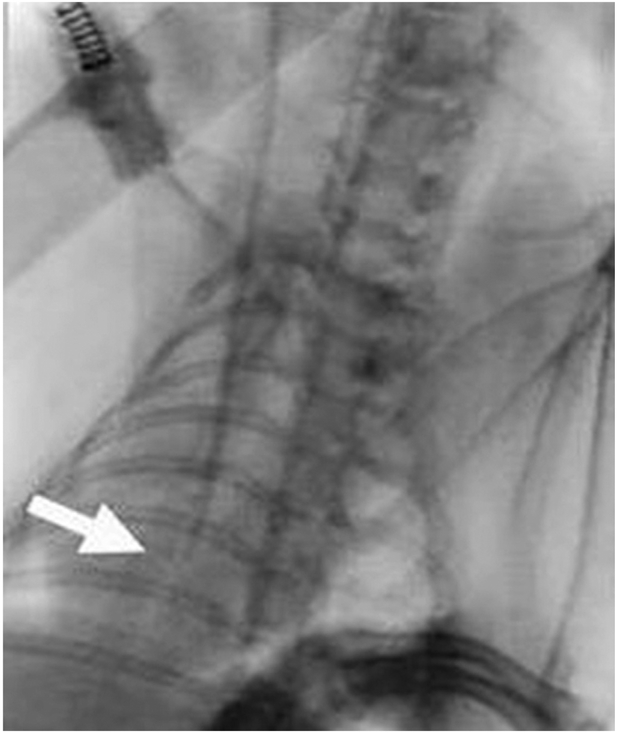
Cuffed central venous catheters were inserted into the jugular vein of female New Zealand White rabbits under image guidance. Catheters were inoculated for 24 hours with broth culture of methicillin-sensitive Staphylococcus aureus. The inoculum was aspirated, and rabbits were randomly assigned to two equal groups for 24 hours: (i) untreated controls (heparinized saline lock), (ii) bacteriophage antimicrobial-lock (staphylococcal bacteriophage K, propagated titer > 108/mL). Blood cultures were obtained via peripheral veins, and the catheters were removed for quantitative culture and scanning electron microscopy.
Results:
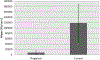
Mean colony-forming units (CFU) per cm2 of the distal catheter segment, as a measure of biofilm, were significantly decreased in experimental animals compared with controls (control, 1.2 × 10⁵ CFU/cm2; experimental, 7.6 × 10³; P = .016). Scanning electron microscopy demonstrated that biofilms were present on the surface of five of five control catheters but only one of five treated catheters (P = .048). Blood culture results were not significantly different between the groups.
Conclusions:
In a rabbit model, treatment of infected central venous catheters with a bacteriophage antimicrobial-lock technique significantly reduced bacterial colonization and biofilm presence. Our data represent a preliminary step toward use of bacteriophage therapy for prevention and treatment of central venous catheter–associated infection. -
Subjects:
-
Source:J Vasc Interv Radiol. 25(10):1627-1632
-
DOI:
-
Pubmed ID:25088065
-
Pubmed Central ID:PMC6467293
-
Document Type:
-
Funding:
-
Genre:
-
Volume:25
-
Issue:10
-
Download URL:
-
File Type:
 [PDF - 529.96 KB]
 -
Collection(s):
-
Main Document Checksum:urn:sha-512:86886e801bd4161a2f00693788eeef3bc1ad94022ab74918a05cc52dd74258f6b6bf9301cd5e5e48d2493dc359b4a63a3cf5c0f4324eb91045db9fe646d57e9a
Supporting Files


File Language:
English
 Was this page helpful?
 Found an issue?




CDC STACKS serves as an archival repository of CDC-published products including
scientific findings, journal articles, guidelines, recommendations, or other public health information authored or
co-authored by CDC or funded partners.
As a repository, CDC STACKS retains documents in their original published format to ensure public access to scientific information.
As a repository, CDC STACKS retains documents in their original published format to ensure public access to scientific information.
You May Also Like
COLLECTION
CDC Public Access