


379. Pediatric Bloodstream Infections by Candida auris in Colombia: Clinical Characteristics and Outcomes of 34 Cases
Supporting Files
Public Domain

-
November 26 2018
-
File Language:
English
Details
-
Alternative Title:Open Forum Infect Dis
-
Personal Author:
-
Description:Background
The emerging multidrug-resistant yeast Candida auris can cause invasive infections associated with high mortality. To date, a majority of C. auris infections have been reported among adults. This report describes cases of pediatric C. auris bloodstream infections (BSI) that occurred during January 2015–September 2016 at two hospitals in Colombia.
Methods
After the Colombian National Institute of Health released a clinical alert about C. auris in September 2016, we conducted a retrospective review of microbiology records for possible C. auris cases in two acute care hospitals in Barranquilla and Cartagena. BSIs occurring in patients <18 years confirmed as C. auris were included in this analysis. Patient information was collected from medical records.
Results
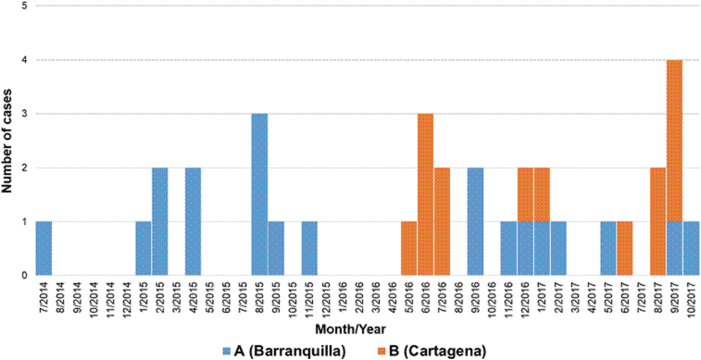
We identified 34 children with C. auris BSI. Cases appeared to cluster in time within each hospital (Figure 1). Twenty-two (65%) patients were male, 21% were <28 days old, 47% were 29–365 days old, and 32% were >1 year. Underlying conditions included preterm birth (26%), altered nutritional status (59%), cancer (12%), solid-organ transplant (3%), and renal disease (3%). Eighty-two percent had a central venous catheter (CVC), 82% on respiratory support, 56% received total parenteral nutrition (TPN), 15% had a surgical procedure, and 9% received hemodialysis. All patient received antibiotics in the 14 days before C. auris BSI, and 97% received antifungal treatment for BSI. Median inpatient stay before onset of C. auris BSI was 22 days (interquartile range: 17–30 days), and in-hospital mortality was 41%.
Conclusion
Similar to other Candida BSI, C. auris affects children with a variety of medical conditions including prematurity, malignancy, and those with CVCs, and receiving TPN. Mortality was high, with nearly half of patients dying before discharge. However, unlike most other Candida species, C. auris can be transmitted in healthcare settings, as suggested by the close clustering of cases in time at each of the hospitals. Pediatric wards should be vigilant for C. auris outbreaks and take necessary infection control measures to stop the spread of the organism.
Disclosures
All authors: No reported disclosures.
-
Subjects:
-
Source:Open Forum Infect Dis. 2018; 5(Suppl 1):S147
-
Pubmed Central ID:PMC6253905
-
Document Type:
-
Genre:
-
Place as Subject:
-
Volume:5
-
Collection(s):
-
Main Document Checksum:urn:sha256:6e7d62c7c41e5b47f50a7faeaf181aaf3b97c262061b7d875e5a3e7cb8543c26
-
Download URL:
-
File Type:
 [PDF
- 217.74 KB
]
[PDF
- 217.74 KB
]
Supporting Files


File Language:
English
ON THIS PAGE


CDC STACKS serves as an archival repository of CDC-published products including
scientific findings,
journal articles, guidelines, recommendations, or other public health information authored or
co-authored by CDC or funded partners.
As a repository, CDC STACKS retains documents in their original published format to ensure public access to scientific information.
As a repository, CDC STACKS retains documents in their original published format to ensure public access to scientific information.
You May Also Like
COLLECTION
CDC Public Access