



Living Alone and Homelessness as Predictors of 30-Day Potentially Preventable Hospital Readmission
Supporting Files

-
February 07 2019
File Language:
English
Details
-
Journal Article:Preventing Chronic Disease (PCD)
-
Personal Author:
-
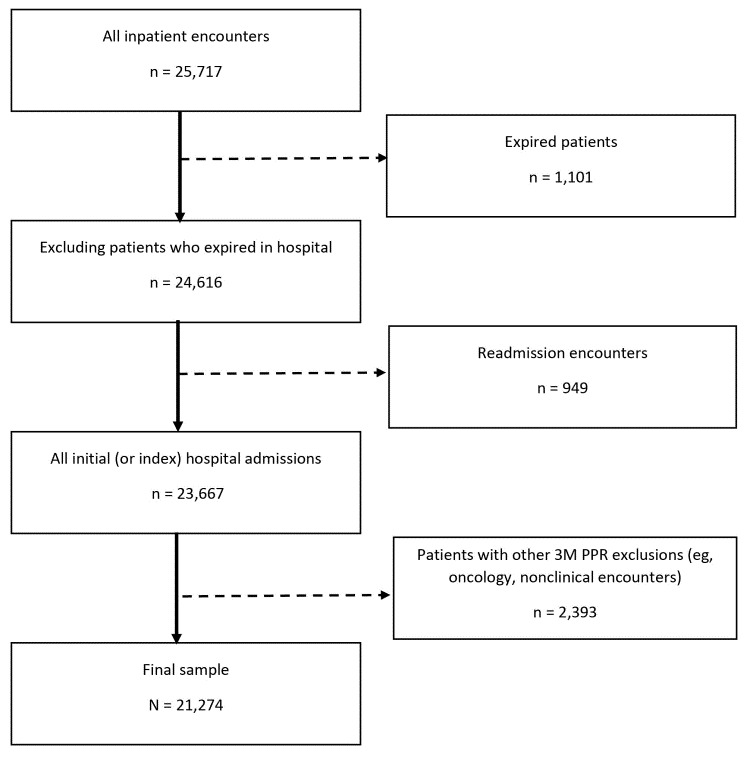
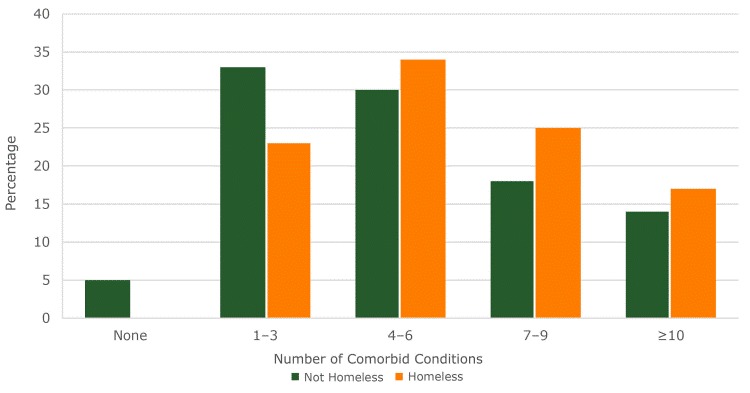
Description:Introduction ; The effect of social factors on health care outcomes is widely recognized. Health care systems are encouraged to add social and behavioral measures to electronic health records (EHRs), but limited research demonstrates how to leverage this information. We assessed 2 social factors collected from EHRs — social isolation and homelessness — in predicting 30-day potentially preventable readmissions (PPRs) to hospital. ; Methods ; EHR data were collected from May 2015 through April 2017 from inpatients at 2 urban hospitals on O‘ahu, Hawai‘i (N = 21,274). We performed multivariable logistic regression models predicting 30-day PPR by living alone versus living with others and by documented homelessness versus no documented homelessness, controlling for relevant factors, including age group, race/ethnicity, sex, and comorbid conditions. ; Results ; Among the 21,274 index hospitalizations, 16.5% (3,504) were people living alone and 11.2% (2,385) were homeless; 4.2% (899) hospitalizations had a 30-day PPR. In bivariate analysis, living alone did not significantly affect likelihood of a 30-day PPR (16.6% 3,376 hospitalizations without PPR vs 14.4% 128 hospitalizations with PPR; P = .09). However, documented homelessness did show a significant effect on the likelihood of 30-day PPR in the bivariate analysis (11.1% 2,259 hospitalizations without PPR vs 14.1% 126 hospitalizations with PPR; P = .006). In multivariable models, neither living alone nor homelessness was significantly associated with PPR. Factors that were significantly associated with PPR were comorbid conditions, discharge disposition, and use of an assistive device. ; Conclusion ; Homelessness predicted PPR in descriptive analyses. Neither living alone nor homelessness predicted PPR once other factors were controlled. Instead, indicators of physical frailty (ie, use of an assistive device) and medical complexity (eg, hospitalizations that required assistive care post-discharge, people with a high number of comorbid conditions) were significant. Future research should focus on refining, collecting, and applying social factor data obtained through acute care EHRs.
-
Subjects:
-
Source:Prev Chronic Dis. 16
-
DOI:
-
ISSN:1545-1151
-
Pubmed ID:30730829
-
Pubmed Central ID:PMC6395076
-
Document Type:
-
Funding:
-
Place as Subject:
-
Location:
-
Volume:16
-
Download URL:
-
File Type:
 [PDF - 392.79 KB]
 -
Collection(s):
-
Main Document Checksum:urn:sha-512:855e23d2886bf0eb4cd340ed6cd5ba62a8f165fc1910d9972c1f1ff35bc4f2a505280c1d6e8a862e05db360133a249024662a94af503b33caea718091476d1d8
Supporting Files


File Language:
English
 Was this page helpful?
 Found an issue?

CDC STACKS serves as an archival repository of CDC-published products including
scientific findings, journal articles, guidelines, recommendations, or other public health information authored or
co-authored by CDC or funded partners.
As a repository, CDC STACKS retains documents in their original published format to ensure public access to scientific information.
As a repository, CDC STACKS retains documents in their original published format to ensure public access to scientific information.
You May Also Like
COLLECTION
Preventing Chronic Disease