



Carbon monoxide emission rates from roasted whole bean and ground coffee
Supporting Files

-
1 2019
-
Available in CDC Stacks on February 27, 2020, 12:00 AM
File Language:
English
Details
-
Journal Article:J Air Waste Manag Assoc
-
Personal Author:
-
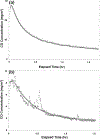
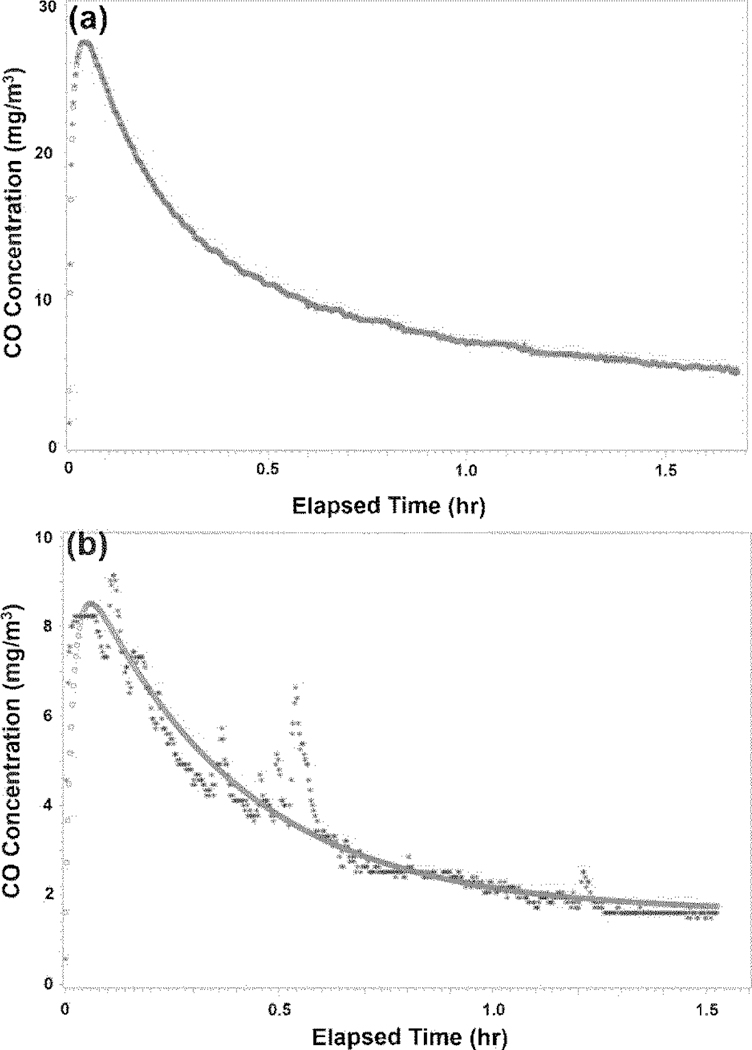
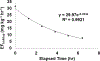
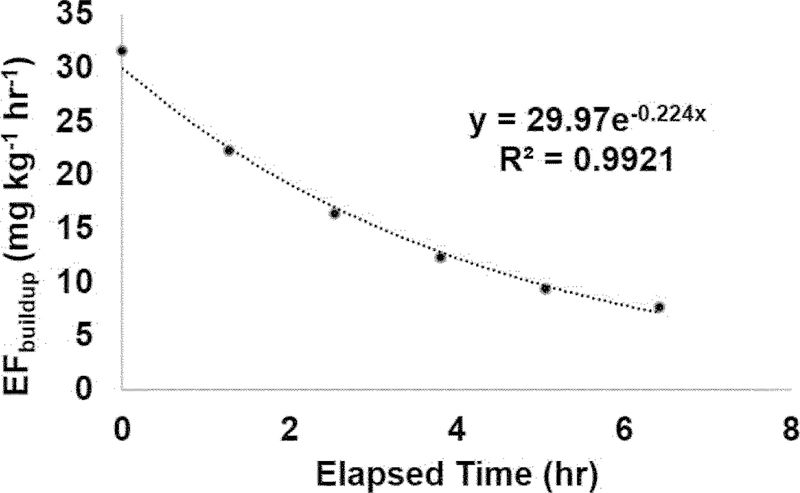
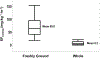
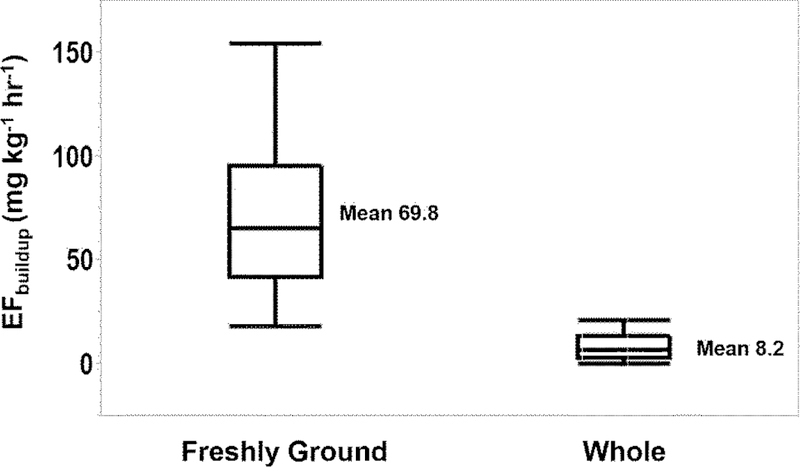
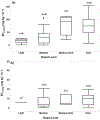
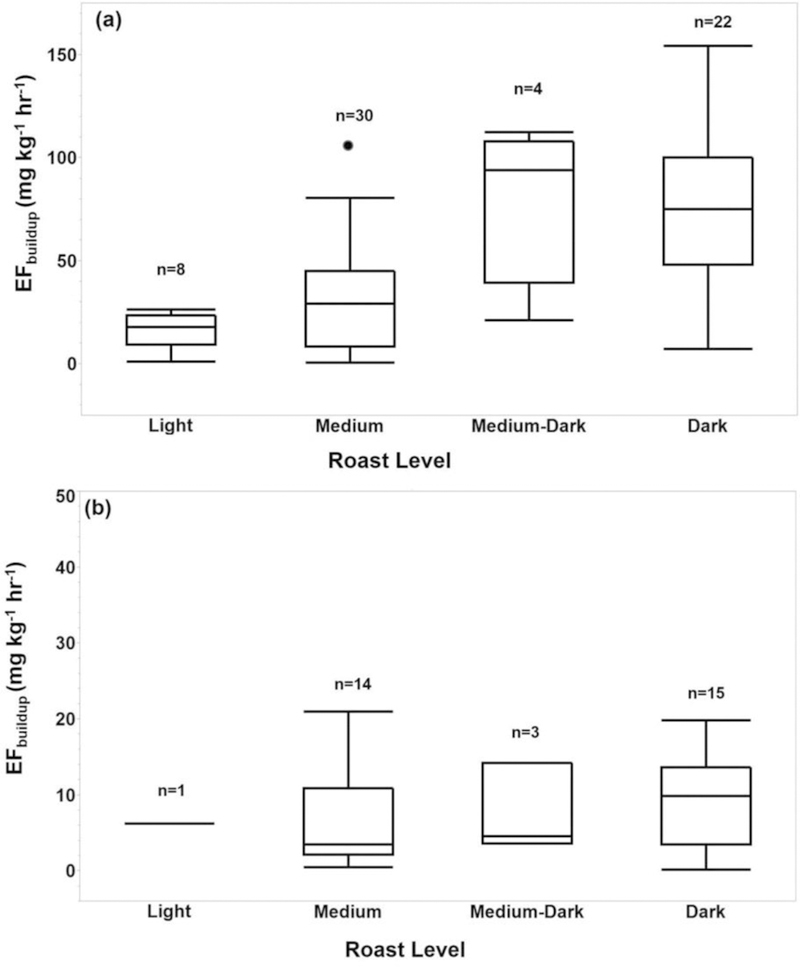
Description:Carbon monoxide (CO) emitted from roasted coffee is a potential occupational respiratory exposure hazard to workers within the coffee industry. The current study objective was to estimate CO emission factors from commercially available roasted whole bean and ground coffee measured in loose form, not packaged, and to assess the utility of CO monitoring in nonventilated storage spaces such as within coffee roasting and packaging facilities, transport vessels, and cafés. Determinants affecting CO emissions from coffee were investigated, including form (whole bean vs. ground), roast level (light, medium, medium-dark, dark), and age (time since the package was opened). CO emission factors were estimated for roasted coffee samples from a variety of manufacturers purchased from local grocery stores and online. Emission tests were performed on 36 brands of coffee, some with more than one sample per brand and with various roast levels. Decaying source equations or smoothing functions were fitted to the CO concentration measurements. Maximum observed emission factors at the peak of the predicted concentration curve were adjusted by the time required to reach the maximum CO concentration and reported as emission factors (EF|). Ground coffee had a significantly increased EF| (| < 0.0001) compared with whole bean. Roast level did not significantly affect emissions for whole bean (| = 0.72) but did for ground (| < 0.001) coffee. For ground coffee, medium-dark and dark roasts had significantly higher emissions than medium and light roasts. Worst-case emission factors from commercially available whole bean and ground coffee measured in loose form, not packaged, showed that roasted coffee can rapidly emit CO. CO concentrations should be monitored in storage spaces in service and manufacturing facilities as well as transport vessels to ensure exposures do not exceed occupational exposure limits. Storage spaces may need to be ventilated to control CO concentrations to safe levels.|: Emission rates of carbon monoxide (CO) from roasted coffee showed that unventilated or underventilated storage spaces should be monitored and ventilated, if necessary, to control CO concentrations to safe levels.
-
Subjects:
-
Keywords:
-
Source:J Air Waste Manag Assoc. 69(1):89-96
-
DOI:
-
Pubmed ID:30148693
-
Pubmed Central ID:PMC6430709
-
Document Type:
-
Funding:
-
Genre:
-
Volume:69
-
Issue:1
-
Download URL:
-
File Type:
 [PDF - 362.87 KB]
 -
Collection(s):
-
Main Document Checksum:urn:sha-512:4d959e7b32a2c6ac8b8780913686dd8b68c043412f78de341b329de37f4e0efaec68fe0d8d1f33c4e3948cc9c6da239647b4cdc3e7035b5b4f6a5540c83ea1b9
Supporting Files


File Language:
English
 Was this page helpful?
 Found an issue?



CDC STACKS serves as an archival repository of CDC-published products including
scientific findings, journal articles, guidelines, recommendations, or other public health information authored or
co-authored by CDC or funded partners.
As a repository, CDC STACKS retains documents in their original published format to ensure public access to scientific information.
As a repository, CDC STACKS retains documents in their original published format to ensure public access to scientific information.
You May Also Like
COLLECTION
CDC Public Access