


Comparison of the toxicity of sintered and unsintered indium-tin oxide particles in murine macrophage and epidermal cells
Supporting Files

-
May 25 2017
-
File Language:
English
Details
-
Alternative Title:Toxicol Appl Pharmacol
-
Personal Author:
-
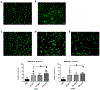
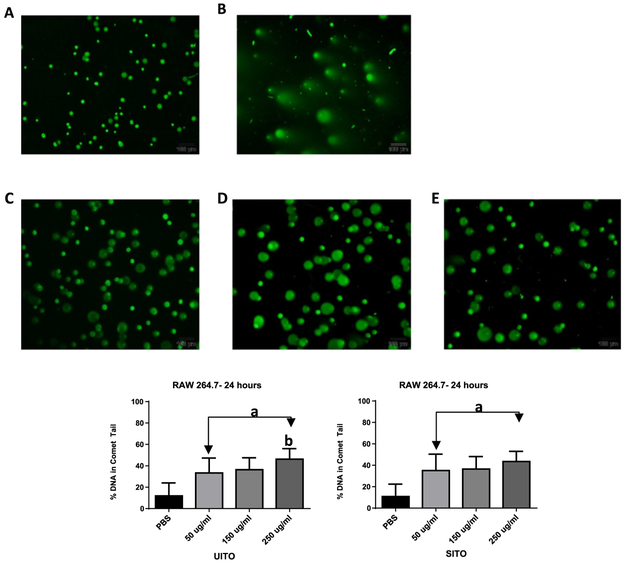
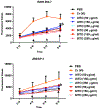
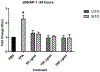
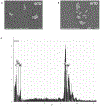
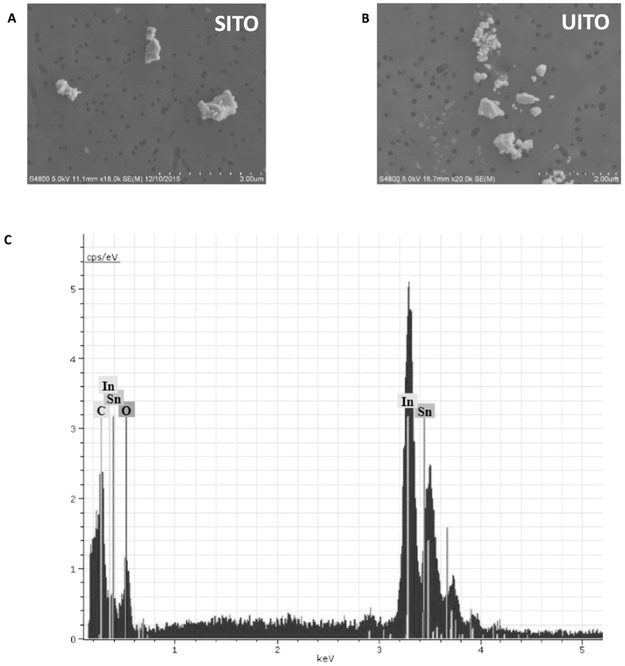
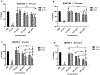
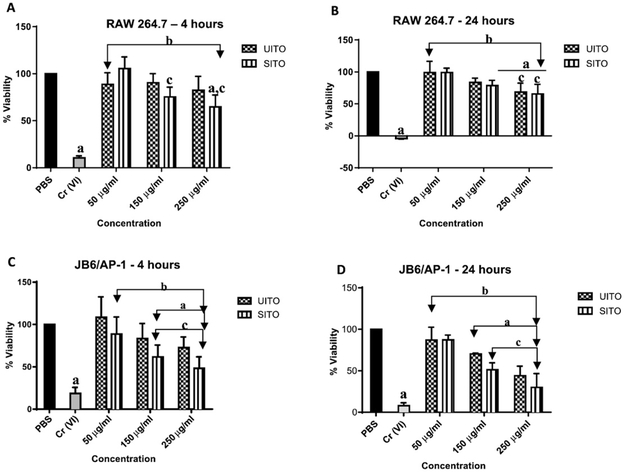
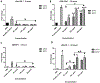
Description:Indium-tin oxide (ITO) is used to produce flat panel displays and several other technology products. Composed of 90% indium oxide (In|O|) and 10% tin oxide (SnO|) by weight, ITO is synthesized under conditions of high heat via a process known as sintering. Indium lung disease, a recently recognized occupational illness, is characterized by pulmonary alveolar proteinosis, fibrosis, and emphysema. Murine macrophage (RAW 264.7) and epidermal (JB6) cells stably transfected with AP-1 to study tumor promoting potential, were used to differentiate between the toxicological profiles of sintered ITO (SITO) and unsintered mixture (UITO). We hypothesized that sintering would play a key role in free radical generation and cytotoxicity. Exposure of cells to both UITO and SITO caused a time and dose dependent decrease of the viability of cells. Intracellular ROS generation was inversely related to the dose of both UITO and SITO, a direct reflection of the decreased number of viable RAW 264.7 and JB6/AP-1 cells observed at higher concentrations. Electron spin resonance showed significantly increased hydroxyl radical (OH) generation in cells exposed to UITO compared to SITO. This is different from LDH release, which showed that SITO caused significantly increased damage to the cell membrane compared to UITO. Lastly, the JB6/AP-1 cell line did not show activation of the AP-1 pathway. Our results highlight both the differences in the mechanisms of cytotoxicity and the consistent adverse effects associated with UITO and SITO exposure.
-
Subjects:
-
Source:Toxicol Appl Pharmacol. 331:85-93
-
Pubmed ID:28552777
-
Pubmed Central ID:PMC6422020
-
Document Type:
-
Funding:
-
Volume:331
-
Collection(s):
-
Main Document Checksum:urn:sha256:ffbda790ec098b3658fd97b4b354cbc780aed0889bad5738264c60667f5e3f26
-
Download URL:
-
File Type:
 [PDF
- 1.12 MB
]
[PDF
- 1.12 MB
]
Supporting Files


File Language:
English
ON THIS PAGE






CDC STACKS serves as an archival repository of CDC-published products including
scientific findings,
journal articles, guidelines, recommendations, or other public health information authored or
co-authored by CDC or funded partners.
As a repository, CDC STACKS retains documents in their original published format to ensure public access to scientific information.
As a repository, CDC STACKS retains documents in their original published format to ensure public access to scientific information.
You May Also Like
COLLECTION
CDC Public Access