



Knee pain in nursing home workers after implementation of a safe resident handling program
Supporting Files

-
10 2018
-
Available in CDC Stacks on October 01, 2019, 12:00 AM

File Language:
English
Details
-
Alternative Title:Am J Ind Med
-
Personal Author:
-
Corporate Authors:
-
Description:Purpose:
Approximately 25–30% of nursing personnel experience knee pain (KP). We sought to identify physical and psychosocial work exposures, and personal factors related to prevalent, incident, and persistent KP 5–8 years after safe resident handing program (SRHP) implementation in nursing homes.
Methods:
Health and exposure information was obtained from worker surveys 5–6 years (“F5”) and 7–8 years (“F6”) post-SRHP implementation. Prevalent KP correlates were examined at F5; persistent and incident KP predictors were analyzed at F6, utilizing robust Poisson multivariable regression.
Results:
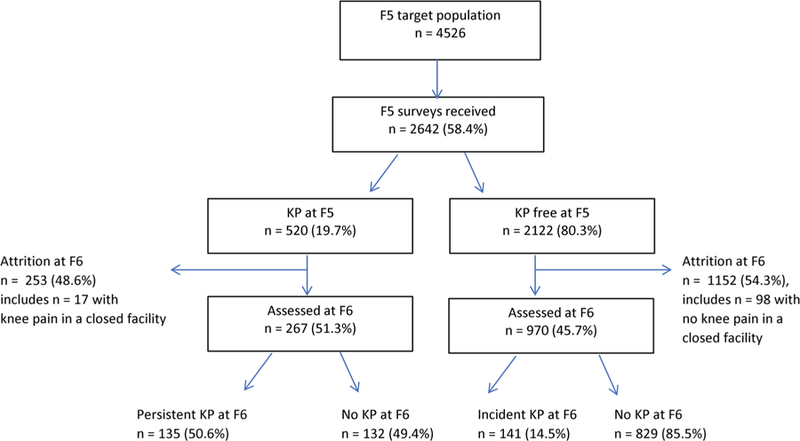
F5 KP prevalence (19.7%) was associated with combined physical exposures, and with either high job strain or low social support, in separate models. Two-year persistent KP was similarly associated with these psychosocial exposures. Being overweight was associated with KP in all analyses.
Conclusions:
The SRHP program did not eliminate knee physical loading, which should be reduced to prevent nursing home worker KP. Workplace psychosocial exposures (high job strain, low social support) also appeared germane. -
Keywords:
- healthcare workers
- job strain
- lower extremity
- moving and lifting patients
- workload
- Adult
- Arthralgia
- Female
- Health Personnel
- Humans
- Knee Joint
- Male
- Middle Aged
- Moving and Lifting Patients
- Multivariate Analysis
- Nurses
- Nursing Homes
- Occupational Stress
- Overweight
- Regression Analysis
- Social Support
- Surveys and Questionnaires
- United States
- Weight-Bearing
- Workload
-
Source:Am J Ind Med. 61(10):849-860
-
Pubmed ID:30156000
-
Pubmed Central ID:PMC6430608
-
Document Type:
-
Funding:
-
Volume:61
-
Issue:10
-
Download URL:
-
File Type:
 [PDF - 221.92 KB]
 -
Collection(s):
-
Main Document Checksum:urn:sha256:603e87ae254bc2c23ec5ded3edbabffd13b96b22d597c1a13193e9dff6389eee
Supporting Files


File Language:
English
 Was this page helpful?
 Found an issue?



CDC STACKS serves as an archival repository of CDC-published products including
scientific findings, journal articles, guidelines, recommendations, or other public health information authored or
co-authored by CDC or funded partners.
As a repository, CDC STACKS retains documents in their original published format to ensure public access to scientific information.
As a repository, CDC STACKS retains documents in their original published format to ensure public access to scientific information.
You May Also Like
COLLECTION
CDC Public Access