



Use of Electronic Vapor Products Before, During, and After Pregnancy Among Women with a Recent Live Birth — Oklahoma and Texas, 2015
Supporting Files
Public Domain

-
March 01 2019
File Language:
English
Details
-
Journal Article:Morbidity and Mortality Weekly Report (MMWR)
-
Personal Author:
-
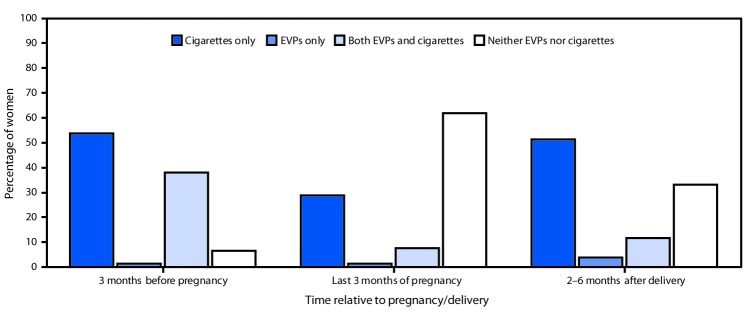
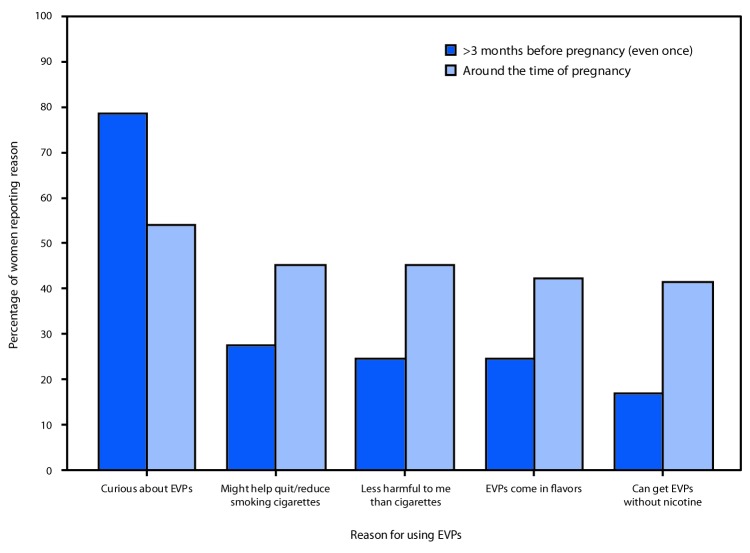
Description:Electronic vapor products (EVPs) comprise a diverse group of devices, including electronic cigarettes (e-cigarettes). EVP users inhale an aerosol that typically contains nicotine, flavorings, and other additives (1). Nicotine is a developmental toxicant that adversely affects pregnancy and infant outcomes (2). Data from the 2015 Pregnancy Risk Assessment Monitoring System (PRAMS) for Oklahoma and Texas were analyzed to estimate population-based EVP use among women with a recent live birth. EVP use before pregnancy (defined as >3 months before pregnancy) and around the time of pregnancy (defined as any time during the 3 months before pregnancy, the last 3 months of pregnancy, or 2-6 months after delivery), reasons for EVP use, and dual use of EVPs and cigarettes were assessed. Prevalence of EVP use was 10.4% before pregnancy and 7.0% around the time of pregnancy, including 1.4% during the last 3 months of pregnancy. Among women using EVPs during the last 3 months of pregnancy, 38.4% reported use of EVPs containing nicotine, and 26.4% were unsure of nicotine content. Among women who had used EVPs and cigarettes, dual use prevalence was 38.0% in the 3 months before pregnancy, 7.7% during the last 3 months of pregnancy, and 11.8% in the 2-6 months after delivery. The most frequently reported reasons for EVP use around the time of pregnancy were curiosity (54.0%), the perception that EVPs might help with quitting or reducing cigarette smoking (45.2%), and the perception of reduced harm to the mother, when compared with cigarette smoking (45.2%). Clear messages that EVP use is not safe during pregnancy are needed, and broad, barrier-free access to evidence-based tobacco cessation strategies need to be made available.
-
Subjects:
-
Source:MMWR Morbidity Mortal Weekly Rep. 68(8):189-194
-
Series:
-
DOI:
-
ISSN:0149-2195 (print) ; 1545-861X (digital)
-
Pubmed ID:30817748
-
Pubmed Central ID:PMC6394383
-
Document Type:
-
Place as Subject:
-
Pages in Document:6 pdf pages
-
Volume:68
-
Issue:8
-
Download URL:
-
File Type:
 [PDF - 186.13 KB]
 -
Collection(s):
-
Main Document Checksum:urn:sha-512:206ca30879ff5f590ab49d7a34bdd66dbdeb307885d890733ef38d98f1c90056242ca4aa11a81553b2c64558dc3e9e77475148f6e2f0b7c0316b9ebee7d22d1b
Supporting Files


File Language:
English
 Was this page helpful?
 Found an issue?

CDC STACKS serves as an archival repository of CDC-published products including
scientific findings, journal articles, guidelines, recommendations, or other public health information authored or
co-authored by CDC or funded partners.
As a repository, CDC STACKS retains documents in their original published format to ensure public access to scientific information.
As a repository, CDC STACKS retains documents in their original published format to ensure public access to scientific information.
You May Also Like
COLLECTION
Morbidity and Mortality Weekly Report (MMWR)