



In utero metal exposures measured in deciduous teeth and birth outcomes in a racially-diverse urban cohort
Supporting Files

-
4 2019 ; 4-2019
-
Available in CDC Stacks on 2020-04-01T00:00:00Z
File Language:
English
Details
-
Alternative Title:Environ Res
-
Personal Author:
-
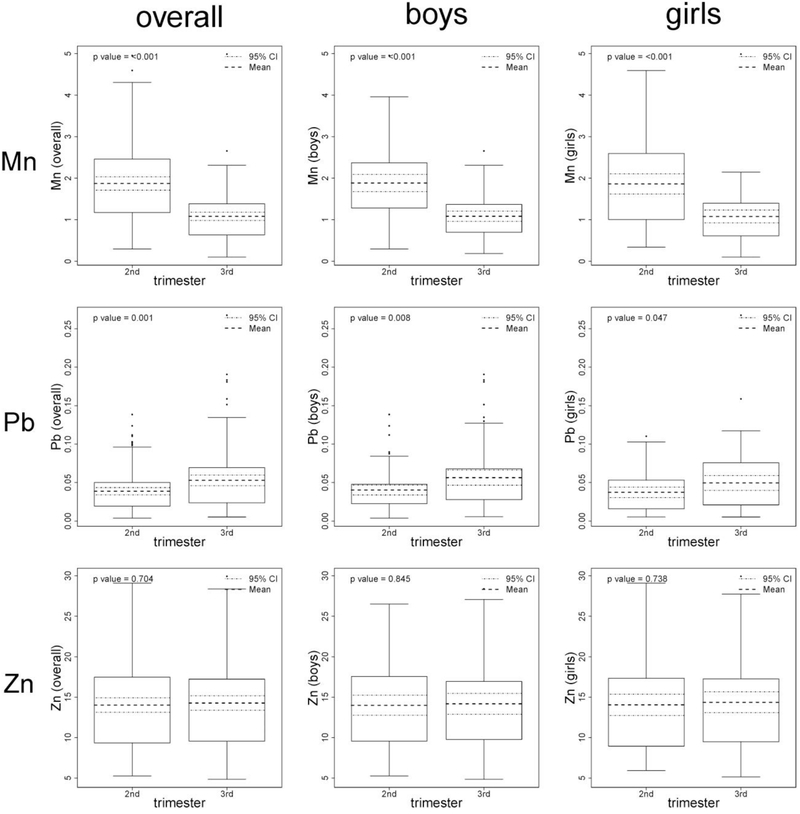
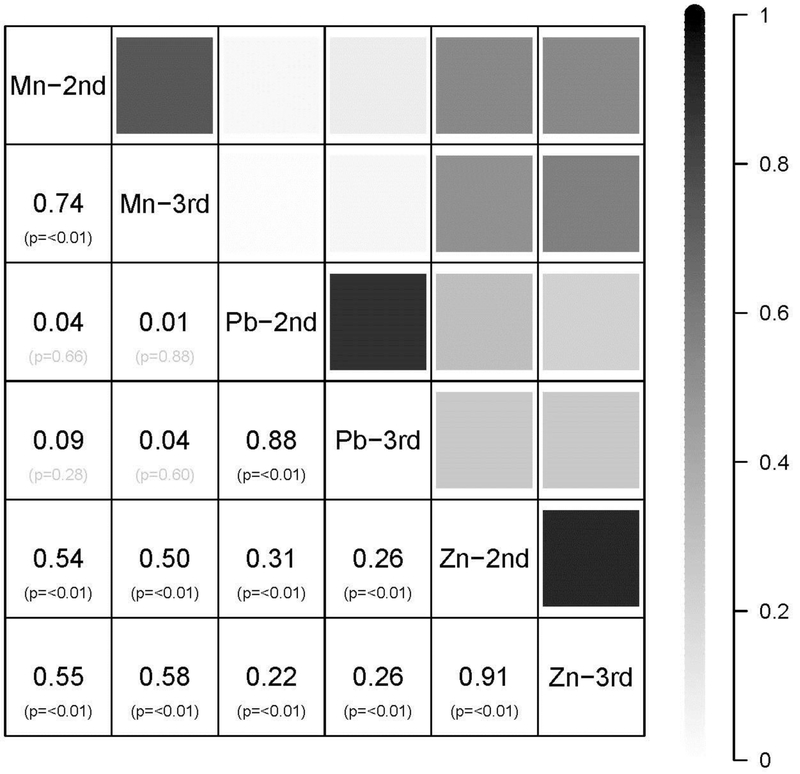
Description:A growing number of studies have examined associations of metal exposures with birth outcomes, however, results from these studies have been inconsistent, and hampered by methodological limitations. We measured direct fetal exposure to three metals (lead, manganese and zinc) during the second and third trimester and examined its association with birth weight and gestational age at delivery. Participants in the Wayne County Health, Environment, Allergy and Asthma Longitudinal Study (WHEALS), a population-based birth cohort established between September 2003 and December 2007, were invited to donate teeth to the study. Lead, manganese and zinc during the second and third trimesters were measured via high-resolution microspatial mapping of dentin growth rings, a validated biomarker for prenatal metal exposure. Gestational age at delivery and infant birth weight were obtained from the delivery medical record. A total of 145 children had tooth metal measurements and birth outcome data. Mean birth weight was 3431 ± 472 g and mean gestational age at delivery was 39.0 ± 1.3 weeks. Overall, there was a positive association between second (β = 0.21, 95% CI: 0.05, 0.37, P = 0.01) and third trimester (β = 0.21, 95% CI: 0.05, 0.37, P = 0.01) tooth manganese and birth weight Z-score; this remained statistically significant after covariate adjustment. There was also a negative association between second trimester tooth lead level and birth weight Z-score (β = -0.20, 95% CI: -0.38, -0.02, P = 0.02), however, this was attenuated after adjusting for covariates. Mixture analysis revealed similar findings. There was evidence for a sex-specific effect of manganese with birth weight Z-score, with the association stronger in female compared to male infants. Overall, we found evidence suggesting that higher in utero manganese is associated with larger birth weight Z-scores and that these associations may vary by infant sex.
-
Keywords:
-
Source:Environ Res. 171:444-451
-
Pubmed ID:30735952
-
Pubmed Central ID:PMC6402585
-
Document Type:
-
Funding:R01 ES026033/ES/NIEHS NIH HHSUnited States/ ; T42 OH008455/OH/NIOSH CDC HHSUnited States/ ; R01 HL113010/HL/NHLBI NIH HHSUnited States/ ; P30 ES023515/ES/NIEHS NIH HHSUnited States/ ; P30 ES020957/ES/NIEHS NIH HHSUnited States/ ; K99 HD087523/HD/NICHD NIH HHSUnited States/ ; DP2 ES025453/ES/NIEHS NIH HHSUnited States/ ; R01 AI110450/AI/NIAID NIH HHSUnited States/ ; R21 ES022321/ES/NIEHS NIH HHSUnited States/ ; P01 AI089473/AI/NIAID NIH HHSUnited States/ ; R01 AI050681/AI/NIAID NIH HHSUnited States/ ; P30 ES017885/ES/NIEHS NIH HHSUnited States/
-
Volume:171
-
Download URL:
-
File Type:
 [PDF - 784.16 KB]
 -
Collection(s):
-
Main Document Checksum:urn:sha256:b313d8b1f507e2f62e2af8814b29840199fd2abb6c7fb5a8809106f2d63a1dca
Supporting Files


File Language:
English
 Was this page helpful?
 Found an issue?


CDC STACKS serves as an archival repository of CDC-published products including
scientific findings, journal articles, guidelines, recommendations, or other public health information authored or
co-authored by CDC or funded partners.
As a repository, CDC STACKS retains documents in their original published format to ensure public access to scientific information.
As a repository, CDC STACKS retains documents in their original published format to ensure public access to scientific information.
You May Also Like
COLLECTION
CDC Public Access