


Lower extremity kinematics of cross-slope roof walking
Supporting Files

-
October 04 2018
File Language:
English
Details
-
Alternative Title:Appl Ergon
-
Personal Author:
-
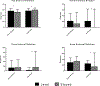
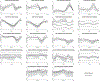
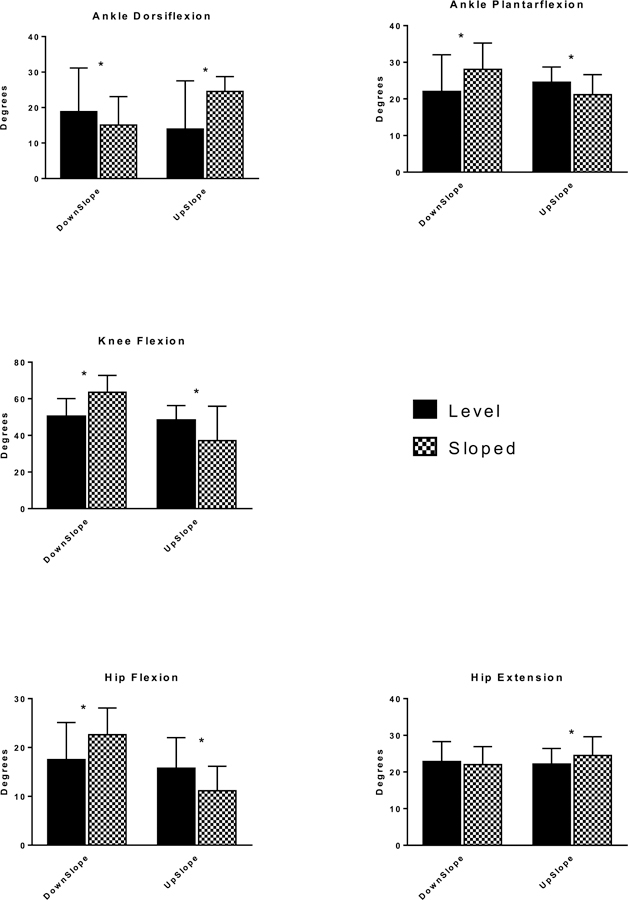
Description:Working conditions of residential roofers expose them to a unique sloped environment. The purpose of this study is to determine in what way traversing across a sloped/roof surface alters lower extremity kinematics of the upslope and downslope legs compared to level walking. College aged males negotiated across a pitched (26 degrees) roof segment during which lower extremity three-dimensional kinematics were calculated. One foot was higher on the slope and one was lower for the duration of cross slope walking. Overall, cross-slope walking on a 26 degree roof significantly altered 77% of the measured lower extremity variables compared to level self-selected pace walking. The data suggest that roof pitch incite significant differences in crossslope walking of the kinematics in the lower extremity between the upslope and down slope limbs when compared to level surface walking. These alterations could temporarily alter proprioception which may in turn lead to increased falls and musculoskeletal injury, though further study is needed.
-
Subjects:
-
Source:Appl Ergon. 75:134-142
-
Pubmed ID:30509518
-
Pubmed Central ID:PMC6401559
-
Document Type:
-
Funding:
-
Volume:75
-
Collection(s):
-
Main Document Checksum:urn:sha256:c3869346cb7114b808b081fac05be7b546edd4eca868f3799e2c77cc618aeddd
-
Download URL:
-
File Type:
 [PDF
- 454.04 KB
]
[PDF
- 454.04 KB
]
Supporting Files


File Language:
English
ON THIS PAGE







CDC STACKS serves as an archival repository of CDC-published products including
scientific findings,
journal articles, guidelines, recommendations, or other public health information authored or
co-authored by CDC or funded partners.
As a repository, CDC STACKS retains documents in their original published format to ensure public access to scientific information.
As a repository, CDC STACKS retains documents in their original published format to ensure public access to scientific information.
You May Also Like
COLLECTION
CDC Public Access