



Readiness for an Increase in Congenital Zika Virus Infections in the United States: Geographic Distance to Pediatric Subspecialist Care
Supporting Files

-
August 24 2018
-
File Language:
English
Details
-
Journal Article:Disaster Med Public Health Prep
-
Personal Author:
-
Description:Objective:
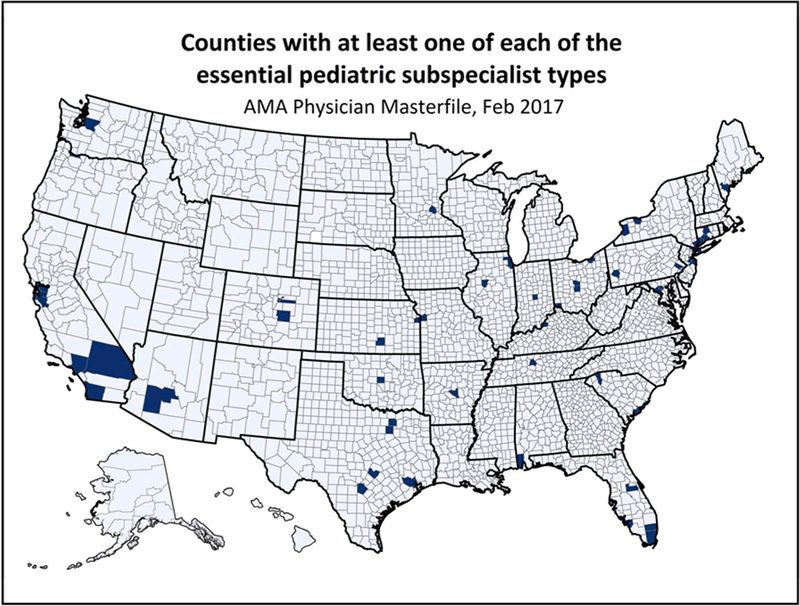
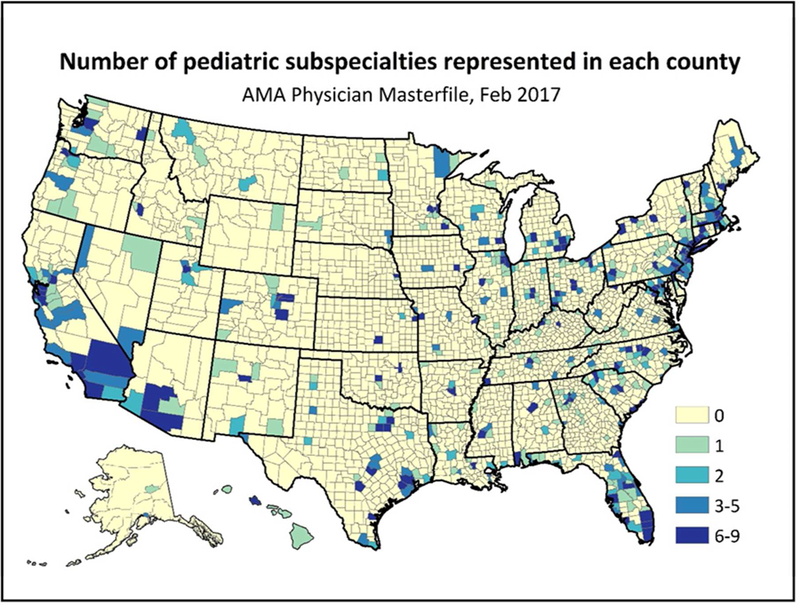
Investigate readiness for an increase in congenital Zika virus infections (CZI) by describing the distribution of pediatric subspecialists needed for the care of children with CZI.
Methods:
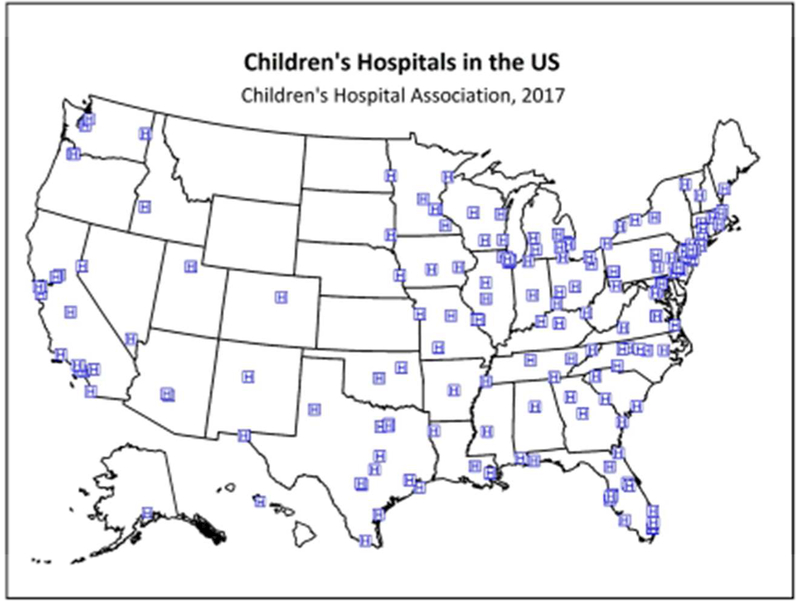
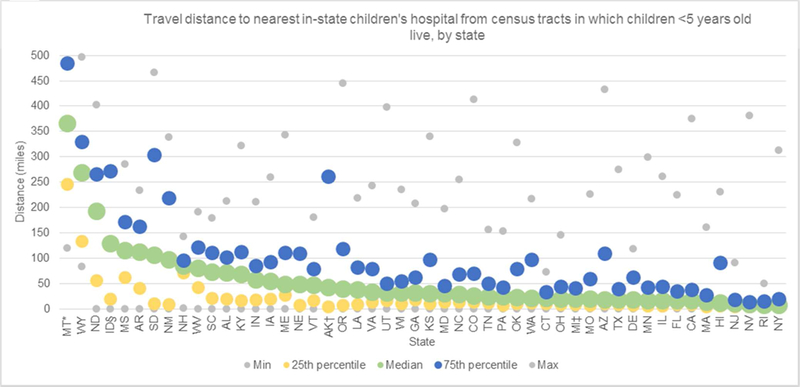
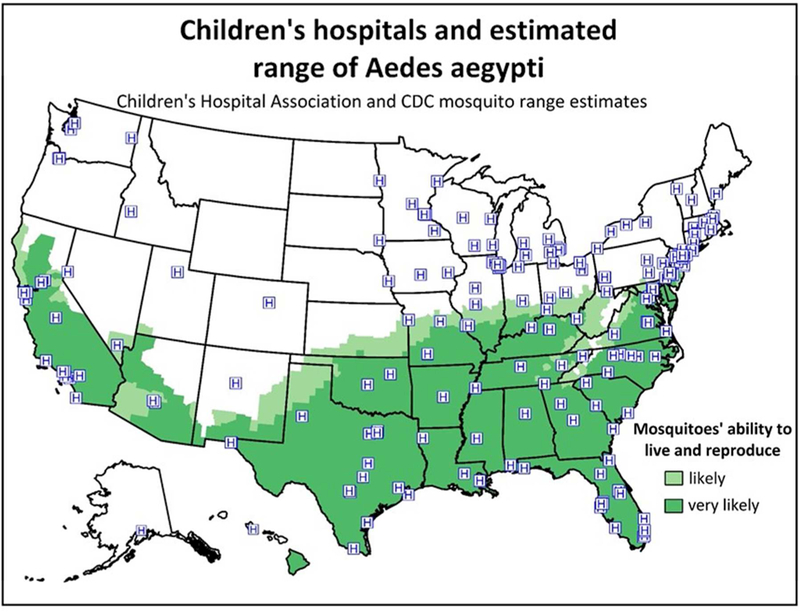
We applied county-level subspecialist counts to U.S. maps, overlaying the geocoded locations of children’s hospitals to assess correlation of hospital and subspecialist locations. We calculated travel distance from census tract centroids to the nearest in-state children’s hospital by state (with/without >100 reported adult Zika virus cases) and by regions corresponding to the likely local Zika virus transmission area and to the full range of the mosquito vector. Travel distance percentiles reflect the population of children <5 years old.
Results:
Overall, 95% of pediatric subspecialists across the United States are located in the same county or neighboring county as a children’s hospital. In the states where Zika virus transmission is likely, 25% of children must travel more than 50 miles for subspecialty care; in one state, 50% of children must travel >100 miles.
Conclusions:
The travel distance to pediatric subspecialty care varies widely by state and is likely to be an access barrier in some areas, particularly states bordering the Gulf of Mexico, which may have increasing numbers of CZI cases.
-
Subjects:
-
Source:Disaster Med Public Health Prep. 13(3):476-486
-
DOI:
-
Pubmed ID:30139407
-
Pubmed Central ID:PMC6387854
-
Document Type:
-
Funding:
-
Genre:
-
Volume:13
-
Issue:3
-
Collection(s):
-
Main Document Checksum:urn:sha-512:034eca1bd7f7b5a19889817c87b02fa93dffb3ecf09ceb23f72bde6bf70d71bd80e8068a9d1515217a029895056d7af09b2ebf3e254661324d64b6de9a6a0bef
-
Download URL:
-
File Type:
 [PDF
- 757.37 KB
]
[PDF
- 757.37 KB
]
Supporting Files


File Language:
English
 Was this page helpful?
 Found an issue?
CDC STACKS serves as an archival repository of CDC-published products including
scientific findings,
journal articles, guidelines, recommendations, or other public health information authored or
co-authored by CDC or funded partners.
As a repository, CDC STACKS retains documents in their original published format to ensure public access to scientific information.
As a repository, CDC STACKS retains documents in their original published format to ensure public access to scientific information.
You May Also Like
COLLECTION
CDC Public Access