


Cervical Cancer Survival in the United States by Race and Stage (2001-2009): Findings From the CONCORD-2 Study
Supporting Files

-
Dec 15 2017
-
File Language:
English
Details
-
Alternative Title:Cancer
-
Personal Author:
-
Description:BACKGROUND:
Overall, cervical cancer survival in the United States has been reported to be among the highest in the world, despite slight decreases over the last decade. Objective of the current study was to describe cervical cancer survival trends among US women and examine differences by race and stage.
METHODS:
This study used data from the CONCORD-2 study to compare survival among women (aged 15–99 years) diagnosed in 37 states covering 80% of the US population. Survival was adjusted for background mortality (net survival) with state- and race-specific life tables and was age-standardized with the International Cancer Survival Standard weights. Five-year survival was compared by race (all races, blacks, and whites). Two time periods, 2001–2003 and 2004–2009, were considered because of changes in how the staging variable was collected.
RESULTS:
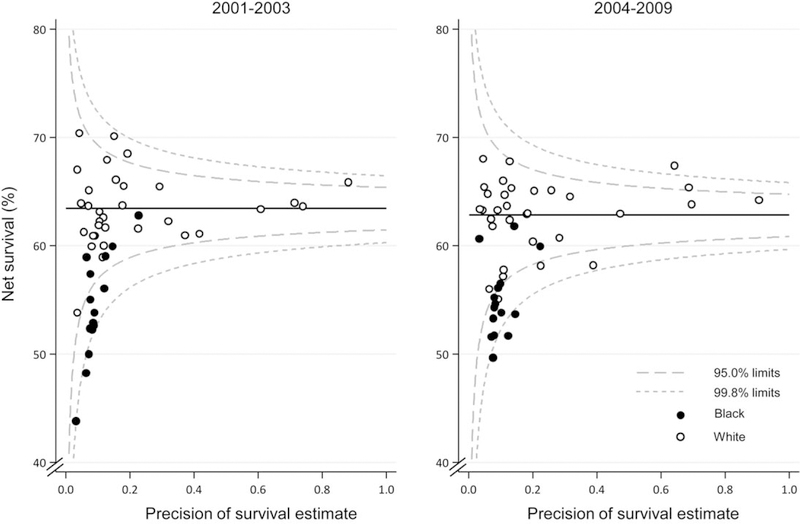
From 2001 to 2009, 90,620 women were diagnosed with invasive cervical cancer. The proportion of cancers diagnosed at a regional or distant stage increased over time in most states. Overall, the 5-year survival was 63.5% in 2001–2003 and 62.8% in 2004–2009. The survival was lower for black women versus white women in both calendar periods and in most states; black women had a higher proportion of distant-stage cancers.
CONCLUSIONS:
The stability of the overall survival over time and the persistent differences in survival between white and black women in all US states suggest that there is a need for targeted interventions and improved access to screening, timely treatment, and follow-up care, especially among black women. Cancer 2017;123:5119–37. Published 2017. This article is a U.S. Government work and is in the public domain in the USA.
-
Subjects:
-
Source:Cancer. 123(Suppl 24):5119-5137
-
Pubmed ID:29205300
-
Pubmed Central ID:PMC6386458
-
Document Type:
-
Funding:
-
Place as Subject:
-
Volume:123
-
Collection(s):
-
Main Document Checksum:urn:sha256:d9e66ad2e36c6560d2d6b0aceec1c0f685fc10fa674d93bf08e1e31be415427a
-
Download URL:
-
File Type:
 [PDF
- 616.05 KB
]
[PDF
- 616.05 KB
]
Supporting Files


File Language:
English
ON THIS PAGE


CDC STACKS serves as an archival repository of CDC-published products including
scientific findings,
journal articles, guidelines, recommendations, or other public health information authored or
co-authored by CDC or funded partners.
As a repository, CDC STACKS retains documents in their original published format to ensure public access to scientific information.
As a repository, CDC STACKS retains documents in their original published format to ensure public access to scientific information.
You May Also Like
COLLECTION
CDC Public Access