



Nanotechnology in agriculture: Opportunities, toxicological implications, and occupational risks
Supporting Files

-
8 15 2017
-
Available in CDC Stacks on 2019-02-19T00:00:00Z
File Language:
English
Details
-
Journal Article:Toxicol Appl Pharmacol
-
Personal Author:
-
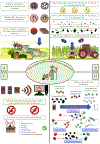
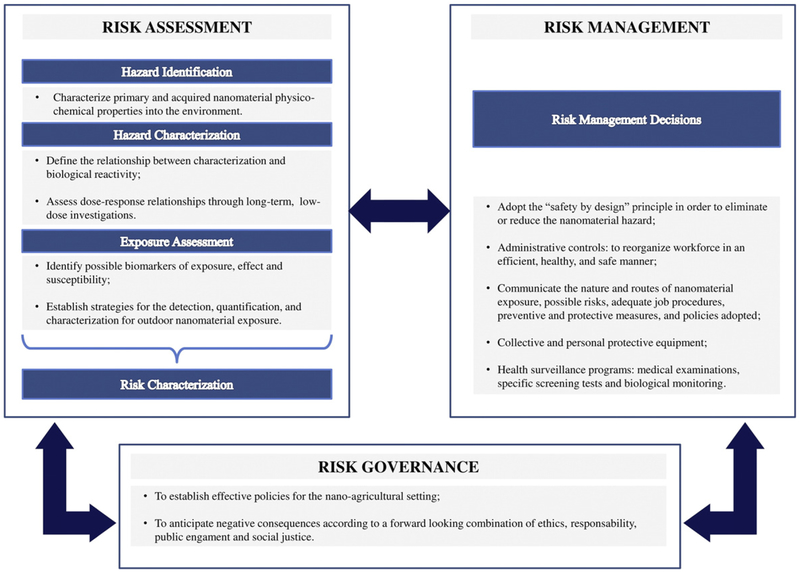
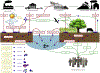
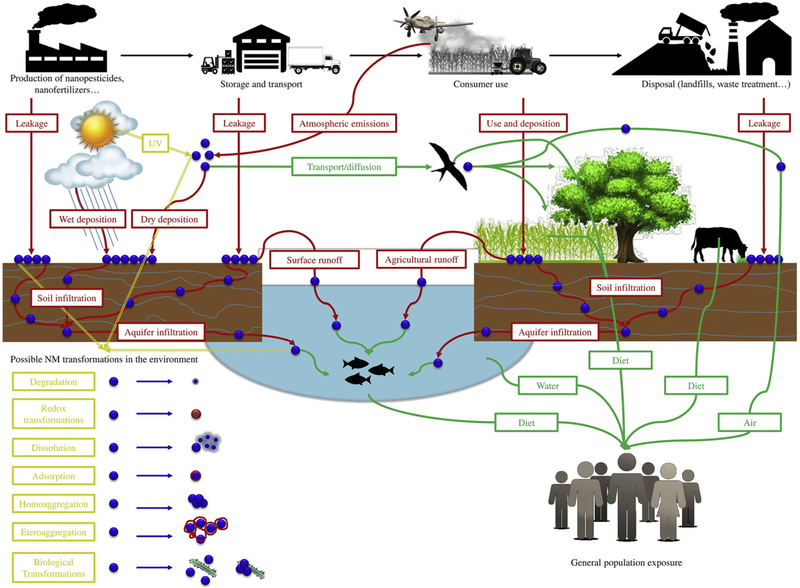
Description:Nanotechnology has the potential to make a beneficial impact on several agricultural, forestry, and environmental challenges, such as urbanization, energy constraints, and sustainable use of resources. However, new environmental and human health hazards may emerge from nano-enhanced applications. This raises concerns for agricultural workers who may become primarily exposed to such xenobiotics during their job tasks. The aim of this review is to discuss promising solutions that nanotechnology may provide in agricultural activities, with a specific focus on critical aspects, challenging issues, and research needs for occupational risk assessment and management in this emerging field. Eco-toxicological aspects were not the focus of the review. Nano-fertilizers, (nano-sized nutrients, nano-coated fertilizers, or engineered metal-oxide or carbon-based nanomaterials per se), and nano-pesticides, (nano-formulations of traditional active ingredients or inorganic nanomaterials), may provide a targeted/controlled release of agrochemicals, aimed to obtain their fullest biological efficacy without over-dosage. Nano-sensors and nano-remediation methods may detect and remove environmental contaminants. However, limited knowledge concerning nanomaterial biosafety, adverse effects, fate, and acquired biological reactivity once dispersed into the environment, requires further scientific efforts to assess possible nano-agricultural risks. In this perspective, toxicological research should be aimed to define nanomaterial hazards and levels of exposure along the life-cycle of nano-enabled products, and to assess those physico-chemical features affecting nanomaterial toxicity, possible interactions with agro-system co-formulants, and stressors. Overall, this review highlights the importance to define adequate risk management strategies for workers, occupational safety practices and policies, as well as to develop a responsible regulatory consensus on nanotechnology in agriculture.
-
Subjects:
-
Keywords:
-
Source:Toxicol Appl Pharmacol. 329:96-111
-
DOI:
-
Pubmed ID:28554660
-
Pubmed Central ID:PMC6380358
-
Document Type:
-
Funding:
-
Genre:
-
Volume:329
-
Download URL:
-
File Type:
 [PDF - 1.51 MB]
 -
Collection(s):
-
Main Document Checksum:urn:sha-512:07e07032489df24686c3650b4477b5c5f52220a114db7bf0516e3e3dd6079b41afbe66060b9bad432679851b5601a86aed32e7edf5ebc663d89a516b8a037084
Supporting Files


File Language:
English
 Was this page helpful?
 Found an issue?


CDC STACKS serves as an archival repository of CDC-published products including
scientific findings, journal articles, guidelines, recommendations, or other public health information authored or
co-authored by CDC or funded partners.
As a repository, CDC STACKS retains documents in their original published format to ensure public access to scientific information.
As a repository, CDC STACKS retains documents in their original published format to ensure public access to scientific information.
You May Also Like
COLLECTION
CDC Public Access