


PTSD and Comorbid Depression: Social Support and Self-Efficacy in World Trade Center Tower Survivors 14–15 Years After 9/11
Supporting Files

-
September 13 2018
-
File Language:
English
Details
-
Alternative Title:Psychol Trauma
-
Personal Author:
-
Description:Objective:
Following the World Trade Center (WTC) terrorist attack in New York City, prevalence rates of posttraumatic stress disorder (PTSD) and depression remain elevated. Although social support and self-efficacy have been associated with PTSD, little is known about their differential effect on PTSD and depressive comorbidity.
Method:
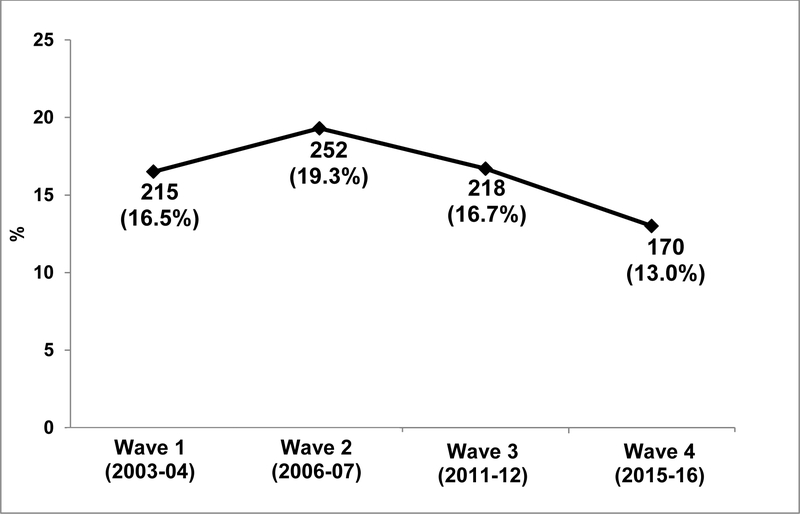
WTC tower survivors (n = 1,304) were assessed at Wave 1 (2003–4), Wave 2 (2006–7), Wave 3 (2011–12), and Wave 4 (2015–16).
Results:
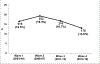
At Wave 4, 13.0% of participants had probable PTSD, a decrease from 16.5% at Wave 1. In addition, 4.1% (54) were identified as having PTSD alone, 6.8% (89) had depression alone, and 8.9% (116) had comorbid PTSD and depression. Of those with PTSD, 68.2% also had comorbid depression. WTC tower survivors with PTSD and comorbid depression reported greater PTSD symptom severity and were more likely to have had greater exposure to the events of 9/11 (aOR = 1.14) and lower self-efficacy (aOR = 0.85) than those with depression alone. Less perceived social support predicted only depression and not PTSD, whereas less perceived self-efficacy equally predicted having PTSD or depression (aOR = 0.76).
Conclusions:
Findings indicate that self-efficacy may be more important to the severity and chronicity of PTSD symptoms than social support. Multivariate comparisons suggest that PTSD with comorbid depression is a presentation of trauma-dependent psychopathologies, as opposed to depression alone following trauma, which was independent of trauma exposure and may be secondary to the traumatic event and posttraumatic response. Implications for assessment and treatment are discussed.
-
Subjects:
-
Source:Psychol Trauma. 11(2):156-164
-
Pubmed ID:30211599
-
Pubmed Central ID:PMC6345605
-
Document Type:
-
Funding:Centers for Disease Control and Prevention; National Institute for Occupational Safety and Health/ ; U50OH009739/ACL HHS/United States ; E11 OH009630/OH/NIOSH CDC HHS/United States ; U50 TS272750/TS/ATSDR CDC HHS/United States ; Centers for Disease Control and Prevention; Agency for Toxic Substances and Disease Registry/ ; New York City Department of Health and Mental Hygiene/
-
Place as Subject:
-
Volume:11
-
Issue:2
-
Collection(s):
-
Main Document Checksum:urn:sha256:08d2f9f68661a77c4b44d7cf159d886263652ec2b0ebc614d3b5b66633171d2e
-
Download URL:
-
File Type:
 [PDF
- 420.19 KB
]
[PDF
- 420.19 KB
]
Supporting Files


File Language:
English
ON THIS PAGE


CDC STACKS serves as an archival repository of CDC-published products including
scientific findings,
journal articles, guidelines, recommendations, or other public health information authored or
co-authored by CDC or funded partners.
As a repository, CDC STACKS retains documents in their original published format to ensure public access to scientific information.
As a repository, CDC STACKS retains documents in their original published format to ensure public access to scientific information.
You May Also Like
COLLECTION
CDC Public Access