



Prevalence of Amyotrophic Lateral Sclerosis — United States, 2015
Supporting Files
Public Domain

-
Nov 23 2018
Details
-
Journal Article:Morbidity and Mortality Weekly Report (MMWR)
-
Personal Author:
-
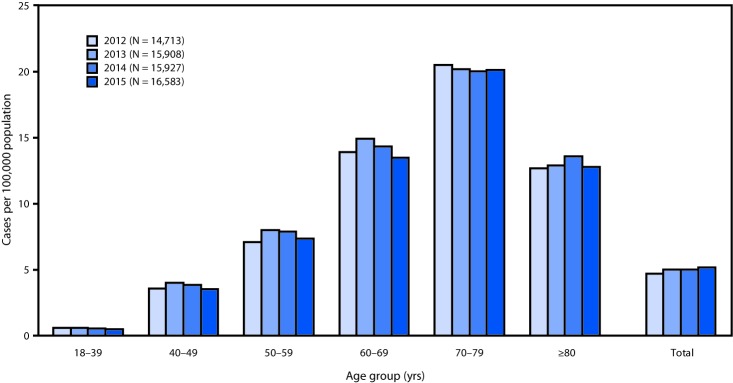
Description:Amyotrophic lateral sclerosis (ALS), commonly known as Lou Gehrig's disease, is a progressive and fatal neuromuscular disease; the majority of ALS patients die within 2-5 years of receiving a Diagnosis (1). Familial ALS, a hereditary form of the disease, accounts for 5%-10% of cases, whereas the remaining cases have no clearly defined etiology (1). ALS affects persons of all races and ethnicities; however, whites, males, non-Hispanics, persons aged ≥60 years, and those with a family History of ALS are more likely to develop the disease (2). No cure for ALS has yet been identified, and the lack of proven and effective therapeutic interventions is an ongoing challenge. Treatments currently available, Edaravone and Riluzole, do not cure ALS, but slow disease progression in certain patients (3,4). This report presents National ALS Registry findings regarding ALS prevalence in the United States for the period January 1-December 31, 2015. In 2015, the estimated prevalence of ALS cases was 5.2 per 100,000 population with a total of 16,583 cases identified. Overall, these findings are similar to the 2014 ALS prevalence and case count (5.0 per 100,000; 15,927 cases) (2). Prevalence rates by patient characteristics (most common in whites, males, and persons aged ≥60 years) and U.S. Census regions are consistent with ALS demographics and have not changed from 2014 to 2015 calendar years. The algorithm used to identify cases from national administrative databases was updated from the International Classification of Diseases, Ninth Revision (ICD-9) to the ICD-10 codes for claims starting on October 1, 2015, with no apparent effect on case ascertainment. Data collected by the National ALS Registry are being used to better describe the Epidemiology of ALS in the United States and to facilitate research on the Genetics, potential biomarkers, environmental pollutants, and etiology for ALS.
-
Subjects:
-
Source:MMWR Morbidity Mortal Weekly Rep. 67(46):1285-1289
-
Series:
-
DOI:
-
ISSN:0149-2195 (print) ; 1545-861X (digital)
-
Pubmed ID:30462626
-
Pubmed Central ID:PMC6289079
-
Document Type:
-
Place as Subject:
-
Pages in Document:5 pdf pages
-
Volume:67
-
Issue:46
-
Download URL:
-
File Type:
 [PDF - 166.88 KB]
 -
Collection(s):
-
Main Document Checksum:urn:sha-512:f3118e17728d8bc15ec772f3492b0820a672a19eb6ce26dfd13831c83addf0eb0ed6b67361e637c217d7037153c420ece53355b412c7eaee266c1fe3d0333bea
Supporting Files


 Was this page helpful?
 Found an issue?

CDC STACKS serves as an archival repository of CDC-published products including
scientific findings, journal articles, guidelines, recommendations, or other public health information authored or
co-authored by CDC or funded partners.
As a repository, CDC STACKS retains documents in their original published format to ensure public access to scientific information.
As a repository, CDC STACKS retains documents in their original published format to ensure public access to scientific information.
You May Also Like
COLLECTION
Morbidity and Mortality Weekly Report (MMWR)