


Maintenance and reappearance of extremely divergent intra-host HIV-1 variants
Supporting Files
Public Domain

-
Dec 04 2018
-
File Language:
English
Details
-
Alternative Title:Virus Evol
-
Personal Author:
-
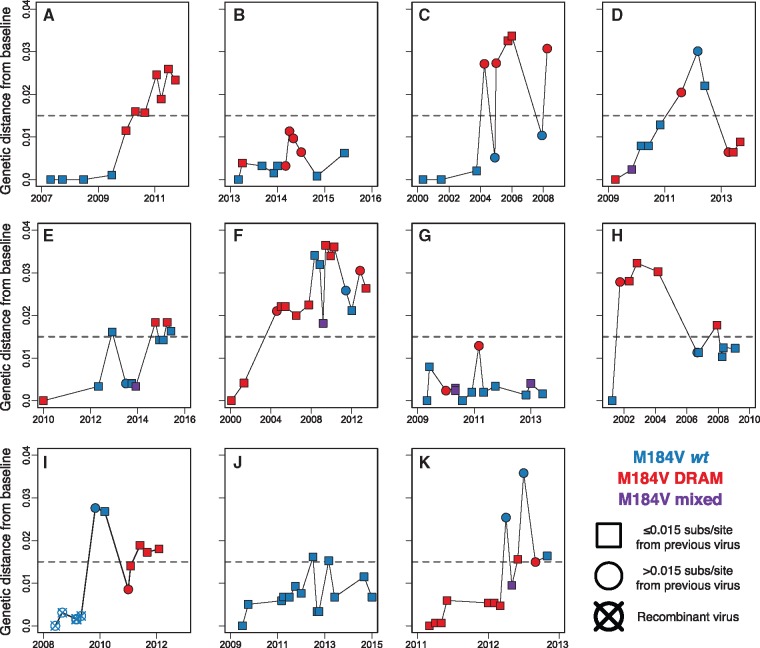
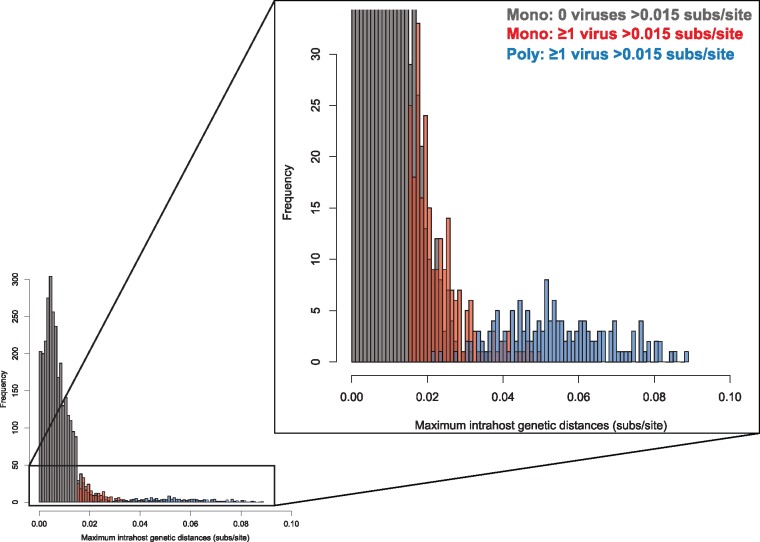
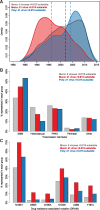
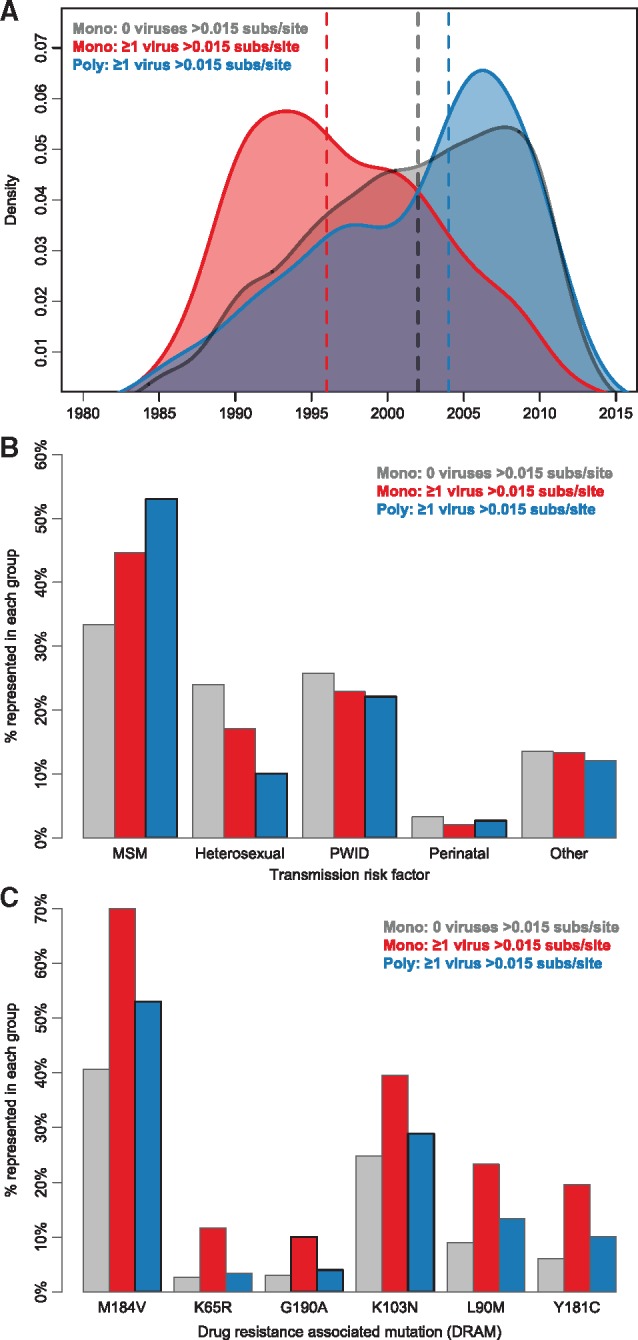
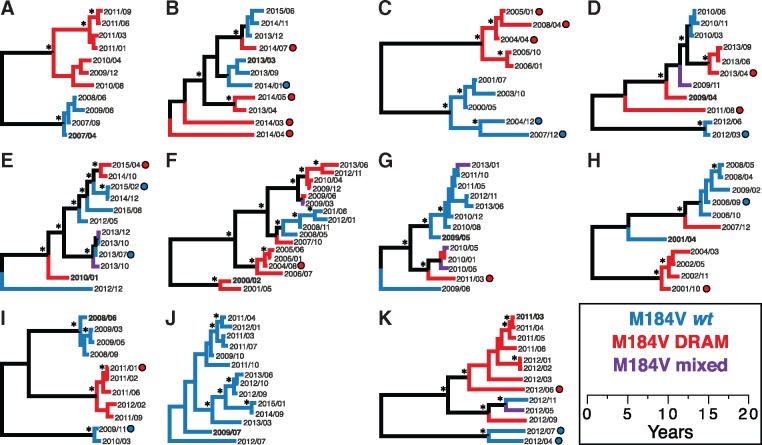
Description:Understanding genetic variation in human immunodeficiency virus (HIV) is clinically and immunologically important for patient treatment and vaccine development. We investigated the longitudinal intra-host genetic variation of HIV in over 3,000 individuals in the US National HIV Surveillance System with at least four reported HIV-1 polymerase (|) sequences. In this population, we identified 149 putative instances of superinfection (i.e. an individual sequentially infected with genetically divergent, polyphyletic viruses). Unexpectedly, we discovered a group of 240 individuals with consecutively sampled viral strains that were >0.015 substitutions/site divergent, despite remaining monophyletic in the phylogeny. Viruses in some of these individuals had a maximum genetic divergence approaching that found between two random, unrelated HIV-1 subtype-B | sequences within the US population. Individuals with these highly divergent viruses tended to be diagnosed nearly a decade earlier in the epidemic than people with superinfection or virus with less intra-host genetic variation, and they had distinct transmission risk factor profiles. To better understand this genetic variation in cases with extremely divergent, monophyletic viruses, we performed molecular clock phylogenetic analysis. Our findings suggest that, like Hepatitis C virus, extremely divergent HIV lineages can be maintained within an individual and reemerge over a period of years.
-
Subjects:
-
Source:Virus Evol. 2018; 4(2).
-
Pubmed Central ID:PMC6279948
-
Document Type:
-
Volume:4
-
Issue:2
-
Collection(s):
-
Main Document Checksum:urn:sha256:8217aaeeb2a544e2e8340093813afb5e2932ebbe03cae534c3438f740b826dd2
-
Download URL:
-
File Type:
 [PDF
- 761.66 KB
]
[PDF
- 761.66 KB
]
Supporting Files


File Language:
English
ON THIS PAGE

CDC STACKS serves as an archival repository of CDC-published products including
scientific findings,
journal articles, guidelines, recommendations, or other public health information authored or
co-authored by CDC or funded partners.
As a repository, CDC STACKS retains documents in their original published format to ensure public access to scientific information.
As a repository, CDC STACKS retains documents in their original published format to ensure public access to scientific information.
You May Also Like
COLLECTION
CDC Public Access