


Trends of racial and ethnic disparities in virologic suppression among women in the HIV Outpatient Study, USA, 2010-2015
Supporting Files

-
Jan 02 2018
-
File Language:
English
Details
-
Alternative Title:PLoS One
-
Personal Author:
-
Corporate Authors:
-
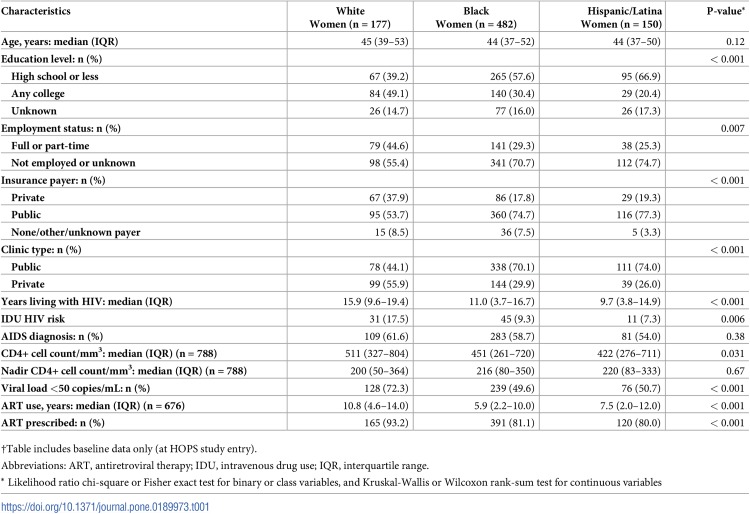
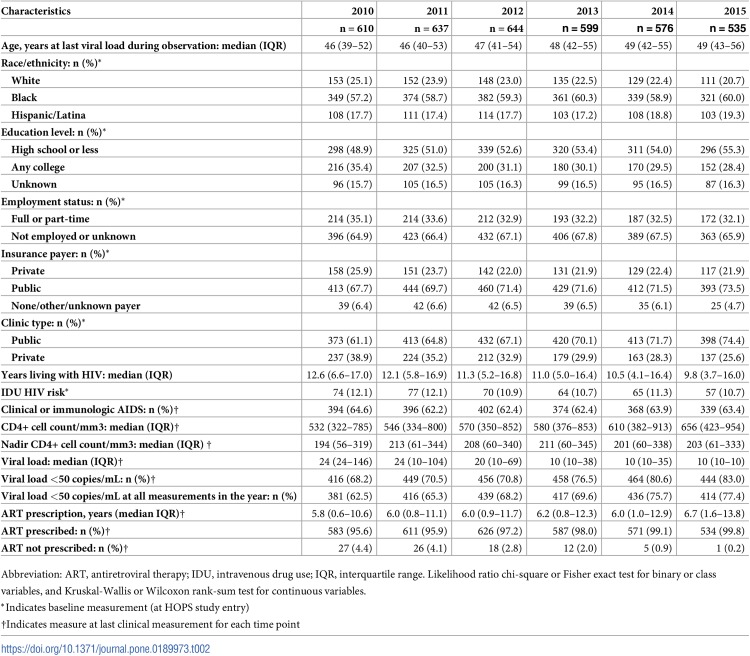
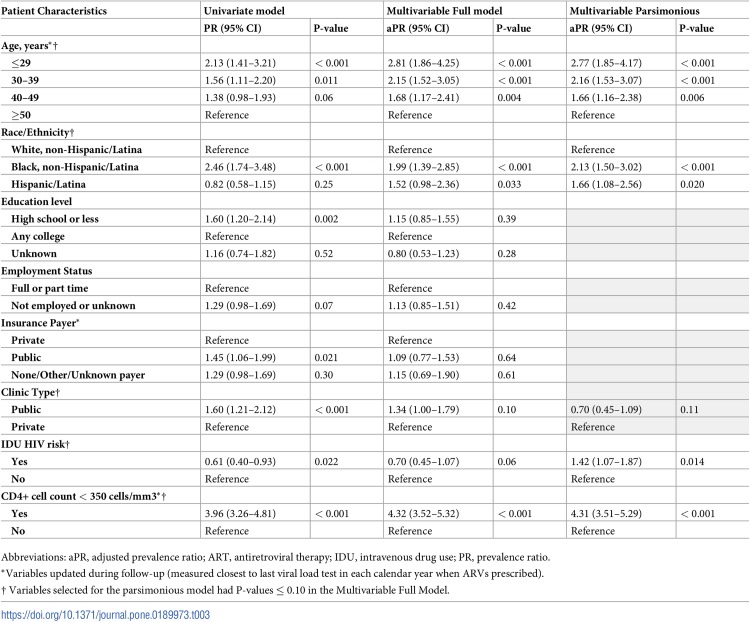
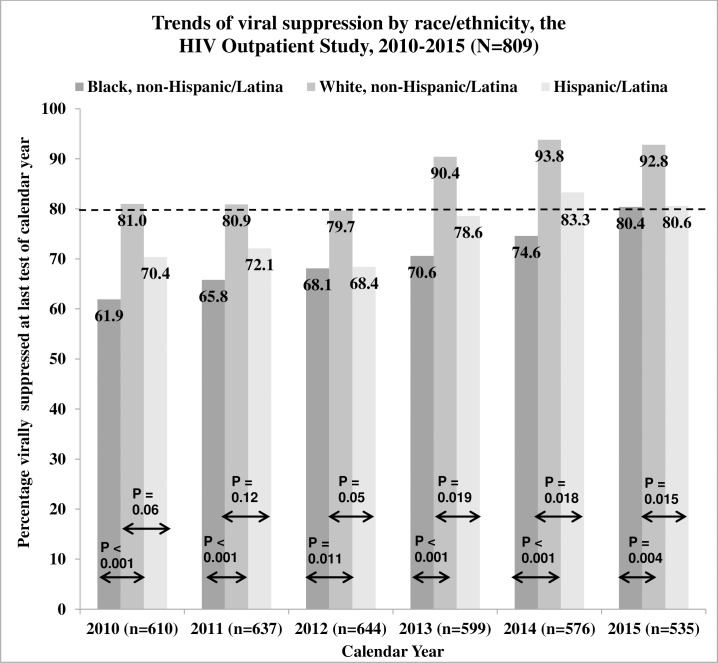
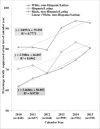
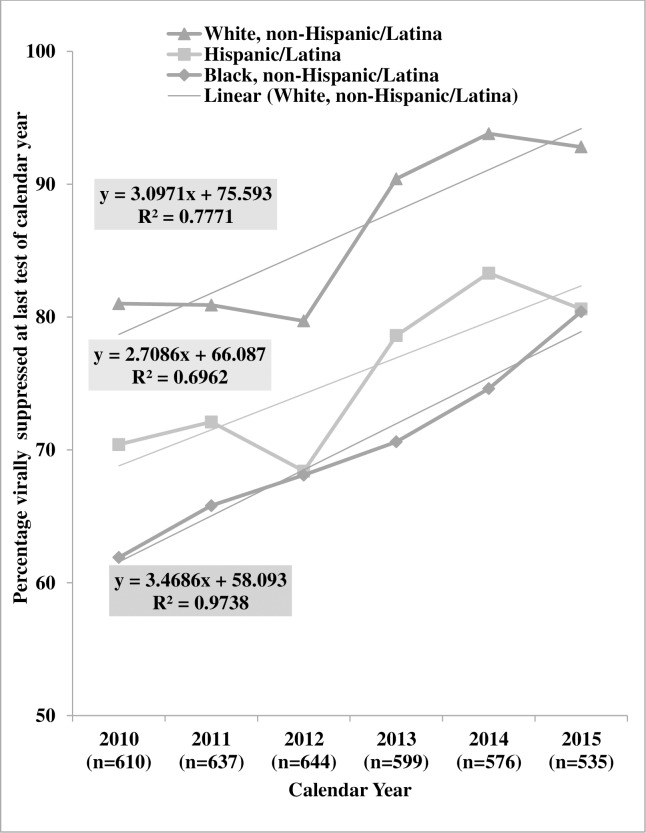
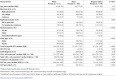
Description:In the United States, women accounted for 19% of new HIV diagnoses in 2015 and were less likely to reach virologic suppression when compared to men. We assessed trends and disparities in virologic suppression among HIV-positive women to inform HIV treatment strategies. Data were from a prospective cohort of the HIV Outpatient Study and collected at nine United States HIV clinics. We included women aged ≥18 years, with ≥1 visit, who were prescribed antiretroviral therapy, and had ≥1 viral load test performed between 2010 and 2015. We defined virologic suppression as viral load <50 copies/mL and calculated adjusted prevalence ratios (aPR) with 95% confidence intervals (CI) for virologic suppression by race/ethnicity and year of measure. Generalized estimating equations were used for multivariable analyses to assess factors associated with virologic suppression. Among 809 women (median age = 44 years), 482 (60%) were black, 177 (22%) white, 150 (19%) Hispanic/Latina. Virologic suppression was less prevalent among black women (73%) compared with Hispanic/Latina women (83%) and white women (91%). In multivariable analyses, not achieving virologic suppression was more likely among black women (aPR = 2.13; CI = 1.50-3.02) or Hispanic/Latina women (aPR = 1.66; CI = 1.08-2.56) compared with white women, and among women who attended public clinics (aPR = 1.42; CI = 1.07-1.87) compared with those who attended a private clinic. Between 2010 and 2015, virologic suppression among HIV-positive women increased from 68% to 83%, but racial/ethnic disparities persisted. Black and Hispanic/Latina women had significantly lower rates of virologic suppression than white women. Interventions targeting virologic suppression improvement among HIV-positive women of color, especially those who attend public clinics, are warranted.
-
Subjects:
-
Source:PLoS One. 13(1).
-
Pubmed ID:29293632
-
Pubmed Central ID:PMC5749722
-
Document Type:
-
Funding:
-
Place as Subject:
-
Volume:13
-
Issue:1
-
Collection(s):
-
Main Document Checksum:urn:sha256:5d9975857cbf4b18322723b7942a9262c85db2cb0beec14d7ba86a1558b534a9
-
Download URL:
-
File Type:
 [PDF
- 2.25 MB
]
[PDF
- 2.25 MB
]
Supporting Files


File Language:
English
ON THIS PAGE


CDC STACKS serves as an archival repository of CDC-published products including
scientific findings,
journal articles, guidelines, recommendations, or other public health information authored or
co-authored by CDC or funded partners.
As a repository, CDC STACKS retains documents in their original published format to ensure public access to scientific information.
As a repository, CDC STACKS retains documents in their original published format to ensure public access to scientific information.
You May Also Like
COLLECTION
CDC Public Access