


Use of Hupresin To Capture Red Blood Cell Acetylcholinesterase for Detection of Soman Exposure
Supporting Files
Public Domain

-
Dec 13 2017
-
File Language:
English
Details
-
Alternative Title:Anal Chem
-
Personal Author:
-
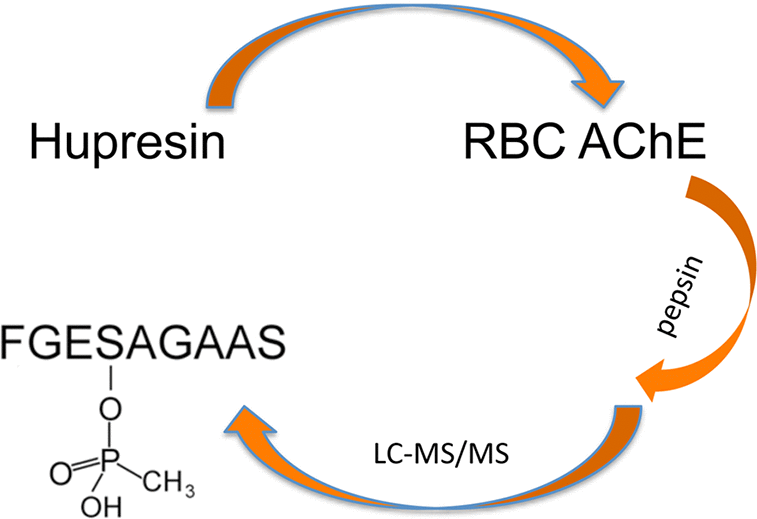
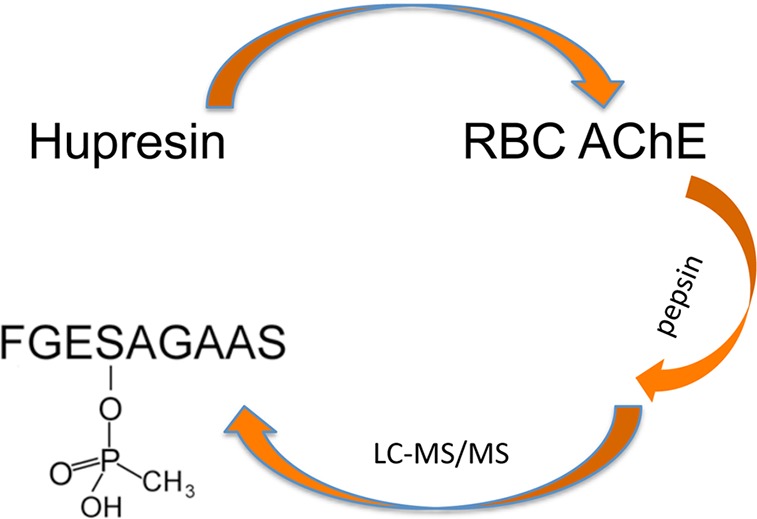
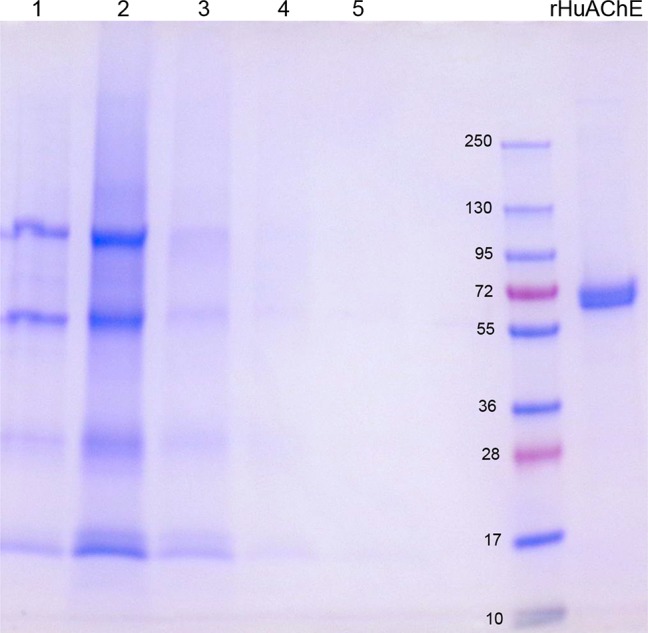
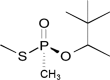
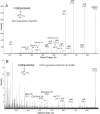
Description:Toxicity from acute exposure to nerve agents and organophosphorus toxicants is due to irreversible inhibition of acetylcholinesterase (AChE) in the nervous system. AChE in red blood cells is a surrogate for AChE in the nervous system. Previously we developed an immunopurification method to enrich red blood cell AChE (RBC AChE) as a biomarker of exposure. The goal of the present work was to provide an alternative RBC AChE enrichment strategy, by binding RBC AChE to Hupresin affinity gel. AChE was solubilized from frozen RBC by addition of 1% Triton X-100. Insoluble debris was removed by centrifugation. The red, but not viscous, RBC AChE solution was loaded on a Hupresin affinity column. Hemoglobin and other proteins were washed off with 3 M NaCl, while retaining AChE bound to Hupresin. Denatured AChE was eluted with 1% trifluoroacetic acid. The same protocol was used for 20 mL of RBC AChE inhibited with a soman model compound. The acid denatured protein was digested with pepsin and analyzed by liquid chromatography tandem mass spectrometry on a 6600 Triple-TOF mass spectrometer. A targeted method identified the aged soman adduct on serine 203 in peptide FGESAGAAS. It was concluded that Hupresin can be used to enrich soman-inhibited AChE solubilized from 8 mL of frozen human erythrocytes, yielding a quantity sufficient for detecting soman exposure.
-
Subjects:
-
Source:Anal Chem. 2017; 90(1):974-979.
-
Pubmed ID:29172437
-
Pubmed Central ID:PMC5757501
-
Document Type:
-
Volume:90
-
Issue:1
-
Collection(s):
-
Main Document Checksum:urn:sha256:f55d3f2b3807aff7d47bec8c51895c8a9b84201ba7c2bac90a0fe61dbee2948c
-
Download URL:
-
File Type:
 [PDF
- 2.22 MB
]
[PDF
- 2.22 MB
]
Supporting Files


File Language:
English
ON THIS PAGE





CDC STACKS serves as an archival repository of CDC-published products including
scientific findings,
journal articles, guidelines, recommendations, or other public health information authored or
co-authored by CDC or funded partners.
As a repository, CDC STACKS retains documents in their original published format to ensure public access to scientific information.
As a repository, CDC STACKS retains documents in their original published format to ensure public access to scientific information.
You May Also Like
COLLECTION
CDC Public Access