


Modeling the impact of obesity on the lifetime risk of chronic kidney disease in the United States using updated estimates of GFR progression from the CRIC study
Supporting Files
Public Domain

-
Oct 19 2018
-
File Language:
English
Details
-
Alternative Title:PLoS One
-
Personal Author:
-
Corporate Authors:
-
Description:Rationale & objective
As the prevalence of obesity continues to rise in the United States, it is important to understand its impact on the lifetime risk of chronic kidney disease (CKD).
Study design
The CKD Health Policy Model was used to simulate the lifetime risk of CKD for those with and without obesity at baseline. Model structure was updated for glomerular filtration rate (GFR) decline to incorporate new longitudinal data from the Chronic Renal Insufficiency Cohort (CRIC) study.
Setting and population
The updated model was populated with a nationally representative cohort from National Health and Nutrition Examination Survey (NHANES).
Outcomes
Lifetime risk of CKD, highest stage and any stage.
Model, perspective, & timeframe
Simulation model following up individuals from current age through death or age 90 years.
Results
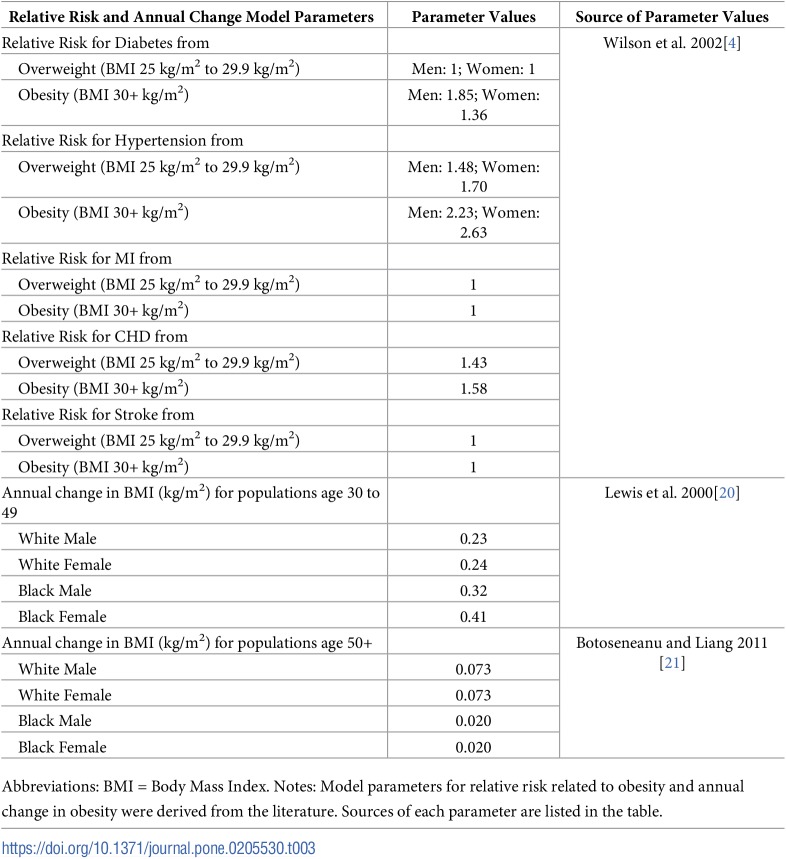
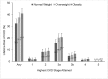
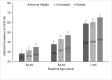
Lifetime risk of any CKD stage was 32.5% (95% CI 28.6%–36.3%) for persons with normal weight, 37.6% (95% CI 33.5%–41.7%) for persons who were overweight, and 41.0% (95% CI 36.7%–45.3%) for persons with obesity at baseline. The difference between persons with normal weight and persons with obesity at baseline was statistically significant (p<0.01). Lifetime risk of CKD stages 4 and 5 was higher for persons with obesity at baseline (Stage 4: 2.1%, 95% CI 0.9%–3.3%; stage 5: 0.6%, 95% CI 0.0%–1.1%), but the differences were not statistically significant (stage 4: p = 0.08; stage 5: p = 0.23).
Limitations
Due to limited data, our simulation model estimates are based on assumptions about the causal pathways from obesity to CKD, diabetes, and hypertension.
Conclusions
The results of this study indicate that obesity may have a large impact on the lifetime risk of CKD. This is important information for policymakers seeking to set priorities and targets for CKD prevention and treatment.
-
Subjects:
-
Source:PLoS One. 13(10).
-
Pubmed ID:30339684
-
Pubmed Central ID:PMC6195263
-
Document Type:
-
Place as Subject:
-
Volume:13
-
Issue:10
-
Collection(s):
-
Main Document Checksum:urn:sha256:7420b42f5e7d573058c76f47afb457e0b701bc506ea7686688cf5a178dd8b4e6
-
Download URL:
-
File Type:
 [PDF
- 835.66 KB
]
[PDF
- 835.66 KB
]
Supporting Files


File Language:
English
ON THIS PAGE




CDC STACKS serves as an archival repository of CDC-published products including
scientific findings,
journal articles, guidelines, recommendations, or other public health information authored or
co-authored by CDC or funded partners.
As a repository, CDC STACKS retains documents in their original published format to ensure public access to scientific information.
As a repository, CDC STACKS retains documents in their original published format to ensure public access to scientific information.
You May Also Like
COLLECTION
CDC Public Access