


Attitudes of Primary Care Providers and Recommendations of Home Blood Pressure Monitoring—DocStyles, 2010
Supporting Files

-
Jan 14 2013
File Language:
English
Details
-
Alternative Title:J Clin Hypertens (Greenwich)
-
Personal Author:
-
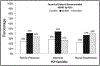
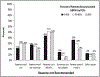
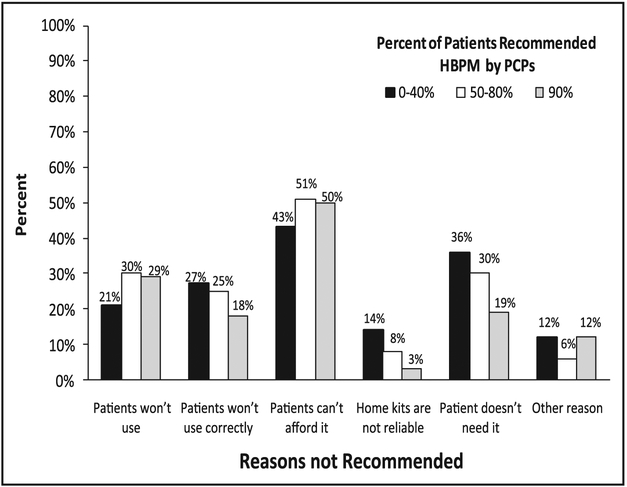
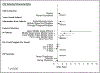
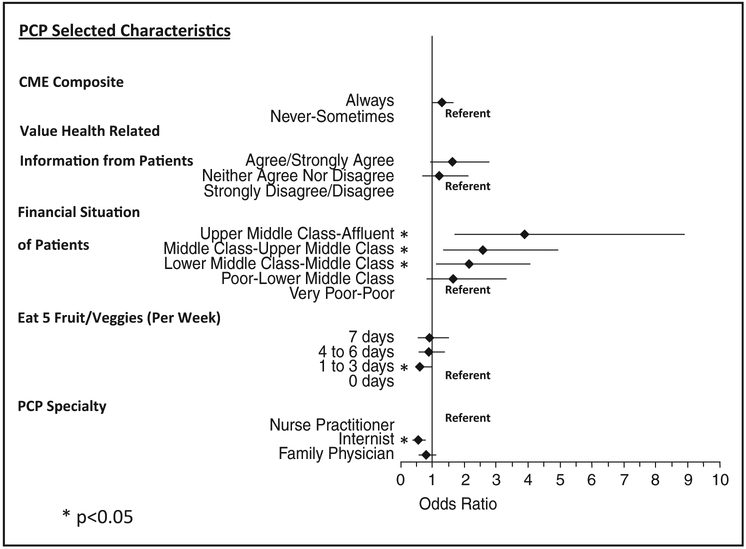
Description:To assess primary care providers' (PCPs) opinions related to recommending home blood pressure monitoring (HBPM) for their hypertensive patients, the authors analyzed a Web-based 2010 DocStyles survey, which included PCPs' demographics, health-related behaviors, recommendations on HBPM, views of patient knowledge, and use of continuing medical education. Of the 1254 PCPs who responded, 539 were family practitioners, 461 were internists, and 254 were nurse practitioners; 32% recommended HBPM to ≥90% of their patients and 26% recommended it to ≤40% of their patients. Nurse practitioners were significantly more likely to recommend HBPM than were internists (odds ratio, 0.55; 95% confidence interval, 0.40-0.78). The top reasons for not recommending HBPM were "patient can't afford it" and "patient doesn't need it." A total of 20% of PCPs indicated that their patients were poor to lower middle class; these PCPs were less likely to recommend HBPM to their patients than were those PCPs with most patients in higher economic classes. Additional efforts are needed to provide education to providers, especially physicians, about the benefits of HBPM in improved and cost-effective blood pressure control in the United States.
-
Subjects:
-
Source:J Clin Hypertens (Greenwich). 15(4):224-229.
-
Pubmed ID:23551720
-
Pubmed Central ID:PMC6223006
-
Document Type:
-
Funding:
-
Volume:15
-
Issue:4
-
Collection(s):
-
Main Document Checksum:urn:sha256:635ce82618afbc65dcbdc410a2cf2dc252142416157d956c8d72d6bf6eeda613
-
Download URL:
-
File Type:
 [PDF
- 253.52 KB
]
[PDF
- 253.52 KB
]
Supporting Files


File Language:
English
ON THIS PAGE


CDC STACKS serves as an archival repository of CDC-published products including
scientific findings,
journal articles, guidelines, recommendations, or other public health information authored or
co-authored by CDC or funded partners.
As a repository, CDC STACKS retains documents in their original published format to ensure public access to scientific information.
As a repository, CDC STACKS retains documents in their original published format to ensure public access to scientific information.
You May Also Like
COLLECTION
CDC Public Access