



Detection of α-, β-, and γ-amanitin in urine by LC-MS/MS using 15N10-α-amanitin as the internal standard
Supporting Files

-
July 30 2018
-
File Language:
English
Details
-
Alternative Title:Toxicon
-
Personal Author:
-
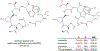
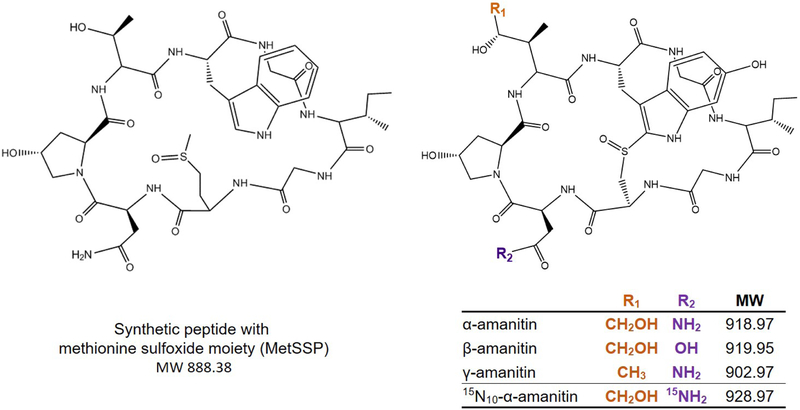
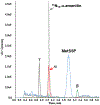
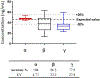
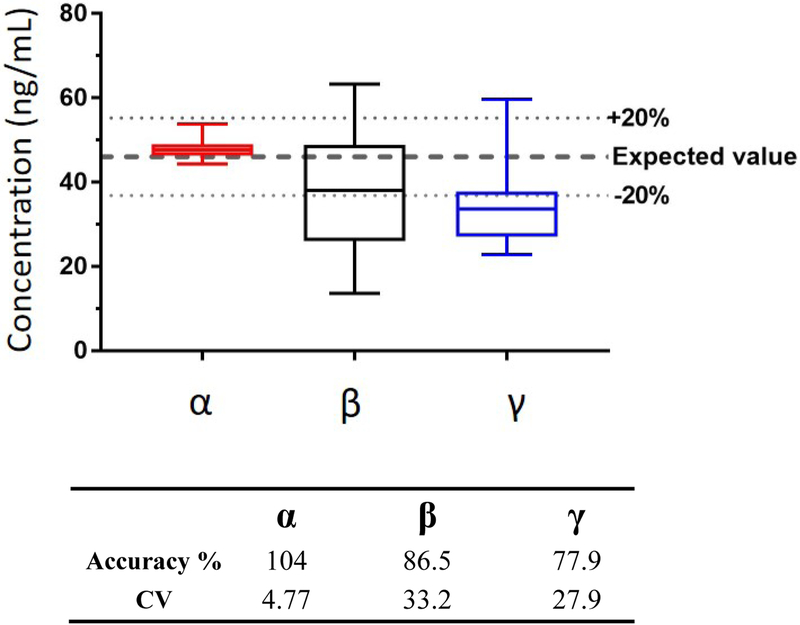
Description:The majority of fatalities from poisonous mushroom ingestion are caused by amatoxins. To prevent liver failure or death, it is critical to accurately and rapidly diagnose amatoxin exposure. We have developed a liquid chromatography tandem mass spectrometry method to detect α-, β-, and γ-amanitin in urine to meet this need. Two internal standard candidates were evaluated, including an isotopically labeled |N|-α-amanitin and a modified amanitin methionine sulfoxide synthetic peptide. Using the |N|-α-amanitin internal standard, precision and accuracy of α-amanitin in pooled urine was ≤5.49% and between 100 and 106%, respectively, with a reportable range from 1-200 ng/mL. β- and γ-Amanitin were most accurately quantitated in pooled urine using external calibration, resulting in precision ≤17.2% and accuracy between 99 and 105% with calibration ranges from 2.5-200 ng/mL and 1.0-200 ng/mL, respectively. The presented urinary diagnostic test is the first method to use an isotopically labeled α-amanitin with the ability to detect and confirm human exposures to α-, β-, and γ-amanitin.
-
Subjects:
-
Source:Toxicon. 152:71-77
-
Pubmed ID:30071219
-
Pubmed Central ID:PMC6216022
-
Document Type:
-
Funding:
-
Volume:152
-
Collection(s):
-
Main Document Checksum:urn:sha256:f03b88dbbf9df8f6393481a8566d5758cd243fccc174d53d6fe89411b45742d8
-
Download URL:
-
File Type:
 [PDF
- 844.73 KB
]
[PDF
- 844.73 KB
]
Supporting Files


File Language:
English
 Was this page helpful?
 Found an issue?

CDC STACKS serves as an archival repository of CDC-published products including
scientific findings,
journal articles, guidelines, recommendations, or other public health information authored or
co-authored by CDC or funded partners.
As a repository, CDC STACKS retains documents in their original published format to ensure public access to scientific information.
As a repository, CDC STACKS retains documents in their original published format to ensure public access to scientific information.
You May Also Like
COLLECTION
CDC Public Access