



Morbidity and Mortality Weekly Report (MMWR): Surveillance Summaries, March 2018 / Vol. 67 / No. SS-4
Supporting Files
Public Domain

-
March 16, 2018
File Language:
English
Details
-
Alternative Title:Geographic Variations in Arthritis Prevalence, Health-Related Characteristics, and Management - U.S. 2015
-
Journal Article:Morbidity and Mortality Weekly Report (MMWR): Surveillance Summaries
-
Personal Author:
-
Corporate Authors:
-
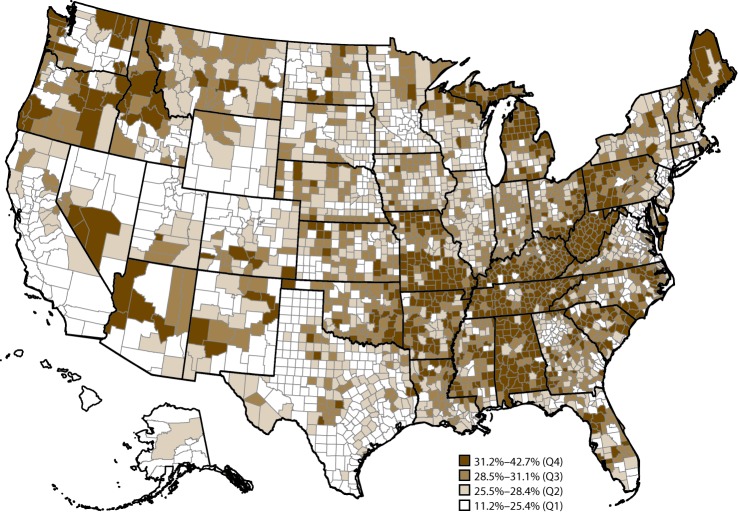
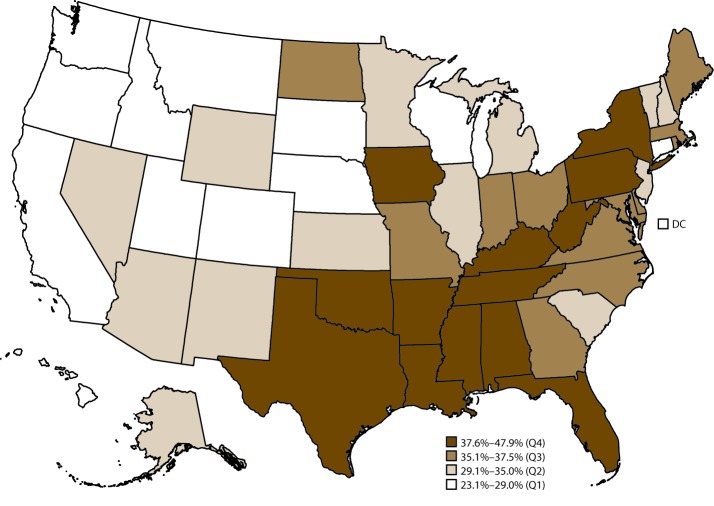
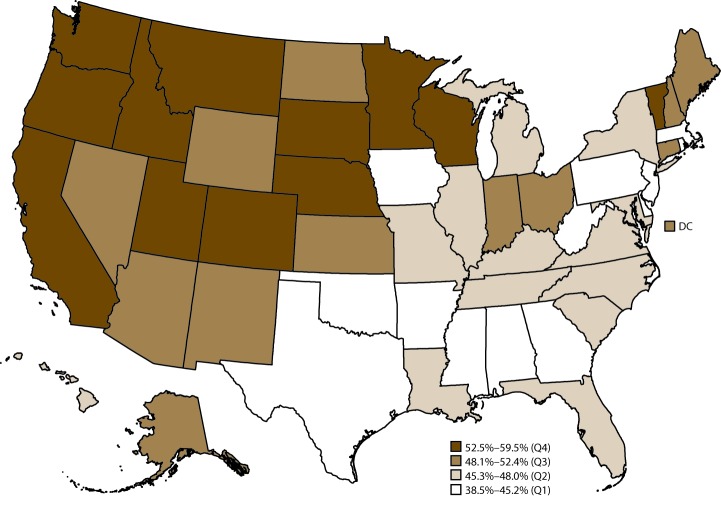
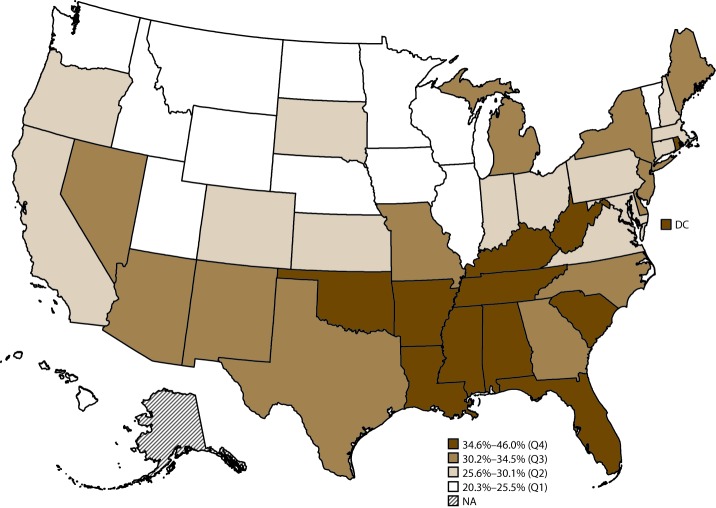
Description:Doctor-diagnosed arthritis is a common chronic condition affecting an estimated 23% (54 million) of adults in the U.S. greatly influencing quality of life and costing approximately $300 billion annually. The geographic variations in arthritis prevalence, health-related characteristics, and management among states and territories are unknown. Therefore, public health professionals need to understand arthritis in their areas to target dissemination of evidence-based interventions that reduce arthritis morbidity. The Behavioral Risk Factor Surveillance System is an annual, random-digit-dialed landline and cellular telephone survey of noninstitutionalized adults aged ≥18 years residing in the U.S. Self-reported data are collected from the 50 states, the District of Columbia, Guam, and Puerto Rico. Unadjusted and age-standardized prevalences of arthritis, arthritis health-related characteristics, and arthritis management were calculated. County-level estimates were calculated using a validated statistical modeling method. In 2015, in the 50 states and the District of Columbia, median age-standardized prevalence of arthritis was 23.0% (range: 17.2%-33.6%). Modeled prevalence of arthritis varied considerably by county (range: 11.2%-42.7%). In 13 states that administered the arthritis management module, among adults with arthritis, the age-standardized median percentage of participation in a self-management education course was 14.5% (range: 9.1%-19.0%), being told by a health care provider to engage in physical activity or exercise was 58.5% (range: 52.3%-61.9%), and being told to lose weight to manage arthritis symptoms (if overweight or obese) was 44.5% (range: 35.1%-53.2%). Respondents with arthritis who lived in the quartile of states with the highest prevalences of arthritis had the highest percentages of negative health-related characteristics (i.e., arthritis-attributable activity limitations, arthritis-attributable severe joint pain, and arthritis-attributable social participation restriction; ≥14 physically unhealthy days during the past 30 days; ≥14 mentally unhealthy days during the past 30 days; obesity; and leisure-time physical inactivity) and the lowest percentage of leisure-time walking.
-
Subjects:
-
Source:Morbidity and Mortality Weekly Report (MMWR): Surveillance Summaries, 2018; v. 67, no. 4
-
Series:
-
DOI:
-
ISSN:1546-0738 (print) ; 1545-8636 (digital)
-
Pubmed ID:29543787
-
Pubmed Central ID:PMC5857191
-
Document Type:
-
Corporate as Subject:
-
Place as Subject:
-
Pages in Document:32 pdf pages
-
Volume:67
-
Issue:4
-
Download URL:
-
File Type:
 [PDF - 2.09 MB]
 -
Collection(s):
-
Main Document Checksum:urn:sha-512:ad42cf9ea7811338e2417c640bd8ad2808a3621d121667ca66dd5ddadaf0e397fbcd405cde9b9fe3d405da0951d1678248b281ad00f0554087a4139c32887c84
Supporting Files


File Language:
English
 Was this page helpful?
 Found an issue?



CDC STACKS serves as an archival repository of CDC-published products including
scientific findings, journal articles, guidelines, recommendations, or other public health information authored or
co-authored by CDC or funded partners.
As a repository, CDC STACKS retains documents in their original published format to ensure public access to scientific information.
As a repository, CDC STACKS retains documents in their original published format to ensure public access to scientific information.
You May Also Like
COLLECTION
Morbidity and Mortality Weekly Report (MMWR)